Sixteen sanctioned supertankers sprinted out of Venezuela the moment Nicolás Maduro fell, daring the U.S. Navy to stop them and turning the Caribbean into the most high‑stakes traffic stop on earth.
Story Snapshot
- At least 16 sanctioned tankers bolted from Venezuelan ports days after Maduro’s capture, many vanishing “dark” from trackers.
- The U.S. oil blockade under Operation Southern Spear uses courts plus warships to hunt a global “ghost fleet.”
- Most of the fleeing ships belong to a shadow network already used to move Iranian and Russian oil under sanctions.
- The showdown tests how far America will go to control oil flows on the high seas—and who really owns Venezuela’s future.
The night sixteen tankers ran for it
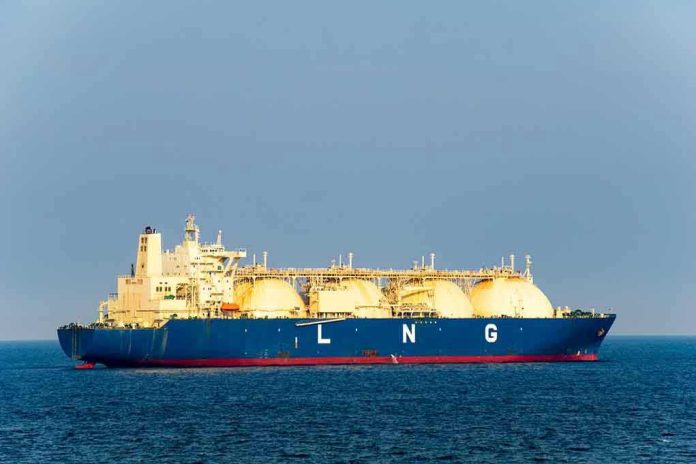
When U.S. forces captured Nicolás Maduro on January 3, 2026, the fireworks did not start in Caracas; they started offshore. Within about forty‑eight hours, satellite and AIS data showed at least sixteen sanctioned oil tankers slipping their moorings and streaming out of Venezuelan ports in near‑synchrony. Fifteen belonged to a pre‑existing “shadow fleet” already notorious for hauling sanctioned Iranian and Russian crude. Four tankers spoofed their positions; a dozen simply turned their tracking off and disappeared.
This was not ordinary commercial traffic. The United States had declared a naval oil quarantine around Venezuela on December 17, 2025, under Operation Southern Spear, specifically targeting sanctioned tankers moving Venezuelan crude. Federal courts had already issued seizure warrants for vessels like Skipper and Bella 1, and U.S. Coast Guard cutters were patrolling the Caribbean and Atlantic approaches. Anyone sailing a sanctioned hull loaded with Venezuelan oil knew they were playing chicken with the world’s most capable navy.
How a “ghost fleet” tried to outrun a superpower
The ships that ran were not mainstream players with blue‑chip insurance and Western charterers. They were older, heavily sanctioned tankers tied to shell companies in permissive jurisdictions, the same “ghost” fleet that had spent years moving Iranian and Russian barrels in the shadows. Their business model depends on risk: high fees to haul crude others will not touch, paid for by regimes and intermediaries that cannot use normal shipping channels.
To keep that business alive, operators rely on tricks that would look familiar to any fraud investigator. They change flags. They swap nominal owners. They spoof AIS signals to show ships “sailing” in places they are not. Or they go completely dark, turning off transponders and trusting that clouds, distance, and ocean vastness will cover their tracks. That calculus changed when U.S. commands began marrying court warrants to geospatial intelligence, using satellite imagery plus pattern analysis to hunt specific hulls far from Venezuelan shores.
Blockade by spreadsheet: law, warships, and American leverage
Washington is not calling this a blockade in the classic sense of ring‑of‑steel battleships. It is something more bureaucratic and, from a conservative rule‑of‑law standpoint, more defensible. The Department of Justice secures civil forfeiture and sanctions‑based seizure warrants from federal courts. The U.S. Coast Guard and combatant commands then execute those warrants on the high seas under “right to visit” authorities when there is suspicion of illicit activity.
That blend of legal process and maritime power matters. It signals that America is not simply muscling foreign commerce because it can; it is enforcing duly enacted sanctions designed to choke off revenue from a captured, corrupt petro‑state and its foreign enablers. Those sanctions have existed for years, but enforcement historically focused on finance and market access. Operation Southern Spear moves the fight onto the water, making the ship itself a target if it serves sanctioned networks.
Collateral pressure: PDVSA, markets, and Venezuelans
For PDVSA and whoever claims to run Venezuela after Maduro, the timing could hardly be worse. Years of mismanagement and sanctions left production fragile and heavily dependent on the very shadow fleet now at the top of U.S. target lists. Storage tanks onshore are near capacity; when barrels cannot leave, wells eventually must shut in, and that risks long‑term reservoir and infrastructure damage that cannot be fixed with a quick political deal.
In the short term, fewer sailings mean less foreign currency and tighter import capacity. For ordinary Venezuelans, that usually translates into more scarcity and fewer options, regardless of who sits in Miraflores. From an American conservative perspective, this is the central tension: sanctions aim to cut the oxygen line to a hostile regime and its criminal networks, but the regime’s own citizens inevitably feel part of the squeeze. The policy question is whether the long‑term benefits of dismantling that network outweigh the near‑term pain and whether new authorities can channel any remaining revenue toward rebuilding instead of repression.
What this showdown reveals about power and precedent
The 16‑tanker dash is a stress test of three things at once: how far U.S. maritime power can reach, how adaptable sanctions‑evasion networks really are, and how much risk China, Russia, and Iran will tolerate in their logistics chains. Early seizures—Centuries off Venezuela with 1.8 million barrels on board, Bella 1 in the North Atlantic after weeks of pursuit, Sophia in the Caribbean with about 2 million barrels loaded—suggest the United States can, when it chooses, make life extremely hard for the current ghost fleet.
No one should assume the game ends there. Shadow‑fleet operators can buy new tonnage, refine their spoofing, or shift routes. But the more aggressive and global U.S. enforcement becomes, the more insurers, flag states, and cautious middlemen will quietly step back from deals touching Venezuelan barrels. That, in turn, forces sanctioned actors toward riskier partners and higher costs. Over time, that is exactly how pressure campaigns work when they align with both common sense and a clear strategic end state: raise the price of bad behavior until even cynical players decide it is no longer worth the voyage.
Sources:
Sanctioned tankers leave Venezuela as US tightens oil blockade — Anadolu Agency
United States oil blockade during Operation Southern Spear — Wikipedia
US moves to seize Venezuela-linked oil tanker in North Atlantic — ABC30
More oil tankers attempt to slip the U.S. blockade — Drop Site News
US seizes two more ships as Trump tightens Venezuela quarantine — Financial Post