

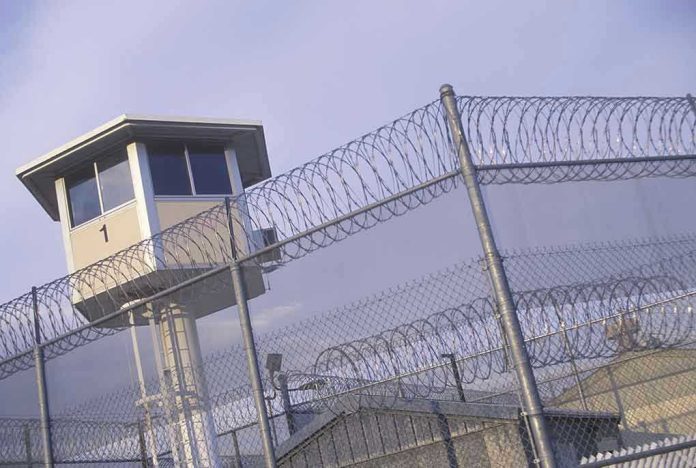
When the government quietly emptied “Alligator Alcatraz” for hurricane season, it exposed how fragile and secretive this massive detention experiment really is.
Story Snapshot
- All detainees have been moved out of the Everglades camp, officially over hurricane safety concerns.
- Officials long claimed the site was “safe” to Category 2 storms, even as lawsuits warned of flooding and weak plans.
- Families and lawyers now say hundreds of former detainees are hard to track or appear “missing” in the system.
- The episode feeds a growing belief on left and right that federal and state officials hide the truth and dodge accountability.
Why detainees were moved out of “Alligator Alcatraz”
Federal immigration officials say everyone held at the South Florida Detention Facility, better known as “Alligator Alcatraz,” has now been moved to other locations because of hurricane risks. A spokesperson for United States Immigration and Customs Enforcement (ICE) told CBS News that transfers were done “for the safety of the illegal alien detainees” as hurricane season ramps up.[1] Local CBS Miami coverage reported earlier that contractors were warned the controversial Everglades camp was being shut down, with about 1,400 people slated for removal.[1] The site, built in tents on a remote airstrip, has faced months of criticism over conditions, flooding, and storm exposure.[1][6]
Homeland Security Secretary Markwayne Mullin previously argued the facility could be taken down and people moved if a natural disaster hit, but he also admitted it faced weather “vulnerabilities.”[1] That language matters. Officials had long promoted the camp as tough enough to handle Category 2 level winds, roughly 110 miles an hour, while saying they would evacuate for stronger storms.[2][9] Now, by clearing out detainees before any major hurricane is even on the radar, ICE is acting as if the risk is serious right now, not just in some worst-case future event. For many Americans, that raises a simple question: if it was safe, why did everyone have to leave?
Storm safety claims versus redacted plans and lawsuits
Florida’s emergency management director has repeatedly said Alligator Alcatraz was engineered to withstand winds “up to 110 miles an hour,” which puts it at about Category 2 strength on the hurricane scale.[2][9] Supporters of the camp point to climate-controlled tents, bunks instead of floor mats, and a promise of “higher than jail” standards to argue it was good enough for detainees.[2] But key hurricane plans released by the state came heavily blacked out. A “continuity of operations” document focused on full-scale evacuation for tropical cyclones had entire pages and alternate facility lists redacted from public view.[9] That secrecy makes it almost impossible for regular citizens, or even local leaders, to judge if the state and federal government are truly ready to protect people inside when a real storm bears down.
Environmental and civil rights groups have gone further, accusing federal agencies of pushing ahead with the Everglades site without doing serious environmental or evacuation studies. A federal lawsuit filed by Friends of the Earth and the Center for Biological Diversity described the former airstrip, known as the TNT Site, as “highly susceptible to flooding” and claimed there was “no feasible plan” evaluated to get detainees and staff out during a major storm.[10] That case seeks to block further detention use of the site until federal agencies follow environmental and transparency laws.[10] Critics also point to early flooding after heavy rain, tribal complaints about being cut out of decisions, and expert warnings about extreme heat, mosquitoes, and wildfires in the area.[1][4][6][15] Taken together, the picture looks less like a carefully engineered fortress and more like another rushed government project dropped into a high-risk zone, with people’s lives depending on plans the public is not allowed to see.
Conditions inside and why the transfer alarms both left and right
Long before the hurricane transfers, Alligator Alcatraz had become a symbol of what many see as a broken immigration and detention system. Reporters and advocacy groups described hastily built tents and cage-like cells for up to 3,000 to 5,000 people, with detainees complaining about giant mosquitoes, overflowing toilets, poor food, and limited access to showers and lawyers.[3][5][6][8][15] Some lawsuits and interviews alleged physical abuse and only one rushed meal per day, charges that Florida officials and the Department of Homeland Security firmly deny.[6][8] At the same time, Florida lawmakers, including Democrats, said they were blocked or delayed from entering the site, and early tours reported people packed into cages in the steamy Everglades.[3][5] For conservatives, this story hits familiar nerves about huge costs, secretive contracts, and a government that throws money at quick fixes without solving the border crisis. For liberals, it underscores fears of human rights violations, rushed deportations, and what looks like a prison camp dropped into a fragile wetland with almost no public debate.[1][3][8][15] Both sides end up staring at the same question: who, exactly, is this system built to serve?
Where did everyone go, and what it says about the system
As detainees left Alligator Alcatraz, new concerns surfaced about tracking where they went. One report described roughly 800 former detainees no longer showing up in ICE’s online search tool, while about 450 others appeared with no listed location and only a “Call ICE for details” note.[9] Lawyers and families say they have struggled to locate people, raising fears of “disappeared” detainees in a system that already spans about 200 facilities nationwide, many run by private prison companies.[17][18] Federal officials respond that transfers, releases, and deportations cause constant movement and that detainees have chances to contact attorneys and relatives.[5][9][22] But when the government can quietly drain a whole camp in the Everglades, hide key hurricane plans under black ink, and then leave families guessing where their loved ones are, it reinforces a belief shared by many on both the right and the left: the people in charge are more focused on protecting agencies and contracts than on honest oversight, clear planning, or the basic dignity and safety of human beings.[1][9][14][15][20][22]
Seems normal.
"A DHS spokesperson … did not answer a question about how many detainees, if any, had killed themselves at Alligator Alcatraz." https://t.co/AA6oHYahqM
— Scott Maxwell (@Scott_Maxwell) June 15, 2026
Immigration detention has grown into the largest such system in the world, with hundreds of thousands of people cycled through each year and more than 200 facilities in use on any given day.[17][18][22] That scale, spread across states, private companies, and shifting emergency sites like Alligator Alcatraz, makes real oversight very hard. For many Americans, the Everglades camp now stands as a warning sign. If a high-profile site with national media attention can operate with redacted hurricane plans, disputed conditions, and now an opaque mass transfer, what might be happening in the quieter corners of this system that almost no one sees?
Sources:
[1] Web – Detainees moved out of “Alligator Alcatraz” over hurricane concerns, …
[2] Web – Trump’s ‘Alligator Alcatraz’ Risks Per Experts: Hurricanes, Mosquitoes
[3] YouTube – ‘Alligator Alcatraz’: Florida shares hurricane emergency plans
[4] Web – Lawmakers who tried to visit ‘Alligator Alcatraz’ amid humanitarian …
[5] YouTube – As “Alligator Alcatraz” opens, critics call detention center …
[6] Web – The Department of Homeland Security has prepared evacuation …
[8] Web – up to 110 mph — and that people onsite would have to … – Facebook
[9] Web – What happens if “Alligator Alcatraz” gets hit by a category 3 or …
[10] YouTube – Hurricane plan for Alligator Alcatraz heavily redacted
[14] Web – Meet the Disaster Capitalists Behind Alligator Alcatraz
[15] Web – Hurricanes Pose Grave Threat to Immigrants in Detention
[17] Web – ICE relocates detainees from Florida’s “Alligator Alcatraz” facility …
[18] Web – United States – Global Detention Project
[20] Web – [PDF] The Landscape of immigraTion deTenTion in The uniTed sTaTes
[22] Web – TRAC Immigration – TRACreports.org