
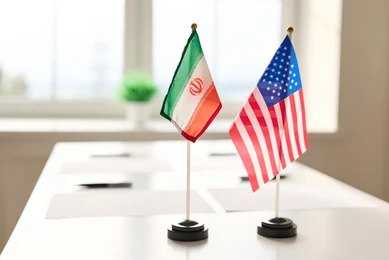
Washington’s new peace deal with Iran looks like a win on paper, but the fine print suggests both parties and the American people may be walking straight into another elite‑crafted mess.
Story Snapshot
- The Trump‑Iran memorandum of understanding gives Iran fast economic relief while kicking core nuclear issues down the road.
- Supporters say U.S. military strikes weakened Iran and forced real concessions, especially on nuclear weapons and shipping lanes.
- Critics warn the deal leaves uranium enrichment and missiles largely untouched while promising sanctions relief Washington may not deliver.
- Both sides see proof that the “deep state” and political class still trade long‑term security for short‑term political calm and lower oil prices.
What Trump’s Iran Peace Deal Actually Promises
President Donald Trump and Iran’s leaders have signed a 14‑point memorandum of understanding that pauses a brutal war and opens a 60‑day window to negotiate a final deal.[19] The agreement orders an immediate end to fighting on every front and lifts the U.S. naval blockade on Iranian ports, reopening the Strait of Hormuz to global shipping.[3][19] It also outlines plans to unfreeze tens of billions in Iranian assets and build a $300 billion reconstruction fund, backed by the United States and regional partners, to repair Iran’s war damage.[3][11][13]
Under the deal, Iran must keep fuel flowing through the Strait of Hormuz and allow commercial ships to pass without fees for at least 60 days, easing pressure on global oil and gas prices.[1][3][8] In return, Washington pledges to lift “all” sanctions tied to United Nations resolutions, nuclear agency rulings, and U.S. laws, and to make frozen Iranian funds fully accessible once the memorandum is implemented.[8][11] Iran repeats that it will not acquire or build nuclear weapons and agrees to down‑blend some enriched uranium under international monitoring, but deeper nuclear questions are delayed to later talks.[8][19]
Why Supporters Call It Tougher Than Obama’s Nuclear Deal
Backers of the agreement argue Trump used force first, then diplomacy, which they say makes this deal stronger than President Barack Obama’s 2015 nuclear accord.[1][21] U.S. airstrikes and other attacks during the war reportedly “significantly degraded” Iran’s ability to launch ballistic missiles, and markets saw oil prices fall to a three‑month low once Iran could again sell crude under the agreement.[5][13] Senator Eric Schmitt and others claim Trump achieved what many thought impossible: weakening Iran’s military and nuclear capacity while forcing Tehran to formally renounce nuclear weapons and open talks on harder issues.[1][2]
Supporters also highlight practical wins that matter to everyday Americans. Keeping the Strait of Hormuz open means fewer shocks at the gas pump and less risk of a global recession caused by disrupted energy flows.[1][12] Ending fighting in Lebanon and building a de‑confliction cell, with help from Pakistan and Qatar, may reduce the chances that clashes between Israel and the Iran‑backed group Hezbollah grow into a wider regional war.[2][4][5] For conservatives tired of “forever wars” and liberals weary of civilian casualties, the short‑term drop in violence feels like overdue relief after a war many experts now call a “war of choice” and a “peace of necessity.”[16]
Why Critics Say Iran Got the Better End of the Deal
Critics from both right and left warn that Iran is getting real money and freedom of movement now, while the United States gets mostly promises and more talks.[8][11] The memorandum does not clearly ban Iran from enriching uranium for civilian use, a long‑time red line for many American negotiators.[8][21] Iran is not yet required in writing to destroy its stockpile of highly enriched uranium, even though this was a key demand pressed by Trump officials before and during the war.[9][21] Important issues like Iran’s ballistic missiles and support for militant groups such as Hezbollah and Hamas are either barely mentioned or punted to future discussions.[2][12][13]
Analysts worry this pattern looks familiar: Washington pays up front in sanctions relief and political cover, while Iran gives limited nuclear steps and keeps most leverage.[8][12] The Atlantic Council notes that the deal “does not appear to resolve” core nuclear and financial questions and may leave the Islamic Republic’s regime intact and even strengthened, now formally engaged by the United States instead of isolated.[12] The Wall Street Journal’s editorial board and Republican lawmakers argue the agreement risks a “strategic setback,” because it lifts the blockade and lets Iran freely sell oil while only promising to talk later about the very nuclear and missile threats that sparked the war.[3][10][13]
How This Fight Feeds Deep State Fears on Both Sides
For many Americans, this deal is not just about Iran; it is about whether the federal government still serves the people or its own insiders. The Conversation’s analysis warns that the United States is making promises on sanctions relief and asset unfreezing that it may not be able to keep, raising doubts about whether the political class is once again signing grand deals it cannot fully enforce.[8] Iran’s negotiators, looking at decades of U.S. treaty withdrawals and broken commitments, treat the memorandum as transactional and temporary, assuming Washington might walk away if political winds shift.[17][23]
Rob Schmitt: "Will we allow the regime to fund Hezbollah, Hamas and the Houthis? This agreement releases the economic pressure on Iran immediately. The strait opens up for all, not just for us." pic.twitter.com/j4l2t9YE9r
— NEWSMAX (@NEWSMAX) June 18, 2026
Conservatives see proof that elites will sacrifice hard‑won military gains for short‑term calm before elections and cheaper energy for Wall Street, while still leaving Hezbollah and other groups protected in the fine print.[3][14][15] Liberals see another case where Washington ignores human rights and long‑term inequality in favor of backroom deals with a repressive regime that deepen the gap between the powerful and ordinary citizens.[2][23] Both sides can look at this agreement and feel that the “deep state” and globalist class turned a bloody war into a rushed peace that may stabilize markets now but leaves the country exposed later, with key nuclear and regional risks still hanging over the American Dream.
Sources:
[1] YouTube – The real reasons Trump is ‘taking hits’ on Iran narrative: Rob Schmitt
[2] Web – High-level U.S.-Iran talks conclude with a road map for peace …
[3] Web – US, Iran agree on ‘roadmap’ towards final deal in Switzerland talks
[4] Web – With Lebanon ceasefire set, Trump envoy heads to Switzerland for …
[5] Web – Negotiations with Iran after Trump’s threat disrupts talks | CNN
[8] Web – US-Iran negotiations in Switzerland yield progress, mediators say
[9] Web – What’s in the US-Iran peace deal? A lot of concessions and empty …
[10] YouTube – US Sen. John Cornyn, other lawmakers criticize peace deal with Iran
[11] Web – WSJ warns potential US-Iran peace deal risks ‘strategic setback’
[12] Web – Trump hits back at critics as Iran peace deal fuels debate … – CNBC
[13] Web – Experts react: The US and Iran just announced an interim peace …
[14] Web – Trump’s Iran Deal: What We Know So Far
[15] YouTube – Catholic Analysis: Trump’s Iran Peace Deal — Will It Bring Lasting …
[16] Web – A good analysis of the peace agreement between Iran and the US …
[17] Web – What is your analysis of the Iran deal that’s taking shape … – …
[19] Web – A History of US-Iranian Relations – Middle East Studies Center
[21] Web – High-wire diplomacy delivered US-Iran deal but hardest stage lies …
[23] Web – Diplomacy just entered its therapy era. Reports claim Iran brought …