
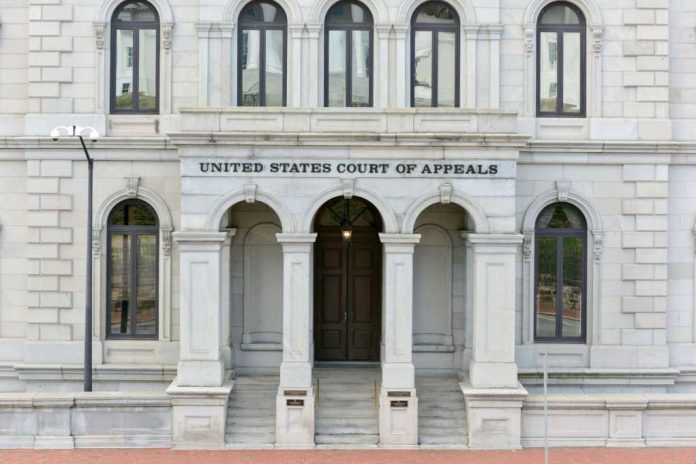
A Biden-appointed California judge has moved to strip Immigration and Customs Enforcement of a key enforcement tool, blocking its ability to arrest illegal immigrants at courthouses and even voiding Trump-era rules nationwide.[1]
Story Snapshot
- A Biden judge in California ruled that Trump-era courthouse arrest policies for illegal immigrants are “arbitrary and capricious” and tossed them nationwide.[1]
- The ruling blocks Immigration and Customs Enforcement from making most civil immigration arrests at immigration courthouses and limits extended detention of detainees.[1]
- The judge said the policies discouraged migrants from showing up to court, citing data on missed hearings and deportation orders.[1][6]
- The order clashes with Trump’s effort to restore tough enforcement and sets up a major fight over judicial power and border security.[1]
Biden Judge Undercuts Trump’s Immigration Enforcement Strategy
U.S. District Judge P. Casey Pitts, a Biden appointee in the Northern District of California, issued a sweeping opinion striking down Trump administration policies that allowed civil immigration arrests at courthouses and expanded short-term detention time limits.[1] He ruled that Immigration and Customs Enforcement and the Executive Office for Immigration Review violated the Administrative Procedure Act by failing to give a “rational explanation” for rolling back earlier limits on courthouse arrests.[1] Pitts not only blocked the rules going forward, he vacated them nationwide, reaching well beyond his own district.[1]
Trump’s Department of Homeland Security had updated policy in 2025 to let Immigration and Customs Enforcement arrest illegal immigrants when they showed up at immigration courts, arguing this was often the only safe way to catch people who ignored other contact.[1] The judge’s decision rejects that enforcement logic and accepts advocates’ claims that these arrests turned court hearings into “traps” for migrants who were at least trying to appear.[7] This approach reflects years of pressure from activist groups that have sued to stop courthouse arrests in states like New York and Massachusetts.[16][18]
Court Says Courthouse Arrests ‘Chill’ Attendance and Violate Procedure
Judge Pitts leaned heavily on the idea that arrests at courthouses scare migrants away from hearings and therefore harm the system.[2] He wrote that noncitizens face a “Hobson’s choice”: show up and risk arrest, or stay away and lose their chance at asylum or other relief.[6] He said Immigration and Customs Enforcement “cannot choose to ignore the ‘costs’” of this chilling effect while counting only the claimed enforcement benefits.[6] Similar arguments have been used in earlier lawsuits where courts halted aggressive courthouse arrest tactics.[12][16]
The opinion points to evidence that courthouse arrests surged after the 2025 policy shift and that a former immigration judge saw a “dramatic decline” in attendance at hearings.[1] Advocates and media outlets hostile to strong enforcement have long highlighted data showing large jumps in courthouse arrests when policy is loosened, such as reports of a seventeen-fold increase in New York under an earlier directive.[17] Pitts used this pattern to say the harms were foreseeable and that the agencies acted in an “arbitrary and capricious” way by not fully confronting that impact.[2][4]
Scope of the Ruling: From California Case to Nationwide Impact
Earlier in the litigation, Judge Pitts had already issued a stay blocking Immigration and Customs Enforcement and immigration court officials from “sweeping” civil arrests at immigration courthouses in the San Francisco Area of Responsibility, which covers Northern and Central California and nearby territories.[2][6] That temporary order was framed as a regional measure while the case moved forward on the merits.[2] Other courts in places like New York and Massachusetts have granted similar regional injunctions in recent years, often limiting arrests at specific immigration court buildings.[12][16]
US judge vacates ICE courthouse arrest policies
A federal judge in California on Tuesday struck down the Trump administration’s policy of making arrests at immigration courts.
In a 71-page ruling, US District Judge P. Casey Pitts concluded that Immigration and Customs… pic.twitter.com/SASsYjl15Z
— The Spot (@Spotnewsth) June 24, 2026
In his new, longer opinion, Pitts went further and vacated the Trump rules nationwide, saying the legal flaw in the policy applied everywhere, not just in his district.[1] That means Immigration and Customs Enforcement must fall back to earlier, more restrictive guidance for courthouse enforcement across the country unless a higher court steps in.[1] The move comes even after the Supreme Court signaled concern about broad nationwide injunctions, setting up a likely clash over the proper reach of a single trial judge’s order.[2]
What This Means for Trump’s Second-Term Border and Interior Crackdown
Trump’s team has tried to restore firm interior enforcement after years of “sanctuary” policies, state roadblocks, and activist lawsuits.[13][19] Courthouse arrests are one of the few tools that let agents detain people who already have hearings scheduled and are often hard to find elsewhere. Immigration and Customs Enforcement’s own guidance has long argued that arrests near courts can be needed when there is a public safety threat and no safe alternative location.[10] By voiding these policies, the California court makes it harder to remove people who ignore the law but still use the courts when it suits them.
The ruling also hits another Trump priority: stopping games with the system. Internal memos reported in 2025 showed Immigration and Customs Enforcement trial lawyers coordinating with deportation officers to dismiss certain removal cases and then arrest illegal border crossers at their next court date for faster removal.[14] Supporters saw this as closing loopholes; critics called it “weaponizing” the courthouse.[18] Now, with this decision, many of those tactics are off the table or tied up in more litigation, even as the border remains under pressure and states struggle with the cost of illegal immigration.
Next Legal and Political Steps for Patriots Watching the Courts
The Justice Department under President Trump is expected to appeal, likely pointing to the Supreme Court’s recent limits on nationwide injunctions and arguing that one district judge should not control policy for all fifty states.[2] Appeals courts will have to decide whether the Administrative Procedure Act truly bars Immigration and Customs Enforcement from changing course unless it accepts activist claims about “chilling effects,” and whether nationwide vacatur is justified. In the meantime, Immigration and Customs Enforcement agents are left with a patchwork of rules that change from state to state.[9][20]
Conservatives who care about border security, the rule of law, and separation of powers will see this as part of a larger pattern. Progressive groups file in friendly courts, label enforcement “cruel,” and lean on technical rulemaking laws to block elected leaders from carrying out the voters’ will.[3][18] This case shows how a Biden-appointed judge can override the Trump administration’s enforcement choices even in a second term. The fight now moves to the appeals courts and, most likely, back to the Supreme Court, where the balance between tough immigration enforcement and judicial activism will be tested again.
Sources:
[1] Web – California-Based Biden Judge Issues Nationwide Block on ICE’s Policy …
[2] Web – Federal Judge Pauses Trump Administration Policy Allowing …
[3] Web – ICE Must Halt Courthouse Arrests in Northern California, Hawaii
[4] Web – Federal Court Halts Trump Administration’s Immigration Courthouse …
[6] Web – REPORT: Judge Bars Most ICE Arrests At Immigration Courts In …
[7] Web – The Brief A federal judge ordered a halt to ICE arrests at Northern …
[9] Web – Judge allows immigrants to challenge ICE courthouse arrests
[10] Web – After ICE Admitted Having No Justification for Arrests at Immigration …
[12] Web – [PDF] ICE Courthouse Arrests in California: Explainer and Legal …
[13] Web – States Push Back Against ICE Courthouse Arrests
[14] Web – ICE Out of Courts – Immigrant Defense Project
[16] Web – ICE issues guidance for civil immigration enforcement in or near …
[17] Web – How ICE Went Rogue: Analysis of the Legal Authorities Governing ICE
[18] Web – ICE’s New Courthouse Arrest Policy Set Them on a Collision Course …
[19] Web – Changing Patterns of Interior Immigration Enforcement in the United …
[20] Web – ICE arrests and detains noncitizens attending immigration-court …