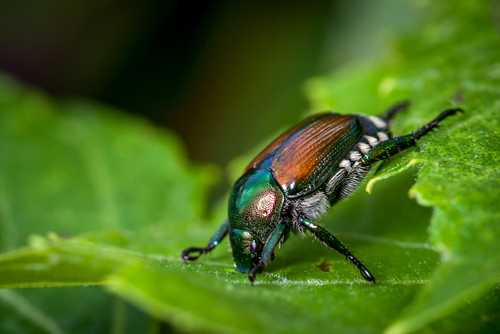
A tiny green beetle from Asia just breached the European Union’s defenses, exposing how fragile our forest protections really are.
Story Snapshot
- Hungary has confirmed the first European Union record of the **emerald ash borer**, a highly destructive Asian beetle.
- Only one insect was caught, but experts warn it could signal a hidden invasion spreading from Ukraine and beyond.
- European projects are racing to deploy new traps, DNA tests, and biological controls, yet past rules on wood packaging have already failed.
- Media headlines shout “devastating,” while slow official responses feed public distrust of the bureaucracies meant to protect forests.
What Hungary Found And Why It Matters
In June 2026, Hungary’s national plant protection office reported catching a single emerald ash borer in a pheromone trap near Beregsurány, close to the border with Ukraine. Laboratory experts used a genetic test called PCR to confirm the beetle’s identity, and Hungary officially declared this the first record of the pest inside the European Union. The insect, native to Asia, is known for killing ash trees by its larvae eating the wood just under the bark, cutting off water and nutrient flow.
Hungarian officials quickly set up a demarcated zone around the site, stretching to the Ukrainian border, and increased trapping and tree inspections in the area. Early field checks found ash trees showing damage that fits emerald ash borer attacks, such as dying branches and bark splits. Even though only one beetle was caught, authorities treated it as a serious threat, because past invasions in Russia and Ukraine showed the species can spread silently for years before anyone notices.
A Beetle With A Track Record Of Wrecking Forests
The emerald ash borer has already killed millions of ash trees in North America and caused sharp declines of European ash in parts of Russia and Ukraine. In those regions, scientists describe large areas of dead and dying ash, with big impacts on forests, city streets, and wildlife that depend on ash trees. Once the beetle settles in, it is very hard to remove, because adults can fly and larvae hide inside the wood where sprays do not reach. That history explains why experts label it a major biosecurity threat to European forests.
Researchers note that the beetle spread west from Moscow at speeds of up to 40 kilometers per year and reached eastern Ukraine years before the European Union detection. In Ukraine, invasion signs appeared two to three years before officials confirmed the pest, showing how long it can stay under the radar. This pattern worries people in border regions like eastern Hungary and Slovakia, where ash trees line roads, rivers, and villages, and where forest managers often lack the money and staff for constant checks. For citizens who already doubt government competence, another “late” detection looks like one more failure to act in time.
Europe’s High-Tech Response – And Its Limits
Before this detection, European agencies were already preparing for emerald ash borer’s arrival by building networks of experts and new tools. The European Food Safety Authority developed risk-based survey guidelines that tell countries to focus traps and inspections in high-risk areas such as borders, transport hubs, and major trade routes. A Europe-wide project called EMERALD created advanced detection methods, including new lure traps and a portable DNA test known as loop-mediated isothermal amplification for quick field checks in forests and ports.
Other scientists worked on pre-emptive biological control, identifying three parasitoid wasp species that could help keep beetle numbers down in Europe if released carefully. These efforts show that some experts are thinking ahead and trying to give front-line foresters better tools. Yet broader research on invasive pests has found that international rules on wood packaging, known as ISPM 15, did not stop borers from moving in shipping materials. That failure adds to public fear that global trade rules are written to please big business more than to protect local communities and forests.
Alarmist Headlines, Slow Data, And Growing Distrust
News outlets quickly framed the Hungary find as a “devastating” Asian beetle entering the European Union, echoing dramatic language used for North American outbreaks. Online, professionals in tree care and forestry debated whether one confirmed beetle really deserves such alarm, and some questioned claims that this was truly the first appearance. Their skepticism did not present hard evidence against the lab tests, but it did show low trust in official statements and frustration with how long it takes for peer-reviewed studies to appear.
3/4
Slovakia informed ministers about the detection of emerald ash borer near the 🇸🇰-🇭🇺 border & stressed the need for coordinated EU response.Together with Hungary and other MS, we called for joint action to prevent the spread of this serious threat to Europe's #forests. pic.twitter.com/p2j2PdLY4r
— Slovakia in the EU (@SLOVAKIAinEU) July 13, 2026
At the same time, forestry experts point out that their sector runs on thin profit margins and often lacks the funding that agriculture enjoys for fast innovation and data sharing. A European field guide on invasive species stresses the need for rapid reporting, expert verification, and quick response plans, but these steps depend on agencies that many citizens now see as slow, secretive, or captured by elites. For people on both the left and the right who feel the system favors trade and bureaucracy over local land and livelihoods, a tiny beetle becoming a continent-wide threat feels like one more sign that those in charge are reactive, not truly protective.
Sources:
insiderpaper.com, tridge.com, en.wikipedia.org, reddit.com, agroscope.admin.ch, slu.se, cordis.europa.eu, academic.oup.com, aphis.usda.gov, phys.org, ecophero.com, eppo.int, ucanr.edu