
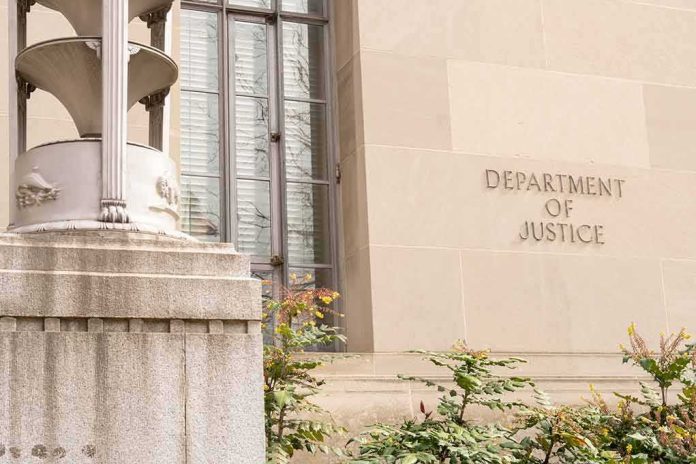
The Justice Department charged 16 people in seven states with alleged illegal voting and related election crimes, signaling a tougher federal push before November.
Story Snapshot
- Justice Department announced 16 defendants tied to illegal voting and related crimes
- Allegations include noncitizens voting and false citizenship claims to register
- Texas prosecutors also charged seven noncitizens in a parallel action
- Officials stress defendants are presumed innocent; data shows such cases are rare
What Federal Prosecutors Announced
The Department of Justice said on Sept. 18–19 that 16 people face charges tied to illegal voting, unlawful registration, and related fraud schemes across several states. The cases include claims of noncitizens voting in federal elections and false statements about citizenship on voter forms. The department framed the effort as a nationwide enforcement push ahead of the general election. Prosecutors also reminded the public that every defendant is presumed innocent until proven guilty in court.
Separate filings in Texas show a similar pattern. The United States Attorney for the Northern District of Texas reported charges against seven noncitizens for unlawful voting or false claims of United States citizenship. Six indictments came on Sept. 10, with one complaint filed later. The Texas office repeated the standard caution that an indictment or complaint is only an allegation, and that guilt must be proven beyond a reasonable doubt at trial.
What The Charges Actually Cover
Justice Department materials list a mix of offenses. They include voting by a person who is not a United States citizen in a federal election, making false claims of citizenship to register or vote, and linked crimes such as document or wire fraud tied to those acts. Federal law has long barred noncitizen voting in federal races, and lying on a voter registration form is a felony in many places. The department emphasized that each case will proceed in federal court on its facts.
State officials in Michigan offered useful context after a 2024 noncitizen voting case there. They said noncitizen voting is very rare and that broad investigations have not shown large numbers of noncitizens registering. They also reminded voters that it is illegal to lie about citizenship on any voting forms. That statement echoes a wider view among many election administrators who track cases and find few proven violations relative to the size of the electorate.
How This Fits The Bigger Picture
National data helps frame today’s news. A Reuters analysis found that federal prosecutors charged only 129 people under the “voting by aliens” law over about three decades. Most of those cases came during years when enforcement efforts were most active, and many defendants were legal residents who said they misunderstood the rules. The low case count does not settle every debate, but it shows these prosecutions are uncommon at the national level.
DOJ Charges 16 in Multi-State Election Fraud Scheme
The Department of Justice announced charges against 16 individuals for illegal voting and related election crimes across multiple states on Friday.
Read: https://t.co/bqLkLrceCU pic.twitter.com/oUGYoP3tHT
— Real Truth Media (@RealTruth) September 20, 2026
Both sides of the aisle share a core worry: a system that feels too loose for some and too punitive for others. For conservatives, illegal voting claims fuel fears that weak rules cancel out their votes. For liberals, a small number of cases can be used to justify heavy crackdowns that might scare lawful voters. The Justice Department’s move shows the federal government can act, but it also raises the perennial question: Are leaders solving real problems or staging wins while bigger failures go untouched?
Why It Matters To Voters
Election rules only work if people believe they are enforced fairly and consistently. Clear charges against specific people can deter fraud and show the law has teeth. Transparent outcomes can also calm fears by proving most votes are lawful. The next test is follow-through. Courts must weigh the facts and deliver verdicts. Voters should expect regular updates, clean data, and honest communication from officials who serve the public—without spin, delay, or excuses.
Sources:
nypost.com, noticias.foxnews.com, justice.gov, forth.news