

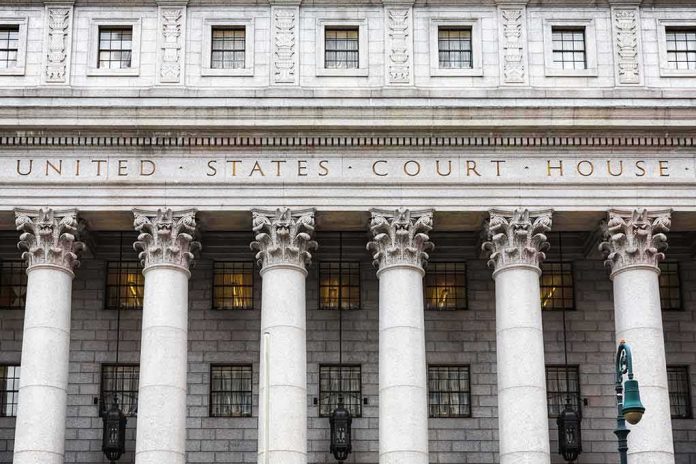
A 15-year-old Washington wrestler says she was sexually assaulted mid-match by a transgender opponent, and now she’s asking the Supreme Court to make sure it can never happen to her again.
Story Snapshot
- Kallie Keeler, a Rogers High School student, says a transgender opponent sexually assaulted her during a December 6, 2025 state wrestling tournament.
- Prosecutors declined to file criminal charges, but Keeler’s federal civil lawsuit names the WIAA, state education officials, and her school district.
- Her Supreme Court emergency request asks to wrestle only girls, or at least get advance notice before facing a male opponent.
- The WIAA says its policy follows Washington law allowing athletes to compete based on gender identity, not sex.
- A June Supreme Court ruling upholding sex-separated school sports in other states may boost her legal argument.
What Happened On The Mat
Kallie Keeler was 15 when she wrestled in a state-sponsored tournament on December 6, 2025. According to The Washington Times, she signaled frantically to her mother during the match and mouthed that her opponent’s fingers were inside her. That moment became the center of a federal lawsuit now headed toward the nation’s highest court.
Local prosecutors reviewed the incident but decided not to charge the transgender athlete with sexual assault. Civil court works differently than criminal court. A lack of charges doesn’t erase the allegation, but it does mean the facts remain legally unsettled while Keeler’s lawsuit moves forward.
The Lawsuit’s Core Argument
Keeler’s federal complaint names the Washington Interscholastic Activities Association (WIAA), the state’s Office of Superintendent of Public Instruction, and the Puyallup School District. It accuses them of “deliberate indifference to a known risk of sexual assault”. Her lawyers argue that forcing a girl to either wrestle male opponents or skip her season entirely violates Title IX, the federal law banning sex discrimination in school programs.
The emergency Supreme Court filing asks for two things. First, let Keeler compete only against girls. Second, if that’s denied, require schools to notify parents before a daughter faces a male athlete in contact sports. The Ninth Circuit Court of Appeals already rejected a broader notice request, calling it too sweeping. That ruling doesn’t kill her Title IX theory, but it shows courts are still working out exactly what relief fits the claim.
A Disputed Timeline Of Who Knew What
Keeler’s attorneys say the school waited 55 days before informing its Title IX coordinator. The district disputes that, saying the coordinator wasn’t told until January 30, 2026, because no formal Title IX complaint had been filed earlier. This gap matters. If school officials sat on a known problem, that strengthens the “deliberate indifference” claim. If no formal complaint existed yet, the delay looks more like a reporting-process issue than a cover-up.
The WIAA’s Defense
The WIAA says it’s simply following Washington law, which lets student-athletes compete based on gender identity rather than sex assigned at birth. Its policy, first adopted in 2007, states that athletes “will participate in programs consistent with their gender identity or the gender most consistently expressed”. The Washington LGBTQ Commission backs this approach, arguing sports should be a “level playing field” open to transgender and gender-diverse athletes on teams matching their identity.
The WIAA also says it would change its rules if state law changes, framing its current policy as compliance rather than independent choice. That argument gives the organization some cover, but it also means the real fight is really about Washington’s own statute, not just one school district’s handling of one incident.
Why This Case Landed At The Supreme Court
Timing matters here. On June 30, the Supreme Court ruled that West Virginia and Idaho could legally separate school sports teams by biological sex, rejecting arguments that Title IX bars such rules. That decision, covering the cases West Virginia v. B.P.J. and Little v. Hecox, gives Keeler’s legal team a fresh precedent to point to. Her lawyers argue the same logic should extend to Washington’s policy, which currently allows the opposite approach.
Alliance Defending Freedom, the advocacy group representing Keeler, has said openly that this case could set broader Title IX precedent beyond her individual situation. That strategic goal doesn’t make the underlying assault allegation less serious, but it does mean both sides understand this fight is bigger than one tournament.
What Remains Unresolved
No criminal charges, no public court exhibits, and no independent tournament video have surfaced in available reporting. The core assault allegation rests on witness accounts and the civil complaint itself, not an adjudicated finding. Whether the Supreme Court takes up Keeler’s emergency request, and how it balances her safety claims against Washington’s inclusion policy, will likely shape how far similar lawsuits can go nationwide.
Sources:
zerohedge.com, washingtonexaminer.com, foxnews.com, washingtontimes.com, applevalleynewsnow.com