

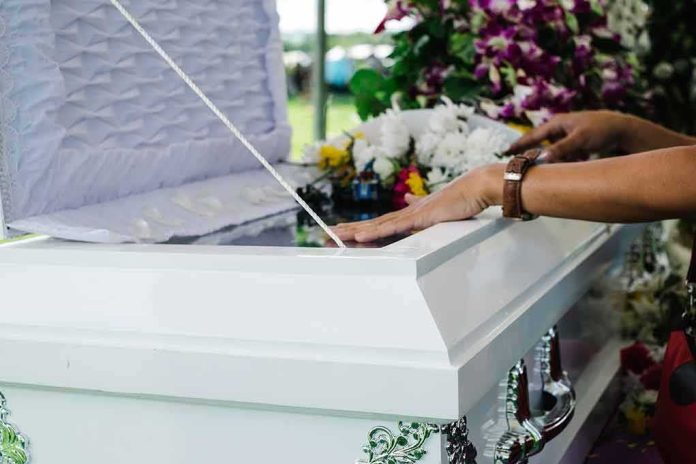
A 15-year-old Guatemalan girl reportedly sat up and spoke inside her coffin during her wake, jolting mourners and triggering an official inquiry into how she was presumed dead without a doctor’s exam.
Story Snapshot
- Witness video reportedly shows the teen moving and speaking inside the coffin during the wake.
- Family members say no doctor confirmed death and no certificate was issued.
- Authorities in Guatemala opened an investigation and ordered medical evaluations.
- The case highlights dangers when death is presumed without medical assessment.
What Happened At The Wake
Family and neighbors gathered in El Jocote, Guatemala, to mourn 15-year-old Yuleidy Ixcotoyac after relatives believed she had died following a sudden health crisis. About eight hours into the wake, her mother, Lesvia Ríos, leaned over the coffin and saw movement. Video shared by outlets shows the teen opening her eyes, sitting up, and speaking as mourners cried out and helped her out of the casket. Reports say she later returned home to recover with her family.
Relatives say the teen lost consciousness while her father was driving her to seek help. He pulled over, checked for signs of life, and concluded she had died. Several accounts say no doctor examined her before the wake began, and no death certificate existed. Outlets report that the father later stressed he believed she was not breathing, but he also confirmed there was no medical declaration by a clinician.
Officials Step In After Viral Footage
After the video drew global attention, Guatemalan authorities began asking how a teenager ended up in a coffin without a medical declaration of death. Reports say the country’s Public Ministry opened an investigation, and a child protection office requested full medical evaluations under a court order. The aim is to document the teen’s condition and review the steps that led to the presumed death and the wake that followed.
Published reporting does not describe a hospital pronouncement or a signed certificate, which underscores a key point: the event centers on a mistaken presumption of death, not a revival from confirmed clinical death. Health experts note rare cases where people appear unresponsive yet later recover. Those events often occur in clinical settings and may involve complex physiology, but this case is about the lack of formal medical assessment before funeral rituals.
Why This Resonates Beyond One Family
Families under stress sometimes face hard choices with limited access to care. When money is tight, clinics are distant, or trust in institutions is low, people may rely on their own judgment. That can turn grief into danger. Here, relatives say they did what they thought was right. But without a doctor’s exam, a teen who needed urgent help ended up in a coffin. That outcome alarmed people across the political spectrum for a basic reason: systems are supposed to prevent this.
Video can race across social media faster than facts. Even so, several outlets described the same core scene from the wake and quoted the mother’s firsthand account. The most important confirmed thread remains simple: a teenager presumed dead was moving and speaking inside a coffin, and authorities are now reviewing how that happened. The lesson is not partisan. It is practical and human: verify life and death with a trained professional, every time.
Sources:
news.com.au, greekreporter.com, wionews.com, perthnow.com.au, infobae.com, lavozdeguate.com, mirror.co.uk, misinforeview.hks.harvard.edu