

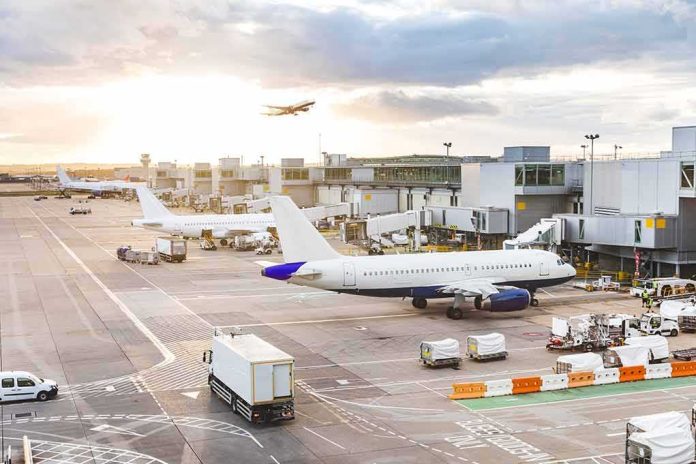
Smoke from a passenger’s device forced an IndiGo flight to divert and land safely in Hyderabad, underscoring the rising risk of lithium batteries on planes.
Story Snapshot
- IndiGo confirmed flight 6E 6115 diverted to Hyderabad after smoke from a device.
- The Airbus A321neo was operating Delhi to Chennai; no injuries were reported.
- Reports point to a power bank in an overhead bin as the likely source.
- Crew action and a precautionary diversion aligned with safety protocols.
What IndiGo Confirmed About The Mid-Flight Incident
IndiGo said flight 6E 6115 from Delhi to Chennai diverted on October 11 after smoke came from a passenger’s personal device. The airline said crew acted fast, brought the situation under control, and the pilots landed at Rajiv Gandhi International Airport in Hyderabad. IndiGo added that an alternate aircraft took passengers onward to Chennai. The statement did not name the device type or confirm a fire, but it detailed the diversion and safe landing.
Independent reports matched key parts of IndiGo’s account. Coverage said the aircraft landed safely in Hyderabad and reported no injuries. NDTV identified the aircraft as an Airbus A321neo on the same Delhi to Chennai route. These details align with the airline’s description of events and the operational choice to switch aircraft before completing the journey to Chennai.
Why Lithium Batteries Keep Forcing Diversions
Airlines treat any smoke or heat from lithium batteries as a serious risk. United States Federal Aviation Administration guidance tells crews to act at once and isolate the device. It also tells passengers to keep power banks and spare batteries in the cabin, not in checked bags, so crews can respond quickly if a battery fails. These rules exist because damaged or faulty cells can overheat and ignite.
The trend line is moving in the wrong direction. Industry reporting shows more smoke and heat events linked to lithium batteries across passenger and cargo flights. In the first half of 2025, the Federal Aviation Administration counted 38 such cases. Reported totals in 2024 reached 89, which was about ten times more than a decade earlier. These numbers show growing exposure even if most flights remain uneventful.
What Likely Happened In The Overhead Bin
Local coverage described a power bank in an overhead luggage compartment as the source of smoke or fire. That detail fits many past events where spare batteries or power banks overheated. Stowing such devices in an overhead bin can slow detection and access. That is why safety bulletins urge passengers to keep batteries where they can see and feel heat quickly and alert the crew without delay.
Panic breaks out aboard a passenger plane in India after a power bank reportedly catches fire in an overhead compartment mid-flight.
Passengers shout "Fire!" as flight attendants rush to extinguish the flames, with video showing people scrambling to help inside the crowded… pic.twitter.com/afKHerF7b2
— Fox News (@FoxNews) October 14, 2026
IndiGo’s public statement stayed careful about root cause and exact crew steps. Some outlets referenced flames and fire extinguisher use, but the airline only said the crew responded and controlled the situation. That caution is common before investigators review the device and logs. What is clear is the protocol chain: detect smoke, notify the cockpit, contain the device, and divert if there is any doubt about continuing safely.
What Travelers Should Do Before Their Next Flight
Passengers can cut the risk by packing smart and staying alert. Keep power banks and spare batteries in carry-on bags, not checked luggage. Do not crush, bend, or expose them to moisture. If a device feels hot, swells, smokes, or smells odd, tell the crew at once. Crew training covers cooling, isolating, and, if needed, using extinguishers and containment bags. Quick reporting helps the crew act before a small issue becomes a fire.
Why This Matters Beyond One Flight
This incident shows how one small device can disrupt an entire flight plan. It also shows a system that still works: trained crews, clear rules, and decisive diversions. People across the political spectrum worry about large systems failing them. Air travel depends on trust that basics work under stress. When airlines act fast and communicate clearly, they build that trust, even when a faulty battery triggers a scare.
Sources:
tbsnews.net, punekarnews.in, rsoe-edis.org, yahoo.com, independent.co.uk, bbc.com, faa.gov