

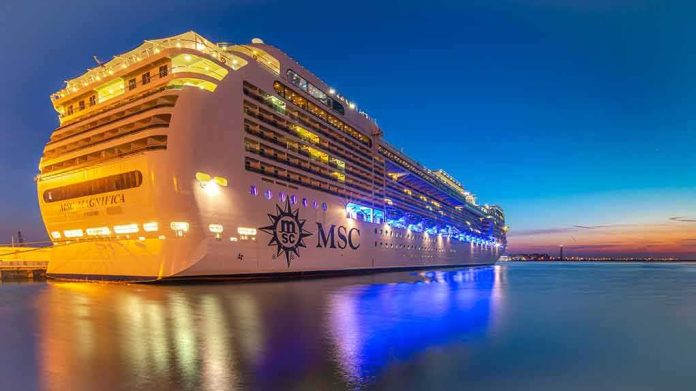
A suspected homicide on the MSC Seascape forced the cruise ship back to Galveston, and a person is now in custody, according to federal authorities.
Story Snapshot
- The Federal Bureau of Investigation (FBI) said it is investigating a suspected homicide aboard MSC Seascape.
- Agents took a suspect into custody after the ship returned to Galveston; names were withheld.
- The Galveston County medical examiner said the victim was a woman and scheduled an autopsy.
- MSC Cruises said authorities instructed the ship to return to port and resumed the voyage after the response.
What Authorities Confirmed About the Shipboard Death
FBI Houston said agents responded to a suspected homicide aboard the MSC Seascape after it docked in Galveston on November 9, 2026. ABC News reported that a suspect was taken into custody tied to the alleged killing, though the FBI did not release a name while the investigation continues. The Galveston County medical examiner said the deceased was a woman and set an autopsy for Tuesday to determine cause and manner of death. Officials said the case remains open.
MSC Cruises stated it reported a guest incident and was instructed by authorities to return to the Port of Galveston. The company said it was cooperating with investigators and that the ship later resumed its planned itinerary after the response. The FBI said a Maritime Liaison Agent from its Texas City Resident Agency coordinated with the United States Coast Guard, the Port of Galveston Police Department, Customs and Border Protection, and the cruise line.
How Shipboard Cases Work Under United States Law
Serious crimes on cruise ships often fall under the special maritime jurisdiction of the United States. The Cruise Vessel Security and Safety Act requires cruise lines to report homicides, suspicious deaths, kidnappings, serious assaults, and certain sexual offenses to the FBI and the United States Coast Guard when jurisdiction applies. The FBI explains that it leads investigations of those crimes and works with partners across agencies and ports to gather evidence and interview witnesses. These steps guide the early hours of a case at sea.
The Government Accountability Office has reported that the FBI and the Coast Guard have implemented the law’s reporting rules and publish some data when cases are no longer under investigation. Those reports show that suspected homicides on cruise ships are uncommon relative to the number of voyages, but direct crime-rate comparisons are hard because data sets differ across agencies and time. That is why early language often uses “suspected” until medical findings and charges are complete.
Why the Investigation’s Pace and Privacy Measures Matter
FBI statements used the term “suspected homicide,” which signals an investigative label, not a final medical or court finding. The medical examiner had not yet released cause or manner of death when the ship returned, and the FBI withheld identities while notifying next of kin. Those steps protect the process and the family, but they also mean the public hears fewer details at first. One clear fact remains: a woman died aboard, and a person is in custody as agents work the case.
48-Year-Old Texas Man Arrested After Suspected Homicide Aboard MSC Seascape. https://t.co/P5rKBBHsYU #cruise #cruises #cruisenews #travelnews
— Cruise Hive (@CruiseHive) November 10, 2026
The episode also shows how several agencies must move fast when a ship turns around for a serious incident. The Coast Guard, port police, federal agents, and company staff must secure scenes, collect camera footage, and log access records. That coordination helps build a clean record for prosecutors if charges follow. It also helps rule out wrong leads. For passengers, it explains why plans change quickly and why updates stay short while evidence is preserved.
Sources:
abc13.com, edition.cnn.com, nbcnews.com, rmb.reuters.com, abc7chicago.com, abc7.com, people.com, gao.gov, congress.gov