
Kimberly Guilfoyle told officials the explosive texts were artificial intelligence fakes even as major outlets reported they had verified the messages’ authenticity.
Story Snapshot
- Guilfoyle, through her lawyer, disputed the authenticity of texts shared by donor Eric Deters.
- News reports say The Wall Street Journal verified the donor’s messages and cited a July 3, 2025 exchange.
- Deters says the texts show a $100,000 request tied to access to senior officials; he gave reporters a PDF of messages.
- A State Department watchdog is looking into the allegations, raising stakes for both sides.
What sparked the clash over the messages
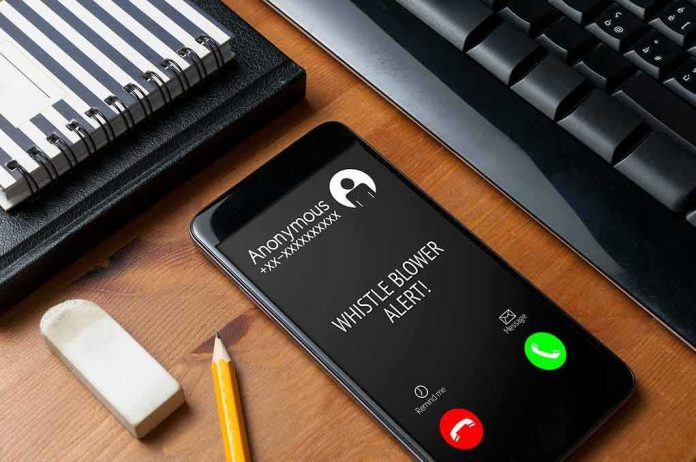
Eric Deters, a Republican donor, shared texts and Signal messages that he says came from Kimberly Guilfoyle in early July 2025. He claims she asked him to cover $100,000 and offered access to senior administration officials in return. He provided a PDF of the conversations to reporters. He says the exchanges occurred days before her Senate confirmation hearing, giving the messages a tight timeline and clear context for investigators to review.
Guilfoyle’s camp rejected the messages’ authenticity. Her attorney, Jesse Binnall, told reporters she disputed the texts and, according to one account, said they were artificial intelligence fabrications. Reports do not cite any named forensic expert or device-level analysis from her side. That leaves her claim anchored in a general denial rather than specific technical proof, a gap that often weakens public confidence in an AI-defense narrative.
What outside reporting says was in the texts
Multiple outlets described a July 3, 2025 message in which Guilfoyle allegedly pressed Deters to finish the payment that day. The reports say the exchange included instructions to wire money to American Express so “it won’t show up anywhere,” which, if accurate, points to an effort to avoid standard disclosure trails. The Wall Street Journal reportedly reviewed a large set of related emails and texts, not just a single screenshot, adding weight to its review.
Several reports say The Wall Street Journal verified the donor’s text messages. Separate accounts say White House officials were told the messages were authentic. Those claims do not reveal the exact methods used, and the public has not seen a full forensic record. Even so, early press verification can shape the narrative, especially when paired with a specific date, quoted language, and a related document like a payment instruction PDF.
Why the evidence fight matters in 2026
Digital messaging is simple to copy and easy to edit. Artificial intelligence makes fake content more convincing. Courts and investigators now ask for device-level data, full-thread exports, and chain-of-custody details, not just screenshots. Without that, both truth and lies can look the same. That risk is real, but it does not prove any one item is fake. Authentication still comes down to devices, metadata, and sworn records, not vibes or headlines.
The State Department watchdog review adds urgency because it signals official scrutiny beyond partisan media. If investigators obtain native Signal databases, original phones, and the alleged American Express document, they can test timestamps, hashes, and creation data. That work could confirm or debunk the messages. Right now, the public record rests on a donor’s file, media verification claims, and a legal denial without named technical backing.
How this feeds a deeper distrust of Washington
People on the right see this as another sign of backroom deals and pay-to-play politics. People on the left see it as proof that powerful insiders trade access while families struggle. Both sides worry that elites use money and connections while regular Americans get lectures about rules. When a high-profile figure answers detailed texts with a broad “AI did it” claim, without evidence, it can feel like the system is built to dodge accountability.
If the texts are real, they point to a culture where access is for sale. If they are fake, they show how anyone can be framed in the age of artificial intelligence. Either outcome shows a government and media environment that too often asks the public to “trust us” without opening the books. The surest fix is sunlight: release device data under oath, authenticate the payment file, and let the facts settle the fight, not the spin.
Sources:
wsj.com, yahoo.com, cbsnews.com, independent.co.uk, nbcnews.com, thehill.com, abcnews.com, people.com