

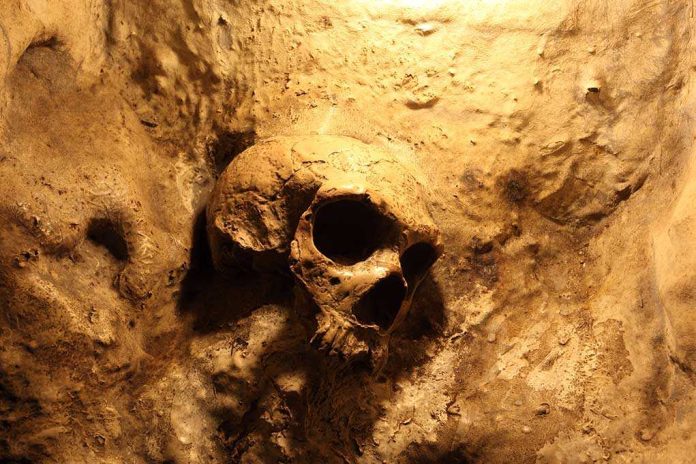
Fresh forensic work on 5,000-year-old skulls points to lethal blows among royal attendants in Egypt’s first dynasty.
Story Snapshot
- Modern analysis found likely fatal head injuries in 18 of 46 skulls tied to early royal tombs.
- Patterns of cuts and fractures match deliberate violence, not simple damage after burial.
- The graves ringed the tombs of first-dynasty rulers, long linked to retainer burials.
- Scholars still debate causes of death for those without visible skull trauma.
What Researchers Found In The Abydos Skulls
Bioarchaeologist Roselyn Campbell reexamined 46 skulls from graves placed around early royal tombs at Abydos. Eighteen showed injuries that could kill, including linear fractures, a penetrating wound to the side of the head, and a chop injury near an eye. These features point to sharp or blunt force near the time of death. They also line up with long-held ideas that some court members were buried to serve rulers in the afterlife.
The skulls came from subsidiary graves near tombs of early kings and elites, including Djer, Djet, and Meretneith. Early excavators had noted massed grave rows and suspected retainer sacrifice. The new trauma evidence adds physical support to that view. The pattern is not random damage from soil or time. It shows different kinds of violent force on different people, which is hard to explain as one natural process.
How Strong Is The Case For Sacrifice?
The case rests on two pillars: location and injury. The people were buried beside rulers, and many skulls carry lethal trauma. That combination pushes the interpretation toward organized killings tied to royal death. But the sample is small and old, and not every skull shows trauma. That means the study strengthens the case but does not prove that all attendants were killed for the burial.
Some experts argue that a number of attendants may have died naturally and were reburied near the king over time. Others suggest that non-skeletal methods, like asphyxiation or poisoning, could explain deaths without head injuries. The new results do not erase those options. They do, however, narrow the debate by adding clear signs of perimortem violence in many cases.
Why This Matters Beyond Ancient History
The first dynasty sits at the birth of the Egyptian state. If early rulers used human sacrifice to project power, that says something hard about how order began. It shows a system willing to trade lives for ritual and image. Modern readers see echoes today when elites shield their interests, even as regular people carry the costs. Different eras, same lesson: concentrated power can push past basic fairness when no one can say no.
The study also shows how careful science can change a long debate. Earlier reports said there was little sign of trauma. New tools and a fresh look found what past eyes missed. That is a useful civic reminder. Institutions often claim “case closed,” but better data can reopen the file. When leaders or agencies say “trust us,” the honest answer is “show us,” then let open methods test the claim.
What We Still Do Not Know And What Comes Next
Key gaps remain. The study sample covers 46 skulls from a much larger burial field, and old digs did not keep perfect records. The team did not publish a full biomechanical match to a single weapon. No known first-dynasty text states plainly that attendants were killed for the king. Future work could share full scans, map fractures in detail, and test whether one tool or method repeats across victims.
Researchers could also run DNA and isotope checks to learn who these people were, compare trauma by tomb and grave row, and look for sealing patterns that show one-time events versus slow reburials. Even if not every person was sacrificed, the current findings make it harder to deny that many died by human hands near the time of burial. That moves the discussion from “if” toward “how and how often”.
How To Read Sensational Headlines
Media outlets rushed to say “human sacrifice,” which grabs clicks. The data are strong but not total. Eighteen of 46 skulls show likely fatal trauma. The rest are unclear. That nuance matters. A fair read is that organized killing of some attendants is now much more likely, while the full scale and methods remain open to study. Good history needs careful claims and clear limits, not all-caps certainty.
For readers worried about power without accountability, this story lands close to home. The past warns that grand projects can hide real harm to real people. Our job is to ask hard questions, demand evidence, and resist any call to look away—whether the altar is an ancient tomb or a modern podium.
Sources:
phys.org, smithsonianmag.com, sciencealert.com