

Trump says Israel and Hezbollah agreed to pause attacks for three weeks, a potential breakthrough that could spare American allies and deter Iran’s proxies from dragging the region into wider war.
Story Highlights
- Trump announced a three-week extension of a ceasefire between Israel and Lebanon, indicating no firing during the pause [1][2].
- The President described the move as a concrete extension to create space for longer-term talks [1].
- Regional reporting confirms claims of de-escalation signals and scaled-back Israeli operations amid diplomacy [3][7].
- Skeptics note ambiguity about Hezbollah’s formal assent and enforcement, keeping risks alive [3].
Trump’s Announcement Of A Three-Week Ceasefire Extension
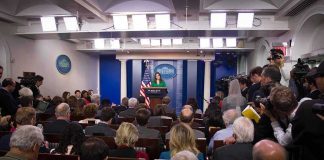
President Donald Trump told reporters the parties had agreed to an additional three weeks of no firing, characterizing the step as an extension of an existing ceasefire between Israel and Lebanon. Trump framed it as a practical window to advance a longer-term arrangement and reduce cross-border strikes, saying, in essence, “no more firing” during the period. The remarks, delivered at the White House, underscore the administration’s claim that pressure and direct leader-to-leader calls are generating immediate de-escalation dividends [1][2].
The administration’s framing aims to deliver clarity that the pause is not an aspirational idea but an actionable extension. By placing a three-week timeline on the halt, Trump presented a measurable standard against which progress and compliance can be judged. For conservative readers who value peace through strength, this approach signals accountability: either violence subsides, or the parties responsible show their hand. The President’s comments explicitly linked the pause to ongoing diplomatic work on a more durable solution [1].
Verifying The De-Escalation Claims And What Is Known
Independent coverage signaled broader moves toward de-escalation. Reporting noted United States and Israeli indications of scaled-back operations, tied to Trump’s outreach to Israel’s leadership and a wider effort to reduce border clashes while talks proceed. Energy and regional outlets echoed that Israel signaled adjustments as Washington sought to keep the lid on escalation, validating key aspects of the administration’s account while leaving some operational details undisclosed, as is typical in real-time conflict diplomacy [3][7].
At the same time, questions remain about Hezbollah’s explicit, public assent and the mechanisms ensuring compliance. Analysis highlighted the familiar pattern in announcement-driven ceasefire diplomacy: government leaders publicize a pause to shape momentum while nonstate actors keep language flexible to avoid appearing to concede. That ambiguity does not nullify the pause but does caution observers to watch for violations and proof of mutual enforcement rather than rely solely on public statements [3].
Why The Pause Matters To U.S. Interests And Conservative Priorities
A verifiable halt to cross-border fire serves core American interests by stabilizing an allied border, reducing risks to U.S. personnel and assets in the region, and constraining Iranian proxy leverage. For readers concerned about endless wars and taxpayer-funded chaos, a time-bound pause that deters escalation without deploying American troops aligns with limited-government prudence and strength-based deterrence. The approach demands results, not press releases, and ties goodwill to quiet borders and fewer rockets—metrics Americans can easily evaluate [1][3][7].
JUST IN: President Trump had a call with the Israeli PM, and no more troops will be going to Israel.
Hezbollah and Israel have exchanged cross-border attacks for months. A sustained halt to hostilities from all sides could help reduce tensions and create an opportunity for a… pic.twitter.com/l3FpCrvaQF
— Donald J Trump Posts TruthSocial (@TruthTrumpPost) June 1, 2026
Conservatives should also weigh the enforcement challenge. If Hezbollah or allied militias test the pause, Washington and Jerusalem must respond in ways that punish violations without rewarding propaganda. That means clear red lines, rapid attribution, and targeted consequences calibrated to restore deterrence. The administration’s credibility hinges on linking this diplomatic breathing space to concrete outcomes: fewer attacks on Israel, reduced risk to civilians, and forward movement toward conditions that degrade Iran-backed terror networks while preserving Israel’s right to self-defense [3][7].
What To Watch Next: Compliance, Messaging, And End-State
First, monitor whether cross-border rocket and drone launches actually stop for the full three weeks. Second, watch for matching statements or conduct from Hezbollah’s political channels that tacitly confirm restraint, even without formal sign-off. Third, look for incremental steps that turn a pause into leverage: stricter weapons-transfer interdictions, stronger international backing for Israel’s defensive actions if the pause is breached, and clearer pathways to isolate Iran’s proxies financially and politically—all steps consistent with peace through strength [3][7].
Sources:
[1] Web – Trump Says Israel and Hezbollah Have Agreed to Dial Back Fighting
[2] YouTube – Trump Says Israel-Lebanon Ceasefire Extended Three Weeks
[3] YouTube – Trump says Lebanon and Israel agree to extend Israel-Hezbollah …
[7] Web – Trump says no Israeli troops will go to Beirut in call with Netanyahu …