A former guerrilla leader turned president vows to grab his rifle again, staring down the world’s mightiest military power over sovereignty and survival.
Story Snapshot
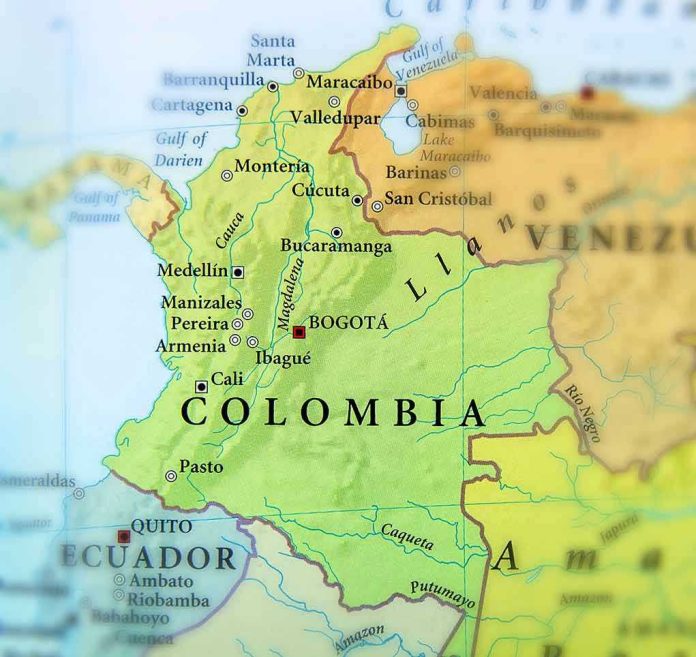
- Colombian President Gustavo Petro, ex-M-19 guerrilla, declares he’ll “take up arms” against U.S. threats from President Trump.
- Statement follows U.S. Delta Force capture of Venezuelan leader Nicolás Maduro in Caracas on January 3-4, 2026.
- Trump’s insults label Petro a “sick man who likes making cocaine,” amid prior sanctions and drug ally status revocation.
- Petro warns U.S. bombings would radicalize peasants into guerrillas, unleashing “the popular jaguar.”
- Tensions signal U.S. shift to unilateral Latin American interventions, eyeing 2026 Colombian elections.
Timeline of Explosive Confrontation
U.S. Delta Force raided Caracas over the January 3-4 weekend, capturing Venezuelan President Nicolás Maduro. Trump immediately targeted Colombia’s Gustavo Petro with insults, warning him to “watch his ass” and accusing him of cocaine production for America. Colombia lost its U.S. drug-war ally certification earlier. Trump imposed financial sanctions on Petro’s family without evidence. These actions built months of harsh rhetoric since Trump’s 2025 White House return.
Petro responded on January 5 via X, swearing he renounced weapons in 1989 but would arm for the homeland. His words echo his M-19 past, where he fought as an urban guerrilla before disarming in a peace deal. This history lends gravity; Petro positions as sovereignty defender against perceived invasion threats.
Petro’s Defiant Warnings Analyzed
Petro cautioned U.S. forces: bombing without intelligence kills children and turns peasants into mountain guerrillas. He predicted thousands radicalizing if rural areas suffer indiscriminate strikes. Counterinsurgency facts back this; civilian deaths historically fuel insurgencies in Colombia’s terrain. Petro invoked “the popular jaguar”—mass resistance if leaders like Maduro face detention by admired figures.
His rhetoric stays defensive, stressing anti-narcotics policy limits but rejecting military overreach. Facts align: U.S. naval forces, including carriers, linger in the Caribbean post-raid. Trump threatens more attacks, escalating brinkmanship. Petro’s stance rallies nationalists, but invites retaliation amid U.S. economic leverage.
Stakeholders and Power Plays
Trump pursues Latin American dominance, securing Venezuelan oil and combating drugs—or so stated. Ties to Colombia’s right-wing opposition aim at 2026 elections, potentially ousting Petro. Opposition gains from U.S. pressure. Maduro’s capture catalyzes chaos; 32 Cubans reportedly died, details emerging. Regional voices like Mexico’s Claudia Sheinbaum declare Americas off-limits to any power. UN’s António Guterres demands sovereignty respect.
Colombia’s president says he’s ready to take up arms against the United States.
I understand defending national sovereignty—but against the U.S.?
The U.S. military isn’t just stronger than any single South American military; it’s stronger than all of them combined across air,…
— Dr. Richard Works (@DrWorks) January 6, 2026
Common sense reveals Trump’s accusations lack evidence, weakening moral high ground. Conservative values prize strong borders and drug fights, yet unilateral leader-snatches erode international norms allies expect America to uphold. Petro’s resistance, rooted in lived guerrilla experience, tests U.S. intervention precedents.
Impacts on Stability and Beyond
Short-term, bilateral ties fracture; Colombia faces retaliation risks, citizens potential conflict. Oil markets jitter from Venezuelan control grabs. Long-term, U.S.-Latin relations harden toward unilateralism, boosting migration and instability. 2026 elections loom pivotal: U.S.-backed opposition could flip power, easing tensions or entrenching divides. Indigenous rural groups suffer most from bombing fallout.
Petro’s words provoke thought: does defending sovereignty justify arming against superior force? Facts show rhetorical flourish over literal mobilization, but history warns ignored warnings breed endless wars. America’s conservative backbone favors might with right, not endless foreign entanglements draining treasure and lives.
Sources:
Colombian president ready to ‘take up arms’ in face of Trump threats