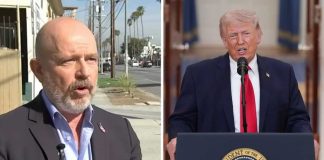

California gubernatorial candidate Eric Swalwell handed his wife over six thousand dollars in campaign cash for childcare services while burning through more than two hundred thousand of his donors’ money on the same category of expenses since 2019.
Story Snapshot
- Swalwell funneled over $200,000 in campaign funds toward childcare costs since 2019, including $6,000 in direct payments to his wife Brittany
- The California Democrat spent more than $22,000 on childcare in just three months during his 2026 gubernatorial campaign launch
- Campaign finance experts warn the arrangement creates a problematic precedent allowing politicians to shift personal expenses onto campaign donors
- Despite the controversy, California labor unions endorsed Swalwell’s gubernatorial bid in March 2026
When Campaign Donors Become Family Bankrollers
Federal Election Commission filings reveal a pattern of childcare spending that transforms campaign contributions into what amounts to a personal family subsidy. Between 2019 and 2025, Swalwell’s congressional campaign disbursed over $200,000 for childcare expenses. The spending accelerated during his gubernatorial campaign launch, with over $22,000 paid out between October and December 2025 alone. Three payments totaling more than $6,000 went directly to Brittany Swalwell, listed as compensation for childcare services. The arrangement raises questions about whether campaign funds donated to advance political objectives should flow into a candidate’s household budget.
The FEC Loophole That Changed Everything
Swalwell secured official permission for this spending arrangement through a 2022 Federal Election Commission ruling. The congressman petitioned the FEC for clarification on whether campaign funds could cover overnight childcare expenses when his spouse was unavailable during campaign travel. The FEC issued Opinion AO 2022-07, authorizing the use of campaign money for childcare costs directly attributable to campaign activity. This ruling built on a 2018 FEC determination that childcare expenses caused by campaign activity do not constitute personal use under federal law. The decision created a pathway for candidates to legitimize what would otherwise be prohibited personal expenditures.
Beyond His Wife: A Six-Figure Childcare Network
The payments to Brittany Swalwell represent only a fraction of the total childcare spending. Between 2021 and 2025, Swalwell’s campaign paid Amanda Barbosa, a Dublin, California childcare provider, over $102,000. From 2023 through 2025, Bambini Play & Learn Child Development Center in Washington, D.C. received $57,324.40 from campaign accounts. Swalwell, who has three children ages eight, seven, and four, argued that his campaign travel schedule necessitated these arrangements. The congressman and his wife both work full-time, creating what his campaign characterizes as legitimate childcare needs during campaign activities.
Creating a Special Class of Politicians
Allen Mendenhall, a research fellow at the Heritage Foundation’s Thomas A. Roe Institute for Economic Policy Studies, characterizes the FEC decision as opening dangerous territory. He argues that childcare constitutes an inherently personal expense that parents with young children incur whether they run for office or not. Mendenhall warns the ruling “opens the slippery slope” for justifying other personal costs like clothing and grooming as campaign expenditures. The arrangement, he contends, creates a privileged political class insulated from ordinary financial constraints that working families face daily. Campaign donors who contribute expecting their money to fund advertising, outreach, and voter contact may not anticipate subsidizing a candidate’s domestic expenses.
The controversy highlights fundamental tensions in campaign finance regulation. Federal law explicitly prohibits using campaign funds for personal use, yet the FEC has carved out exceptions based on arguments that certain personal expenses become campaign costs when incurred during political activity. Critics argue this logic could justify almost any routine expense a candidate faces. After all, candidates need to eat, sleep, and maintain their appearance regardless of campaign activity, yet these costs intensify during campaigns. The question becomes where regulators draw the line between legitimate campaign operations and personal budget relief.
Political Survival Despite the Scrutiny
The spending revelations emerged through Fox News Digital’s investigation of FEC filings in February 2026. Despite the controversy, Swalwell’s gubernatorial campaign secured endorsements from California labor unions on March 30, 2026, demonstrating that the childcare spending has not torpedoed his political viability. The endorsements suggest either that Democratic constituencies view the spending as legitimate under current rules, or that other political considerations outweigh concerns about campaign finance practices. Swalwell has not issued public statements directly addressing the criticism, relying instead on the legal authorization provided by the FEC’s 2022 opinion.
The broader implications extend beyond one candidate’s spending habits. If campaign funds can legitimately cover childcare, the principle could apply to any candidate with dependent care responsibilities. Elderly parent care, special needs family members, or other domestic obligations could theoretically qualify under similar reasoning. The FEC’s regulatory approach creates ambiguity that candidates can exploit while remaining technically compliant. Campaign donors deserve transparency about whether their contributions fund political persuasion or personal household management. The distinction matters for electoral integrity and public confidence in democratic processes.
Sources:
Campaign finance expert blasts Swalwell over $200K in childcare spending – Fox News
Swalwell faces scrutiny over $200K in campaign funds spent on childcare – National Today
AO 2022-07 – Federal Election Commission
Swalwell secures California labor union endorsement – Politico