
As Colombian families dig through shattered concrete for loved ones, many Americans are asking why government everywhere seems quicker to promise help than to deliver it.
Story Snapshot
- A powerful 7.4 earthquake hit western Colombia, killing well over 100 people and destroying buildings.
- Rescue workers and ordinary residents are searching rubble by hand in cities like Cali and Pereira.
- Colombia’s leaders declared a state of emergency and rushed in army and special rescue teams.
- The disaster highlights global worries that governments protect elites first and everyday people last.
Earthquake Shakes Western Colombia and Shatters Daily Life
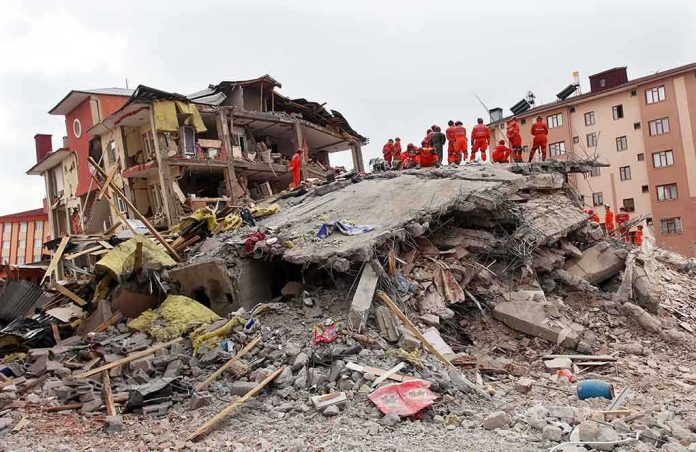
A powerful 7.4 magnitude earthquake struck western Colombia on Monday morning, ripping through cities such as Cali and Pereira and turning homes, offices, and hospitals into piles of broken concrete. National and international reports say at least around one hundred people have been killed, with totals climbing as bodies are found and more damage is counted. Thousands are missing, many feared trapped under debris. Daily routines vanished in seconds as people ran into streets, watched buildings sway, and saw entire blocks collapse.
Rescue crews and local residents moved fast once the shaking stopped, often long before full government teams arrived. Video and photos show firefighters, soldiers, and volunteers climbing over smashed walls and broken rebar, listening for voices and digging for anyone still alive. In some streets, neighbors formed human chains, passing chunks of concrete and twisted metal by hand because large machines could not safely reach collapsed buildings. Every minute mattered as aftershocks and unstable structures threatened both trapped victims and rescuers.
Search and Rescue Across Cali, Pereira, and Dozens of Towns
In Cali, one of Colombia’s largest cities, residents and professional rescuers worked side by side around collapsed apartment blocks and shops. Ambulances crowded narrow streets as crews tried to move the injured away from falling glass and dust-filled air. An Associated Press photo series shows people in helmets and simple work clothes bending over rubble piles, using basic tools and their bare hands to look for survivors in the ruins. These scenes echo in other cities like Pereira, where live footage shows teams combing through debris for hours.
Colombia’s government declared a national state of emergency and activated special urban search and rescue teams trained for collapsed buildings. Army rescue units joined local fire departments and medical staff, focusing first on places where witnesses reported cries for help under fallen floors and staircases. International aid offers came in, but the first and hardest work stayed in the hands of people on the ground who faced dust, sharp metal, and the fear of more walls coming down. Their job was simple and brutal: find the living before time ran out.
Human Stories Inside the Rubble and What They Reveal About Power
Amid the ruins, some stories cut through the chaos and remind people why rescue work matters so much. One widely shared video shows a baby pulled alive from a collapsed building after being buried under debris, while another tells of adults surviving more than twenty hours beneath broken concrete before crews reached them. Families who escaped in time now wait outside smashed homes, hoping that missing relatives will walk out with rescuers instead of being carried out on stretchers. These moments bring hope, but they also reveal hard questions about risk and safety.
"Colombian Rescuers Pull Woman Alive From Earthquake Rubble in Pereira After More Than 30 Hours Trapped"
➡️ Emergency search & rescue teams in Pereira, Colombia, successfully pulled 32-year-old Daniela Largo alive from the rubble of a collapsed structure after she survived more… pic.twitter.com/SohYvuBNGq
— BreakinNewz (@BreakinNewz01) August 12, 2026
For many Americans watching from far away, this disaster feels familiar in one key way: once again, the people closest to danger move first, while leaders talk about action from safer offices. Colombians see volunteers and local crews stepping up because they must, even as officials promise investigations and better building rules after the fact. In the United States, both conservatives and liberals are already frustrated with how often government seems to protect the powerful, sign big aid packages, and then lose focus while regular families wait for real help.
Shared Anxiety About Government, Elites, and the Next Crisis
Conservatives who distrust global institutions look at Colombia and worry that distant planners push rules and projects but rarely stand in the dust with families when concrete fails. Liberals who fear growing inequality see poor and working-class Colombians living in weaker buildings and bearing the worst losses, while the wealthy have more options to rebuild. Both sides see the same pattern: leaders hold press events, promise reforms, and then move on, while the people who did the digging still struggle to put their lives back together.
The Colombia earthquake is not just a distant tragedy; it is a live case study in how societies handle disaster and who pays the price when systems fail. It raises questions Americans ask after every hurricane, fire, or bridge collapse at home: are building codes strong enough, are emergency plans real, and do officials face real consequences when they cut corners? Watching volunteers, soldiers, and medics risking their lives while casualty counts rise, many feel that ordinary citizens worldwide carry the heaviest burden, while the deep state of connected elites keeps power, money, and security.
Sources:
youtube.com, euronews.com, facebook.com, today.com, washingtonpost.com, scmp.com, lemonde.fr, apnews.com, bbc.com, nbcnews.com, timesunion.com, theguardian.com, ksl.com, english.aawsat.com