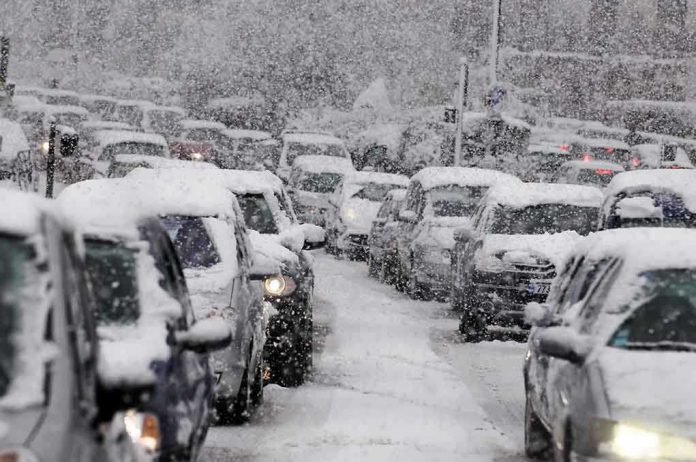
A destructive storm sweeps through the US, leaving over a million people in darkness and grounding thousands of flights, with significant economic impacts looming.
Story Snapshot
- Massive storm leads to widespread power outages affecting over 1 million people.
- Approximately 10,000 flights canceled, causing massive travel disruptions.
- Economic ripple effects include billions in GDP loss, highlighting infrastructure vulnerabilities.
- Focus on urgent need for grid modernization and increased resilience.
Understanding the Scale of Disruption
Storms in the US have increasingly caused widespread, long-duration power outages, impacting over a million people. This particular storm not only cut off electricity but also led to the cancellation of around 10,000 flights, underscoring the interconnectedness of infrastructure systems. The immediate strain on the power grid and aviation industry highlights the vulnerability of critical services during extreme weather events.
These disruptions are not isolated incidents. Historical events like Hurricane Sandy and Winter Storm Uri have shown similar patterns, where severe weather conditions lead to prolonged outages and transportation chaos. The economic implications are profound, with GDP losses estimated between 1.3% to 2.6% within the first few days of such events, highlighting the urgent need for robust infrastructure to withstand future storms.
The Underlying Causes
The root of these massive outages lies in an aging power grid that struggles to cope with the increasing intensity of climate-driven weather events. Regions like the Gulf Coast and Midwest are particularly susceptible due to their high urban density and location in storm corridors. The lack of investment in grid modernization exacerbates these vulnerabilities, leaving communities, especially those with high social vulnerability, disproportionately affected.
Efforts to mitigate these impacts are ongoing, with utilities and government agencies working to improve resilience. However, the pace of change is often slow, hindered by regulatory challenges and funding constraints. The focus remains on not only restoring power swiftly but also preventing such large-scale disruptions in the future through strategic investments and policy changes.
Economic and Social Impacts
The short-term economic impact of this storm is staggering. A single day of power outages can lead to a GDP loss of up to $2.2 billion, affecting various sectors like retail and transportation. The aviation industry, already sensitive to weather disruptions, suffers significantly with thousands of flights canceled, leading to stranded passengers and cascading delays. Health risks also rise, with prolonged outages posing threats like carbon monoxide poisoning and failure of medical devices.
In the long term, the economic toll mounts, with estimated losses reaching $15.2 billion over a two-week period. The broader implications include slowed economic growth and increased political pressure for infrastructural resilience. Vulnerable communities face compounded challenges, with basic needs like food and heating becoming critical during extended outages.
Sources:
Economic Modeling of Power Outages
Economic Costs of Utility Disruptions
Study Links Power Outages and Social Vulnerability