
El Salvador’s President Nayib Bukele cleverly uses a social media blitz to challenge domestic and international critics following the U.S. capture of Venezuelan President Nicolás Maduro.
Story Overview
- Bukele releases a video linking Venezuela’s Maduro to El Salvador’s FMLN party.
- U.S. Senator Chris Van Hollen criticizes the capture, calling it an act of war.
- Bukele mocks Van Hollen, accusing him of supporting authoritarianism.
- The arrest highlights broader U.S.-Venezuela-El Salvador political tensions.
Bukele’s Strategic Mockery
President Nayib Bukele of El Salvador took to social media to share a provocative video after U.S. forces captured Venezuelan President Nicolás Maduro. The footage not only showcased Maduro’s past threats but also highlighted historical support from El Salvador’s left-wing FMLN party. This move strategically placed Bukele in the spotlight, as he linked political adversaries at home with authoritarian figures abroad, capitalizing on the event to strengthen his anti-leftist narrative.
El Salvador President Bukele Trolls Maduro After Arrest; Orders 'No More Margaritas' for Sen. Van Hollen – RedState
The Democrats Failure https://t.co/cNU0ymJnWL
— DocNancy (@KeepTexasRed77) January 5, 2026
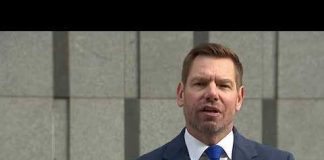
Bukele’s response to the capture wasn’t limited to exposing connections. He directly addressed U.S. Senator Chris Van Hollen, who had criticized the operation as an “illegal act of war” by President Donald Trump. Van Hollen suggested that the move was an attempt by the U.S. to seize Venezuelan oil. Bukele didn’t hold back, accusing the senator of defending authoritarian thugs, thereby framing himself as a staunch opponent of authoritarianism and a defender of democratic principles.
Historical Context and Political Maneuvering
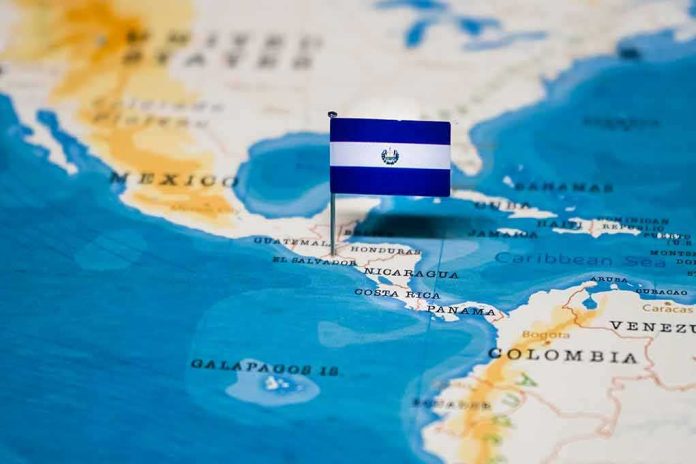
El Salvador’s political landscape has long been intertwined with Venezuela’s, particularly during the “pink tide” era when leftist movements across Latin America gained momentum. The FMLN party, which ruled El Salvador until 2019, had openly supported Maduro’s regime. This historical affiliation provided Bukele an opportunity to discredit his domestic opponents by linking them to an unpopular foreign leader. The presence of images of fugitive ex-President Salvador Sánchez Cerén in the video further cemented this narrative.
Bukele’s savvy use of social media to blend historical footage with his cutting commentary underscores his ability to leverage current events for political gain. By painting the FMLN as supporters of a captured dictator, he not only tarnished their reputation but also bolstered his own standing as a reformer and opponent of corruption.
International Reactions and Implications
The capture of Nicolás Maduro by U.S. forces on Venezuelan territory marked a significant moment in the ongoing geopolitical chess game between the U.S., Venezuela, and El Salvador. While some view the operation as a necessary measure to curb Venezuelan influence and address U.S. security concerns, others, like Senator Van Hollen, see it as an overreach. This divergence in perspectives reflects broader debates about U.S. foreign policy in Latin America.
The incident also reignited discussions about Bukele’s controversial “iron fist” policies. His administration’s willingness to house deportees from Venezuela in El Salvador’s CECOT mega-prison has drawn criticism from human rights advocates. Families of Venezuelan political prisoners expressed opposition to Bukele’s earlier proposal to swap prisoners, viewing it as dehumanizing and a violation of human rights.
The Broader Impact of Bukele’s Actions
Bukele’s deft political maneuvering following Maduro’s capture has immediate and long-term implications. In the short term, it has heightened tensions between the U.S., Venezuela, and El Salvador, while boosting Bukele’s domestic popularity by discrediting the FMLN. The stalled prisoner swap talks and the ongoing detention of Venezuelan deportees at CECOT highlight the complexity of the situation.
Long-term, Bukele’s approach may reinforce his model of hosting U.S. deportees, potentially leading to expanded deals with other countries. It also sets a precedent for the extraterritorial reach of U.S. operations, while enhancing Bukele’s profile as a global populist leader. The incident serves as a potent reminder of how interconnected domestic and international politics have become in the digital age.