

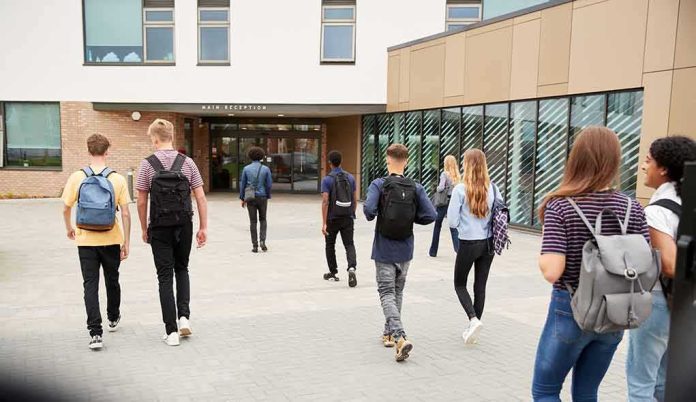
French students shut hundreds of schools to protest missing teachers, crowded classes, and crumbling buildings—forcing a national crisis response.
Story Snapshot
- Students cited absent teachers, overcrowded classes, and aging buildings as daily problems.
- Actions hit hundreds of schools nationwide, including widespread blockades in and around Paris.
- France’s prime minister held a crisis meeting; teachers were told to teach online where sites were blocked.
- The government pledged 3,000 substitute teachers and proposed more education funding.
What Sparked The Protests In Paris And Beyond
Student groups began blockading schools after weeks of teacher absences and crowded rooms in the Paris area. Reports said some classes had 35 students, with no substitutes when teachers were out. Buildings were old and hard to ventilate, which made heat waves worse. Students also worried about access to university. These were not one-off gripes but a list of repeated problems across sites, according to national and Paris media accounts.
Interior officials counted actions at hundreds of schools across France, showing the reach went far beyond one neighborhood. Media reported both blockades and marches, with students calling for smaller classes, stable staffing, and repairs. The scale suggests a system-level strain, even if conditions vary school by school. Authorities treated it as a national disruption, not a local spat, which raised pressure to act fast.
How Authorities Responded And What They Promised
The prime minister convened a crisis meeting as blockades spread. The education ministry told teachers to switch to remote lessons if buildings were sealed. Officials announced 3,000 available substitute teachers, with priority for 114 secondary schools in greatest need. They said new software would direct staff to about 500 high-need schools. Leaders also backed extra overtime funds so teachers could cover gaps in the short term.
Budget talks followed the street pressure. The government proposed a 1.2 billion euro increase for the National Education Ministry in the 2027 plan. In the Paris region, leaders pointed to years of renovation spending, saying billions had gone into secondary school upgrades since 2015. The education minister argued that education remained a priority and that slower budget growth reflected fewer school-age children, not neglect.
What The Evidence Shows—And What We Do Not Know Yet
Independent reporting said nearly 10 percent of teaching hours went untaught last year because missing teachers were not replaced, and some students went months without key subjects. Other reports said many schools were in poor shape, with heat and ventilation problems and over-capacity buildings. These indicators support the students’ core claims. But much of the data is national, and not every Paris school has verified, public metrics on shortages or building safety.
The October 17, 2026 unrest in France grew out of weeks of student protests (starting in Paris suburbs over teacher shortages, crumbling schools, and infrastructure) that merged with broader anger over the cost of living, fuel prices, public services, and government inaction.…
— Cathy Morgan (AFH) I exist 🌸 (@CathyMo41926708) October 21, 2026
Authorities and students agree that high schools face real strain. They differ on pace and scale of fixes. Protest turnout alone cannot prove every claim, and some incidents focused attention on clashes instead of classroom losses. The most useful next steps are specific: publish school-by-school staffing gaps, track untaught hours, and release facility audits. Clear, public numbers would show where resources are landing and whether promised help is reaching the most affected sites.
Why This Matters For Americans Watching Abroad
French families on both the left and right share a basic worry: public systems promise a path to success but often break down in daily life. Missing teachers, unsafe rooms, and endless delays look like a failure of basic governance. Americans know this feeling when schools struggle with staff, aging buildings, or budget games. When leaders manage by crisis, trust drops. Transparent data and delivery—not slogans—are what rebuild confidence in any democracy.
Sources:
youtube.com, rfi.fr, yahoo.com, lemonde.fr, en.wikipedia.org, slovaknews.com