

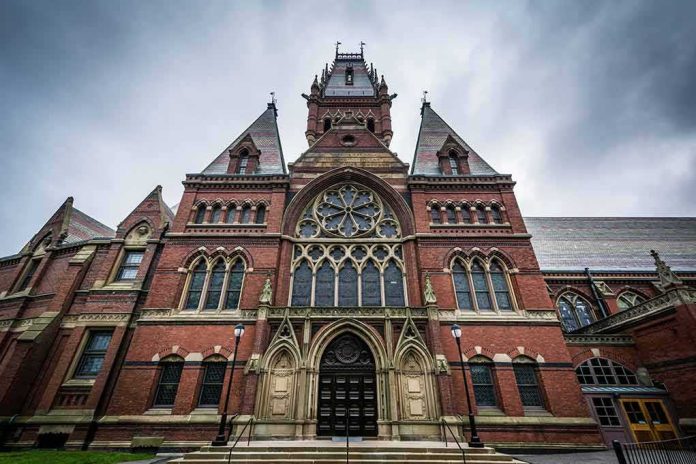
A small Catholic trade college in Ohio now plans to turn Steubenville’s historic Masonic temple into a shrine and public hall, raising big questions about faith, power, and who shapes America’s town squares.
Story Snapshot
- A Catholic trade college says it will buy Steubenville’s historic Masonic temple and convert it into a Catholic shrine and public gathering space.
- The plan comes as the college expands after winning access to a disputed $5 million West Virginia grant tied to “public benefit” and non‑religious use rules.
- The project blends worship and civic use, promising concerts, lectures, and festivals alongside Catholic devotions.
- The deal is not yet documented in public land records, highlighting how symbolic stories can move faster than hard facts.
A historic Masonic landmark set for a dramatic new life
The College of St. Joseph the Worker in Steubenville, Ohio, has announced plans to purchase the city’s historic Masonic temple and convert it into a Catholic shrine and public space. The temple sits at 227 North Fourth Street and has long served as a meeting place for the local Masonic lodge, which still draws a small but steady membership. The college says the project will “give the building back” to the city in a new form, centered on worship, culture, and community life. For many locals, this move turns a building tied to secretive fraternal power into something far more open, but it also raises fresh debates about religion and public life in a time of deep distrust toward institutions on both sides of the aisle.
The college is a new Catholic trade school that mixes liberal arts, faith formation, and hands‑on training in construction trades such as carpentry, electrical work, and plumbing. Its leaders say they want students to graduate with skills and without crippling debt. That message speaks to working‑class frustration with a higher‑education system that often loads young people with loans while the cost of living keeps rising. By reaching for a prominent downtown building, the school is signaling it does not just want to train workers; it wants to reshape the civic space of Steubenville itself.
From Masonic temple to Catholic shrine and “athenaeum”
According to the announcement reported by LifeSiteNews, the college plans not only to bless and “exorcise” the former Masonic space but also to make key parts of the building a public “athenaeum.” A five‑hundred‑seat theater is slated to host symphonies, lectures, literary festivals, and civic events, not just Catholic talks. That dual use matters in today’s culture wars. Supporters can point to the public programs to argue this is not a closed church takeover, while critics may see a religious group gaining control of a major civic stage. Both left and right know that who runs the big rooms in town often decides which voices get heard and which do not.
The project also taps into a wider national trend of old Masonic halls and other fraternal buildings being sold off and repurposed as apartments, arts centers, or event spaces. Shrinking lodge membership and aging buildings have forced many sales. In that sense, a Catholic college stepping in as a buyer is not shocking. What is unusual is the outspoken spiritual framing: the idea of “reclaiming” a former Masonic temple for Christ will stir strong feelings among some Catholics and some Freemasons alike. It turns a standard real‑estate deal into a symbolic victory for one worldview over another, at a time when many Americans already feel squeezed between rival elites using symbols instead of solving everyday problems.
Funding fights, public benefit promises, and trust in institutions
This temple plan comes just as the College of St. Joseph the Worker is expanding with help from a controversial $5 million West Virginia grant tied to job training and infrastructure. Civil liberties groups sued to block the grant, arguing that public funds cannot support a religious college under the state constitution. A West Virginia judge ultimately allowed the grant so long as the money is used for non‑religious purposes and for projects that clearly benefit the public, such as real‑estate acquisition, site development, and infrastructure. That ruling pushed the college to stress the public‑use side of its projects, including how new buildings will serve the broader community, not just its own students.
For readers across the political spectrum, this raises a familiar worry: do government grants and back‑room deals favor well‑connected institutions, while regular families see little relief from high costs and weak local services? The college argues that its projects, including this temple‑to‑shrine conversion, will create jobs, revive a downtown, and host public events. Skeptics might ask whether such promises will really reach struggling residents or mainly build prestige for yet another institution overseen by lawyers, donors, and church leaders. The lack of easily accessible purchase records for the temple so far shows how public messaging can leap ahead of documented facts, putting citizens again in the dark and feeding suspicion toward both church and state.
Shared concerns: who owns the public square?
Many conservatives will see this project as a win against what they view as decades of secular and “woke” influence in culture, taking a building linked to secretive fraternal power and reorienting it toward open Christian worship and beauty. Many liberals, meanwhile, will worry about a religious college gaining more control over shared civic space, especially when public funding and court battles are already in the mix. Underneath those clashes lies a deeper, shared concern: ordinary people have less and less say over the spaces that shape their lives, while big moves happen in boardrooms and courtrooms.
The College of St. Joseph the Worker has purchased a 1930s Masonic temple in Steubenville, Ohio.
It will become a Catholic shrine with a replica of the Shroud of Turin.
An exorcism is planned.
Freemasonry is being replaced by Christianity. pic.twitter.com/ZLEgENfI8s— ISL Paladins (@ISL_Paladins) July 24, 2026
Both left and right know Steubenville’s story is not just about one temple. It is about who decides what gets built, which voices get a microphone, and how taxpayer‑backed dollars are used in an era of mistrust and tight budgets. If the college follows through on its promise of true public access and clear, transparent use of funds, the project could become a rare example of a symbolic victory that also delivers concrete benefits: jobs, events, and a restored historic site. If not, it risks becoming one more case where powerful institutions use grand language about “the public” while everyday citizens watch from the outside.
Sources:
lifesitenews.com, heraldstaronline.com, cardinalnewmansociety.org, thecatholictravelguide.com, freemasonsfordummies.blogspot.com