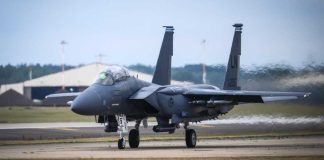

North Korea’s barrage of 10 ballistic missiles on March 14, 2026, exposed America’s stretched-thin defenses, daring the U.S. to fight on two fronts amid Iran chaos.
Story Snapshot
- North Korea launched ~10 missiles from Sunan toward Sea of Japan during US-South Korea drills, landing outside Japan’s EEZ with no damage.
- Direct retaliation for Freedom Shield exercises (March 9-19), following Kim Yo Jong’s warning of “terrible consequences.”
- Allies—South Korea, Japan, US—boost surveillance; drills continue despite global tensions including US-Iran war.
- Signals strengthening NK-Russia-Iran axis, testing US multi-theater commitments with possible asset shifts from Korea.
- Reinforces pattern of NK salvos against joint drills, rejecting diplomacy after failed summits.
Missile Launch Details and Timeline
North Korea fired approximately 10 ballistic missiles from the Sunan area on its west coast at around 1:20-1:24 p.m. local time, or 04:20 GMT, on March 14, 2026. The missiles followed a northeast trajectory toward the Sea of Japan, traveling 340-350 km with a maximum altitude of 80 km. Japan Self-Defense Forces radar detected them immediately; all splashed down outside Japan’s exclusive economic zone. Earlier that day, South Korea spotted one unidentified projectile toward the eastern sea.
Provocation Tied to US-South Korea Drills
Pyongyang launched the salvo directly in response to the ongoing US-South Korea Freedom Shield joint military exercises, running March 9-19, 2026. North Korea labels these annual drills “dress rehearsals” for invasion, incorporating computer-simulated scenarios and field training with new war plans. This followed Kim Yo Jong’s March 12 statement criticizing the exercises amid “collapsing” global security, implicitly nodding to the US-Iran conflict. The timing contrasts with North Korea’s single missile test on January 4, 2026.
Stakeholders and Power Plays
Kim Jong Un and sister Kim Yo Jong drive North Korea’s deterrence strategy, signaling strength to allies Russia and Iran while rejecting denuclearization talks. South Korea’s Joint Chiefs of Staff, President Lee Jae Myung, and Prime Minister Kim Min-seok enhance readiness and eye diplomacy, like PM’s hoped-for Trump-Kim meeting. Japan’s Ministry of Defense and prime minister ordered information gathering and crisis headquarters activation. The US Trump administration and US Forces Korea test joint operations despite Middle East distractions and potential THAAD or Patriot shifts.
North Korea exploits drill timing and US Iran commitments, bolstered by Russia tech exchanges for Ukraine war aid. Seoul-Tokyo-Washington trilateral sharing counters this, but Kim family absolutism dictates Pyongyang’s provocations, forcing reactive allied responses rooted in deterrence.
North Korea Fires 10 Ballistic Missiles, Flexing During US Regional Drills https://t.co/v6bxkSBoFY
— zerohedge (@zerohedge) March 15, 2026
Immediate and Broader Impacts
Short-term, regional tensions spike with allies heightening surveillance; no damage occurred, but miscalculation risks grow during drills. Long-term, North Korea entrenches its nuclear program post-failed diplomacy like the 2019 Hanoi summit, escalating the arms race and dimming Trump-Kim prospects. Affected parties include Japan near the EEZ, South Korea under direct threat, US forces, and regional fisheries with implied cleared zones. Political strains hit the US-ROK-Japan alliance amid Iran war; economic costs stay minor from drills and monitoring, though public anxiety rises in Seoul and Tokyo.
Strategic Perspectives and Axis Signals
North Korea frames salvos as defensive shows of force against perceived existential threats from drills, per Seoul JCS and Japan MoD analysis. Allies view them as routine destabilizing provocations, confident in deterrence despite US shifts—South Korea’s presidential office asserts its strength suffices. Facts align with common sense: appeasement failed historically, so firm allied readiness deters better than weak diplomacy. The barrage spotlights a NK-Iran-Russia axis, with Pyongyang backing Iran’s Mojtaba Khamenei and trading troops for Russian aid, testing American resolve across theaters.
Sources:
North Korea Fires About 10 Ballistic Missiles Toward Sea of Japan
North Korea fired 10 ballistic missiles, says Seoul
North Korea fires 10 ballistic missiles during US-South Korea military drills, says Seoul