
A five-a.m. loudspeaker can turn “religious freedom” into a neighborhood brawl faster than any campaign ad.
Quick Take
- Viral clips claim New Yorkers in Manhattan and Brooklyn woke to the Islamic call to prayer (adhan) blasting at dawn, five times daily.
- The loudest allegation pins the change on “Mayor Zohran Mamdani,” but the available reporting doesn’t verify a new policy or even that leadership claim.
- New York City already loosened rules in 2023 under Mayor Eric Adams to allow amplified calls for Friday prayers and Ramadan without special permits.
- The real fault line isn’t Islam versus America; it’s city noise enforcement versus a social-media-driven narrative of “takeover.”
The Viral 5 A.M. Complaint and the Problem With “Citywide” Claims
Manhattan and Brooklyn videos sparked the current uproar by pairing a simple fact—an amplified adhan can be heard in parts of New York—with a loaded conclusion—that the city “flipped” into daily dawn broadcasts everywhere. The posts frame sleepy residents as victims of an abrupt cultural imposition. The catch: viral clips can prove a moment happened on a block, not that City Hall rewrote rules for all five boroughs.
That distinction matters because the story’s emotional punch comes from scale. “Five times daily” and “citywide” trigger an instinctive reaction: if government can wake you at dawn for someone else’s religious practice, what can’t it do? Conservative common sense says start with verifiable basics—who authorized it, what locations, what decibel levels, what hours—before declaring a sweeping transformation of public life.
What NYC Actually Announced in 2023: Less Red Tape, Not Unlimited Volume
New York’s documented policy backdrop predates the current clips. In 2023, Mayor Eric Adams announced guidelines that let mosques amplify the call to prayer during Friday services and Ramadan iftar without having to obtain a special permit each time. The public rationale leaned on equal treatment for faith communities and the role of religious institutions in neighborhood stability. That approach aligns with pluralism—but it never implied a blank check to blast sound whenever.
For readers over 40 who’ve lived through New York’s endless “quality of life” swings, this is familiar: the city routinely promises order, then leaves enforcement fuzzy. Noise rules exist, yet outcomes often depend on the neighborhood, the complaint volume, and whether the issue becomes political. When officials remove procedural hurdles, they also raise the stakes for consistent enforcement. If enforcement looks selective, people don’t just get irritated; they get suspicious.
Adhan, Timing, and Why Dawn Hits Harder Than Midday
The adhan calls Muslims to five daily prayers, and the dawn prayer (Fajr) naturally lands around five a.m. in late winter. That clock reality collides with an urban reality: New York’s density turns any amplified sound into a shared experience, including for people who never chose it. A Friday midday call sits inside the city’s daytime roar; a pre-sunrise call lands in the quiet, when even a modest speaker feels intrusive.
That’s why this story won’t die online. The argument isn’t really theological; it’s practical and visceral. People tolerate plenty in New York—sirens, nightlife, construction—because they assume the city sets limits. A recurring dawn broadcast reads differently, especially for families, shift workers trying to sleep, or older residents with light sleep. The conservative impulse for local control makes sense here: rules should protect the ordinary citizen first, not the loudest activist.
The “Mamdani” Hook: A Narrative Accelerator With Thin Verification
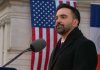
Social media and an opinion-driven write-up push the idea that a new mayor, Zohran Mamdani, enabled a sudden expansion. That claim works as political gasoline: attach an unfamiliar name, add “socialist,” add “takeover,” and every complaint becomes proof of an ideological project. The available material, though, doesn’t show an official directive, a City Hall statement, or a specific rule change tied to any new administration.
Responsible skepticism doesn’t dismiss the residents who say they were woken up. It rejects the leap from “I heard this today” to “the city has been captured.” New York’s politics already supply enough real controversies—crime, housing, transit—without outsourcing truth to viral clips. If the claim is that government changed policy, the burden stays on the claimant to produce the policy, the memo, or the ordinance update.
Where the Fight Lands Next: Noise Complaints, Permits, and Equal Standards
New York’s next move won’t come from a hashtag; it will come from the complaint-and-enforcement pipeline. If broadcasts occurred outside allowed windows, the city can treat them like any other amplified sound: warnings, fines, and clear limits. If broadcasts were within current guidelines, the city still faces a choice: clarify hours and decibel caps, or accept that “permitted” will be interpreted as “anything goes.”
Equal treatment is the hinge. Conservatives can defend the First Amendment and still demand that the same standards apply to everyone—church bells, street preachers, political rallies, and amplified calls to prayer. The test is simple: would the city accept a different group waking residents at dawn on loudspeakers? If the answer is no, officials need to tighten rules in a way that protects liberty without sacrificing livability.
New Yorkers Wake to the Islamic Call to Prayer https://t.co/UnIcXJ44yk
— Paul Cass (@Pabloenrique196) February 17, 2026
The wiser takeaway is also the least satisfying for outrage merchants: this story remains unresolved without official confirmation of expanded, daily, citywide dawn broadcasts. The videos may capture real disturbances; they don’t prove a municipal “infiltration.” New Yorkers should demand receipts, demand consistent noise enforcement, and refuse to let legitimate annoyance get converted into blanket suspicion of millions of peaceful neighbors.
Sources:
Islamic Call to Prayer Echoes Across NYC Ahead of Ramadan Under Mamdani’s Leadership
New York allows the loudspeaker call to prayer during Fridays and Ramadan