

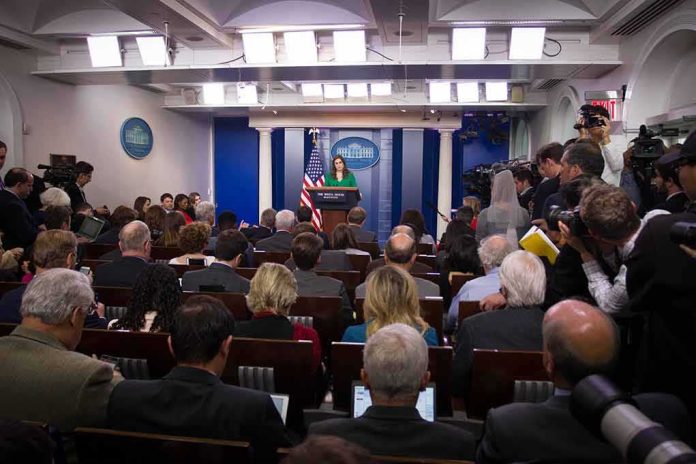
Sean Hannity pressed the White House’s new press secretary on a 14-minute debut that limited questions to three conservative outlets, sharpening concerns about access and accountability.
Story Highlights
- The first briefing lasted about 14–15 minutes with only three questions.
- Multiple outlets called the performance rocky, while Trump said she did “very good.”
- Katie Zacharia said the short format was planned to defer to Trump’s later media time.
- The briefing still delivered a major personnel announcement about Kimberly Guilfoyle.
What Happened in the Briefing Room
On October 13, 2026, new press secretary Katie Zacharia held her first on-camera briefing. Reporters saw a tightly controlled event. The session lasted about 14 to 15 minutes. She read prepared remarks for several minutes, then called on only three reporters, all from conservative outlets. She ended by steering more questions to President Trump. The Associated Press clocked the event at 14 minutes and noted the early end.
Major outlets described the performance as halting and unsteady. National Public Radio reported the briefing barely cleared 15 minutes. The Public Broadcasting Service said Zacharia slowly read an opening statement and wrapped soon after. The New York Times transcript captured a verbal slip as she corrected “my president” to “my husband” while discussing family. These characterizations focused on style, access, and control rather than factual errors.
Hannity’s Push and the White House Defense
Sean Hannity pressed Zacharia on-air with the core question: what happened. Earlier, Hannity had also defended her, which showed mixed signals inside friendly media. President Trump publicly praised her, saying she did “very good.” An unnamed White House official, quoted elsewhere, called it a poor start that needed fast improvement. That contrast captured a growing split between supportive spin and concern about limited press access.
Zacharia offered her own explanation. She said she kept the briefing short on purpose. She argued that President Trump would answer questions later that morning as he left for Marine One. She also said she got final materials less than two hours before the appearance. That account supports a strategic choice to defer to the president’s availability, not an accidental cutoff or a walk-off under pressure.
Substance Versus Access
Despite the brief time, Zacharia made news. She announced that President Trump requested Ambassador Kimberly Guilfoyle’s resignation. Supporters pointed to that move as the key “deliverable” on day one. Critics argued the method still mattered. They said the public lost a chance to hear diverse questions and follow-ups. The Associated Press confirmed both the short duration and the personnel announcement, which complicates a single, negative read.
Sean Hannity CONFRONTS new Trump press secretary Katie Zacharia over disastrous debut dlvr.it/TVxDKL pic.twitter.com/AHBEzyUawF
— Sam -GSD- Fisher 🐝⚖💛 (@SamFish90) October 16, 2026
The debate reflects a larger question about the role of a White House briefing. Some see it as message delivery controlled by the administration. Others see it as an accountability forum where reporters test power. A short, scripted event can look efficient to supporters and evasive to critics. The facts show the debut was unusually short, tightly managed, and light on questions, without evidence that answers were false. That mix fuels distrust across the spectrum.
Why It Resonates With Public Frustration
Americans on the right and left say the government talks at them, not with them. A 14-minute briefing with three questions feeds that view. Supporters may accept tight control to avoid media “gotchas.” Skeptics see gatekeeping that shields leaders from hard questions. When even a friendly host pushes, it signals pressure to allow more access. Restoring trust will likely require longer briefings, broader reporter lists, and steady chances for follow-ups, not just set pieces.
What to Watch Next
Watch whether future briefings run longer and take wider questions. Track if the press office releases full transcripts and videos on time. Look for consistent policies on who gets called and how often. See whether the White House explains how formats are set and by whom. These steps would give citizens a clearer window into power. They would also test whether this debut was an outlier or the new normal for public accountability.
Sources:
mediaite.com, npr.org, nbcnews.com, newsweek.com, nytimes.com, apnews.com