

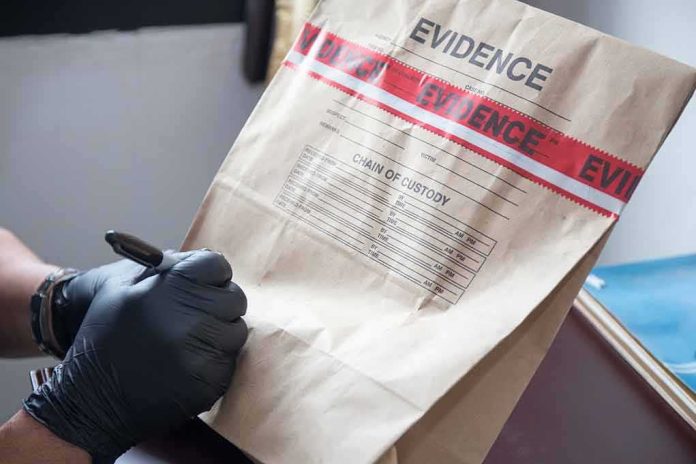
Prosecutors say a murder suspect’s backpack held a loaded magazine wrapped in underwear and a handgun tied to a killing—evidence aired in open court.
Story Snapshot
- Hearing testimony described a loaded magazine hidden in underwear inside a backpack.
- Prosecutors said the recovered handgun matched a weapon used in a homicide.
- The items surfaced during a Manhattan Criminal Court evidence fight.
- Courthouse weapon incidents, while rare, shape security policy nationwide.
What Prosecutors And A Witness Described Under Oath
Manhattan prosecutors presented evidence that a backpack linked to defendant Luigi Mangione held a gray pair of underwear wrapped around a loaded gun magazine. A police veteran, identified in reports as Christy Wasser, testified that she unwrapped the underwear and found the magazine. Prosecutors said they also recovered a handgun that matched the firearm used in a homicide of a health care executive. These details came out in open court during a pretrial hearing over whether the items can be used at trial.
Coverage of the hearing said the backpack also contained a silencer, identification, bank cards, a cellphone, a passport, and a notebook. Prosecutors tied the handgun to the murder investigation through ballistics, according to those reports, which frames the items as more than just unlawful possession. The defense pushed to exclude the magazine, handgun, and other materials. The judge did not rule from the bench in the summary accounts that described the hearing events.
How The Case Reached A New York Courtroom
The evidence fight unfolded in Manhattan Criminal Court, where both sides argued over the search and what was seized. Reporting indicates officers had previously recovered the backpack and weapon components during the investigation, and the state now aims to keep them in the case. The testimony identified who found the magazine and how it was hidden. That level of detail matters because courts weigh chain of custody and search steps when deciding what jurors may see.
Prosecutors relied on the witness account to establish where the items were found and how they were concealed. They also argued that the handgun matched the gun used in the homicide. The defense challenged the seizure, likely focusing on how police obtained and inspected the contents. Judges often parse such records line by line. A single ruling on suppression can reshape the charges that move forward or the leverage each side has in plea talks.
Why Courthouse Weapon Incidents Draw Extra Scrutiny
State court systems track dangerous incidents because small gaps can lead to major harm. One national review cited 185 attacks on courts involving shootings, bombings, or arson between 1970 and 2009. Another dataset counted more than 400 court-targeted acts in a more recent seven-year span. These figures explain why security screening, search procedures, and training have grown more intense in many jurisdictions over the past decade.
Nutjob strolled into NYC court with loaded handgun tucked in his underwear https://t.co/yNNMWn411y pic.twitter.com/DQGGMsaUYz
— New York Post Metro (@nypmetro) September 23, 2026
Recent state-level data also point to rising reporting of security incidents. Washington’s court system logged 261 incidents in 2025, up 63 percent from 2024. Over time, that state reported a 190 percent increase since tracking began in 2017. While not every incident involves a weapon, the trendline shows why judges, sheriffs, and court administrators keep pushing for tighter screening and better reporting. Consistent records help spot gaps before they become tragedies.
What This Means Beyond One Case
This hearing underscored two things at once. First, hiding a loaded magazine in clothing inside a bag shows how people try to beat screening, which raises alarms for everyone who works in or visits a courthouse. Second, evidence rules still govern what the jury can hear. The court must decide if police followed the law at each step. That balance—strong security and strict due process—protects both public safety and individual rights in every case.
Sources:
yahoo.com, drgnews.com, caselaw.findlaw.com