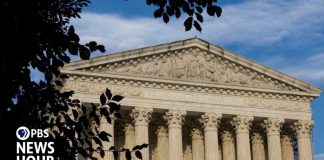

Hundreds of protesters swarmed the Supreme Court steps on April 1, 2026, clashing with police during oral arguments in a case that could shatter Big Tech’s content moderation empire—or unleash unchecked censorship.
Story Snapshot
- Hundreds gathered on Supreme Court steps as NetChoice v. Paxton oral arguments began at 10 AM ET, peaking with chants and skirmishes.
- Protests targeted Texas and Florida laws forcing platforms to host unwanted speech, pitting tech giants against conservative attorneys general.
- U.S. Capitol Police made 15 arrests for unlawful assembly; crowds dispersed by 1 PM ET without disrupting arguments inside.
- Case under deliberation with June 2026 decision expected, potentially invalidating 10+ state laws affecting 100 million users.
- Texas AG Ken Paxton’s claims of “thousands” exaggerated; actual estimates 200-500 per eyewitness reports.
Protest Timeline Unfolds on Historic Steps
Protesters assembled around 9-10 AM ET on the Supreme Court steps in Washington, D.C. Crowds swelled to hundreds by mid-morning, waving signs and chanting against state laws restricting social media moderation. Minor skirmishes erupted with law enforcement as oral arguments started at 10 AM inside. U.S. Capitol Police maintained barriers under post-January 6 protocols. The scene symbolized raw tension between grassroots activism and judicial authority.
NetChoice v. Paxton: Core Legal Battle
NetChoice, representing Meta and Google, challenged Texas HB 20 and Florida’s similar law. These statutes block platforms from moderating user content, framing it as anti-censorship. The 5th Circuit upheld the laws; the 11th Circuit struck them down. Supreme Court granted certiorari in October 2024 for April 1, 2026 arguments. Justices Kavanaugh and Barrett probed moderation precedents during the session. A ruling could set nationwide standards.
Stakeholders Clash in Power Dynamics
Texas AG Ken Paxton enforces HB 20 to curb perceived Big Tech bias against conservatives. NetChoice defends First Amendment rights to curate content. Protesters from Free Speech Coalition and progressive groups opposed “forced speech,” aligning with tech interests. Biden Administration’s Solicitor General backed platforms. The 6-3 conservative Court holds final say. Paxton’s stance resonates with common sense limits on corporate overreach, though facts show platforms’ lobbying muscle at $10 million plus.
Capitol Police tolerated peaceful protest but enforced violations swiftly. Post-Dobbs precedents like 2022 leaks with 2,000 demonstrators inform security. No prior mass protest hit exactly on NetChoice argument day, amplifying this event’s uniqueness.
Expert Views and Potential Fallout
Stanford’s Daphne Keller predicted SCOTUS reversal of the 5th Circuit with 70% odds, citing errors in lower rulings. EFF’s David Greene warned of gutted platform autonomy. Heritage’s Sarah Field hailed potential viewpoint diversity wins. Volokh Conspiracy foresaw 6-3 for NetChoice via 303 Creative precedent. Conservatives gain if states prevail, countering Silicon Valley gatekeeping—a bulwark for free discourse aligned with American values.
Short-term, D.C. security cost $500,000 amid media buzz. Long-term, billions in market swings loom for Meta and Google. Users face moderation shifts; 2026 midterms weaponize “censorship.” Section 230 debates intensify, possibly drawing FCC oversight. Protests shifted to Capitol Hill post-dispersal.
Sources:
SCOTUS.gov: Docket Nos. 24-555, 24-556
WaPo (April 1): “Hundreds protest at SCOTUS on tech case”
Reuters: Arrest tally, statements
C-SPAN: Argument transcript/audio
Politico/NYT: Background, briefs