
A deadly missile strike that killed travelers in Riyadh has pushed many to drive four hours to Bahrain to find a way out.
Story Snapshot
- A Houthi missile hit a Riyadh airport terminal, killing 13 and injuring hundreds, snarling flights across the kingdom.
- Travelers turned to Bahrain as a practical backup, with many planning the four-hour road trip to catch flights.
- Bahrain’s government condemned continued Houthi missile and drone attacks aimed at Saudi cities and airports.
- Manama tied Saudi security to Bahrain’s own and backed defensive steps under the United Nations Charter.
Riyadh Airport Strike Disrupts Travel Plans Across Saudi Arabia
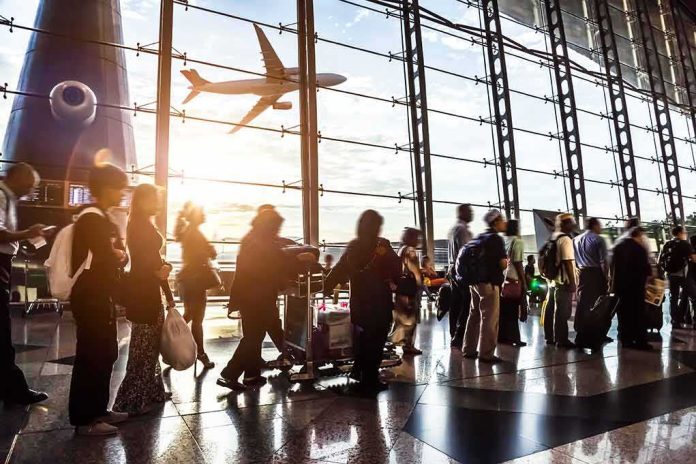
Reuters reported that a Houthi missile hit a departure terminal at a Riyadh airport on October 14, killing 13 people and wounding about 300. The blast and safety checks halted or delayed many flights. Pilgrims, business travelers, tourists, and foreign residents scrambled to rebook. The report described a growing effort to leave the country by any route that worked. Many looked for flights from other cities or tried to reach nearby hubs by road.
Officials and airlines faced a fast-moving crisis. Airport staff directed crowds and cleared damaged areas. Airlines shifted passengers where they could. Families waited for news on injuries. Some travelers accepted long delays. Others gave up on local departures and chose to leave Saudi Arabia by land. The attack turned routine trips into tense, uncertain journeys. It also raised hard questions about safety at sites that most people see as off-limits in war.
Bahrain Emerges as a Practical Detour for Stranded Travelers
Reuters said many people who planned to fly from Riyadh began considering the four-hour drive to Bahrain. That route offered a chance to cross the King Fahd Causeway and catch flights from Manama. Some also weighed longer trips to Qatar or Dubai. The Bahrain option stood out because of distance, road access, and a busy international airport. For many, it felt like the fastest way to get home, keep business plans, or continue a long-planned pilgrimage.
The shift showed how regional links can ease a shock. When one major hub stalls, nearby gateways can pick up demand. The causeway, car rentals, and ride services became part of an emergency travel chain. People checked schedules, border rules, and baggage limits on the move. The flow also stressed fees, staff, and lane capacity at peak hours. Even so, a clear road and open airport beat days of waiting in crowded terminals with uncertain timelines.
Bahrain Condemns Attacks and Backs Saudi Defensive Steps
Bahrain’s Ministry of Foreign Affairs condemned continued Houthi missile and drone launches toward Saudi cities, including Riyadh, Dhahran, and Khamis Mushait. The statement said these attacks threaten civilian lives and regional stability. Manama framed the strikes as a violation of international law and called for a halt to targeting civilian and vital facilities. The government also voiced support for Saudi actions to protect people and infrastructure against further attacks.
The US is evacuating some diplomatic staff from Saudi Arabia following Houthi attacks that killed 3 in Dammam. Despite rumors regarding UAE, Qatar, and Bahrain, Washington clarified the order applies only to Riyadh. The move coincides with new military plans targeting Iran. pic.twitter.com/wVxl3N7Z2Q
— Mintel World (@mintelworld) October 22, 2026
Bahrain further tied Saudi stability to its own national security, and reaffirmed support under Article 51 of the United Nations Charter, which addresses self-defense. That linkage explains why a blow to Saudi airports quickly becomes a Bahrain concern. It affects trade, travel, and safety for both countries. The stance also signals to allies and rivals that Gulf states see these attacks as a shared challenge that crosses borders, sectors, and communities.
Why This Matters to Ordinary People on Both Sides of U.S. Politics
Airport strikes turn daily life into risk management. Families lose loved ones. Workers miss paychecks. Small firms eat costs from missed cargo or meetings. People on the right worry about weak borders and chaos spreading. People on the left worry about civilian harm and rising inequality when crisis hits travel and jobs first. Both see a system that feels unable to protect basic movement and safety while power brokers trade statements and hold summits.
Travel shocks also drive up prices. Rebooking costs rise. Cargo delays hit supply chains. Insurance goes up. Governments must spend more on defense and repairs, which can mean less for schools and clinics. That cycle feeds the belief that the system favors the well connected. Clear facts matter here: a strike on a civilian airport killed and injured many in Riyadh, and Bahrain publicly said such attacks threaten the region and must stop. Those points frame the stakes in human terms.
Regional Security and the Road Ahead
United Nations records show the long Yemen conflict keeps spilling into the region’s air and trade routes. States stress the need to protect civilians and keep vital infrastructure running. That means better defenses, faster incident response, and steady diplomacy. It also means stronger plans to keep travel moving when one hub goes dark. When neighbors help, people get options besides waiting in a crowded gate area without answers.
For now, the four-hour road to Bahrain has become a pressure valve for stranded travelers. It reflects practical problem-solving by people who cannot afford to wait. It also shows how a single strike can ripple across borders in hours. Leaders can debate blame and strategy. Families still need safe flights home. That is where policy meets pavement: open causeways, working airports, clear rules, and a shared duty to shield civilians from war.
Sources:
youtube.com, spa.gov.sa, transcripts.un.org