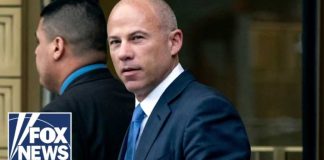
The Supreme Court just slammed the door on a self-described progressive’s audacious attempt to infiltrate Ohio’s Republican primary, exposing a calculated scheme that could have upended the integrity of partisan elections nationwide.
Story Snapshot
- Samuel Ronan, a former Democratic National Committee chairman candidate, tried running as a Republican in Ohio’s 15th Congressional District primary despite publicly advocating for Democrats to infiltrate GOP races
- Ohio Secretary of State Frank LaRose disqualified Ronan under state law requiring candidates to run in “good faith” after a Republican voter presented evidence of his Democratic ties and strategic admissions
- The Supreme Court rejected Ronan’s emergency petition without explanation, affirming lower court rulings that states can prevent fraudulent party declarations
- The decision strengthens states’ authority to police primary integrity and may deter similar cross-party sabotage tactics as the 2026 midterms approach
The Infiltration Strategy Unravels
Samuel Ronan made a critical mistake that political operatives rarely commit: he said the quiet part out loud. The progressive activist publicly advocated for Democrats to run as Republicans in deep red districts to “trick” GOP voters and “get a foot in the door.” When he filed to run against incumbent Rep. Mike Carey in Ohio’s solidly Republican 15th Congressional District, he signed a declaration under penalty of falsification affirming his Republican affiliation. Republican voter Mark Schare connected the dots, presenting the Franklin County Board of Elections with damning social media posts and interview footage where Ronan detailed his infiltration strategy.
Ohio’s Good Faith Standard Holds
Ohio law demands more than a signature on a form. State statute R.C. 3513.05 requires partisan primary candidates to declare party affiliation in good faith and actually abide by party principles. This provision emerged from earlier primary manipulation attempts, including the 2012 “Operation Chaos” when radio host Rush Limbaugh encouraged Democrats to vote in Republican primaries to prolong contentious nomination fights. Secretary of State Frank LaRose enforced this standard, disqualifying Ronan based on overwhelming evidence of misrepresentation. The law treats primaries as intra-party contests where members select their own standard-bearers, not battlegrounds for opposition sabotage.
Courts Reject First Amendment Defense
Ronan filed a federal lawsuit claiming his disqualification violated First Amendment free speech protections. Chief U.S. District Judge Sarah D. Morrison delivered a decisive rebuke, ruling that Ohio’s substantial interest in preventing fraudulent candidate declarations outweighed any speech considerations. The First Amendment does not shield lies on official candidacy forms signed under penalty of falsification. A federal appeals court agreed, denying restoration to the ballot. When Ronan made an eleventh-hour emergency petition to the Supreme Court as early voting approached, Justice Brett Kavanaugh referred it to the full Court, which rejected it without comment, following standard practice for such emergency applications.
Broader Implications for Election Integrity
This case arrives as Ohio’s decision resonates beyond state borders. Nebraska recently faced an identical situation when Democratic candidate Cindy Burbank was kept off the Senate primary ballot for lacking good faith Republican affiliation. She plans to appeal to the Nebraska Supreme Court, but the federal precedent now works against such challenges. The ruling reinforces states’ constitutional authority to regulate their own elections and protect political parties’ associational rights. Primary elections serve a specific function: allowing party members to choose nominees who genuinely represent their values and platform, not Trojan horses deployed by opposition strategists.
The political calculus behind infiltration schemes seems straightforward on paper. Plant a candidate in the opposing party’s safe districts, split the vote, expose vulnerabilities, or at minimum force incumbents to spend resources on what should be uncontested primaries. Ronan’s public advocacy for this tactic reveals a strategic vision where progressive candidates masquerade as Republicans across multiple red districts. The flaw lies in execution: state laws and vigilant voters can expose such fraudulent candidacies. Mark Schare’s protest demonstrates how engaged citizens armed with publicly available evidence can defend primary integrity. His documentation of Ronan’s statements and Democratic background provided officials with an airtight case for disqualification.
Does the Right do this?
Supreme Court REJECTS Appeal from So-Called ‘Republican’ Candidate After Being Exposed as a Democrat Plant https://t.co/4UJsDXFVCE #gatewaypundit via @gatewaypundit
— Can you see this? (@canyouseethis) April 10, 2026
The Supreme Court’s decision sends an unmistakable message as the 2026 midterms intensify. States possess legitimate power to enforce good faith requirements for partisan primaries, and federal courts will defer to reasonable state regulations. Judge Morrison’s opinion articulated what common sense already suggested: allowing candidates to lie about party affiliation on official forms under penalty of falsification would transform primaries into meaningless free-for-alls. Political parties retain the right to ensure their nominating contests feature genuine members, not infiltrators executing opposition research operations from within. Ohio voters in the 15th District will cast ballots in a primary free from manufactured confusion, with Rep. Mike Carey facing only legitimate Republican challengers who actually embrace the party’s principles.
Sources:
Supreme Court blocks candidate after alleged GOP infiltration scheme exposed – Fox News
Supreme Court keeps former DNC candidate off Ohio GOP primary ballot – Courthouse News