An immigration enforcement operation in North Austin ended with a federal agent shooting and wounding a man, and city leaders now want answers about what happened.
Story Snapshot
- A federal immigration agent shot and injured a man in North Austin on Sunday, officials said.
- Austin Police Department said its officers were not involved and that the cause is not yet known.
- The injured man was taken to a hospital and was alert and talking, city officials said.
- Rep. Greg Casar called for an independent investigation and swift release of any body-camera video.
Confirmed Incident: Agent-Involved Shooting in North Austin
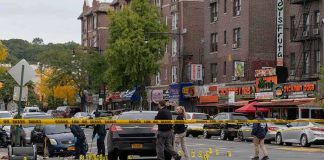
Authorities said a federal immigration agent shot and wounded a man on Sunday in North Austin. The incident drew a large response near West Anderson Lane, with crime tape and damaged vehicles at the scene. Reporters on site described a dark blue Toyota Corolla with damage and what appeared to be bullet holes, signaling a serious use-of-force event during an enforcement action. City officials acknowledged the shooting and began sharing limited facts while broader details remained under review.
Austin city leaders briefed council offices that local police did not take part in the encounter. The city’s communication stated that Austin Police Department officers were not involved and that officials did not yet know what led to the shooting. That early distinction matters because it places responsibility for the initial facts and follow-up on federal authorities rather than local officers. It also shapes which policies and records will guide the review of the agent’s actions.
Health Status and Scene Response
Austin-Travis County emergency medical crews took the injured man to a hospital. City officials said he was alert and talking at the time of transport, which suggests nonfatal injuries despite gunfire at close range. The area showed signs of a tense stop. Local reporting described visible bullet damage on a blue Toyota Corolla, matching images from the taped-off block. Those physical details underscore why leaders quickly sought a formal accounting of the tactics used that day.
The Texas Department of Public Safety’s public information office signaled that the federal agency would lead on fact-gathering. A statement cited in local coverage said the immigration agency was handling the investigation in the West Anderson area. That aligns with common practice when a federal officer discharges a firearm during duty. It also means the most crucial evidence, including any body-camera video and use-of-force reports, will first sit inside federal systems before any public release.
Calls for Transparency and the Body-Camera Question
U.S. Representative Greg Casar urged a “full, independent investigation” and the “immediate release of the body camera footage,” if it exists, to show the public what happened. That demand fits a wider debate over body-worn cameras for federal agents. Policy coverage has reported that Immigration and Customs Enforcement can release body-camera recordings after serious incidents but weighs whether release is in the agency’s interests, which can slow or limit public access.
BREAKING: An ICE-involved shooting in Austin, Texas is being investigated. @Max_Gorden has the latest on the situation.
pic.twitter.com/DtbIr8QfA0 https://t.co/ka9jkLLGeG
— VICTOR (@victorLiuFu) September 21, 2026
City officials planned a press briefing to update residents, signaling that local leaders view the event as significant and still unfolding. Early stories did not identify the agent or the injured person, and they did not provide a detailed timeline. That is common in the first 24 to 48 hours of a shooting review. One brief caveat belongs here: many facts, including what triggered the gunfire, have not been released yet by the investigating agency.
Why This Matters Beyond One Block in Austin
This case lands inside a national struggle over how fast the public should see video after force by any officer, local or federal. Research and policy reviews show mixed evidence that cameras reduce force or complaints, even as many groups say video is vital for trust and accountability. Communities across the spectrum want two things at once: safety and fairness. Events like this test both, especially when federal agents operate in cities where residents rarely see inside those systems.
What to Watch Next
Watch for three things in the coming days. First, whether federal officials release any body-camera or dash video and how much is redacted. Second, whether investigators publish a clear timeline that explains the stop, the vehicle damage, and the shot or shots fired. Third, whether Austin or Travis County release dispatch logs that add precise times and responses. These steps can confirm facts and reduce spin, which helps people judge the event on evidence rather than rumors.
Sources:
townhall.com, statesman.com, texastribune.org, news.meaww.com, foxbusiness.com, yahoo.com