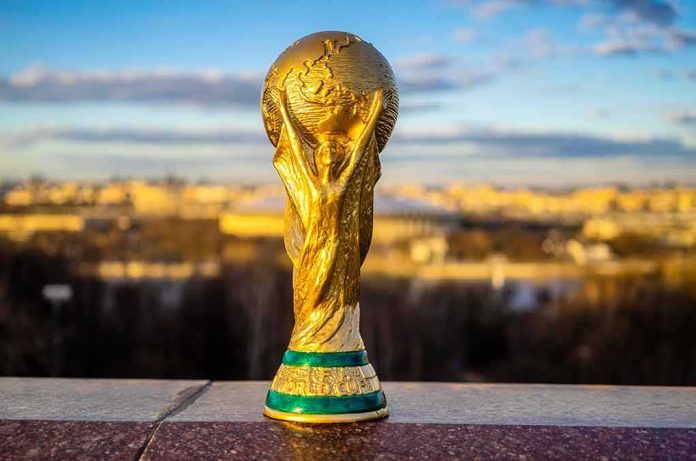
Spain did not just win the World Cup on the field this year — they walked out of New Jersey with almost every major individual honor in their hands, too.
Story Snapshot
- Spain beat Argentina 1-0 in extra time to win the 2026 World Cup, their second men’s title.
- Midfielder Rodri was named the tournament’s best player, taking home the Golden Ball.
- Goalkeeper Unai Simón won the Golden Glove after leading the tightest defense of the tournament.
- Teen defender Pau Cubarsí was named Best Young Player, as Spain swept three of four top awards.
Spain’s win, decided late, capped a tournament they quietly controlled
Spain’s 1-0 extra time win over Argentina in the 2026 FIFA World Cup final was the kind of tight, grinding game that often decides world titles, but the final score hides how much Spain controlled the month as a whole. Ferran Torres came off the bench and scored in the 106th minute after a headed pass from Nico Williams, finally breaking through a worn-down Argentina defense. That goal delivered Spain their second men’s World Cup, 16 years after their first in 2010, and made them the first country to hold both men’s and women’s titles at the same time.
Across the tournament, Spain’s defense allowed just one goal, while their midfield wore down opponent after opponent with constant pressure and simple passing. That balance explains why many of the sport’s biggest honors ended up in Spanish hands later that night. The final itself, played at the MetLife Stadium in East Rutherford, fit the long pattern of World Cup finals: low scoring, tense, and decided by one moment of quality rather than by a blowout.
Rodri’s Golden Ball crowns the true engine of Spain’s title run
FIFA named Spanish captain Rodri the winner of the Golden Ball, the award for the tournament’s best player, after the final whistle. The Manchester City midfielder was not the flashiest player on the field, but he was the one who made Spain’s system work almost every minute he played. He dropped deep to help build attacks, shielded the back line when needed, and kept the ball moving so his younger teammates could attack tired defenses. Beating out global stars like Lionel Messi and Kylian Mbappé for that honor shows how much coaches and voters valued control and consistency over highlight-reel moments this year.
Rodri’s win also reminds fans on both the left and the right of a simple truth that often feels missing in politics: real progress usually comes from steady, unseen work, not big speeches. In Washington, leaders of both parties spend millions on public relations while the country struggles with high prices, border chaos, and rising anger at elites. On the field, Rodri did the opposite. He did the hard, quiet work that let others shine, then accepted his award as one part of a larger system that functioned well.
Unai Simón and Pau Cubarsí show the power of defense and youth
Goalkeeper Unai Simón took home the Golden Glove as the tournament’s best keeper after conceding only a single goal in the entire World Cup. Behind a young but disciplined defense, he made the few key saves he needed and stayed calm when games got tight. Nineteen-year-old center back Pau Cubarsí was named Best Young Player, beating even his fellow teenage teammate Lamine Yamal for the honor. Cubarsí’s poise under pressure and smart positioning helped Spain stay in control even when opponents tried to press high or counter quickly.
Together, Simón and Cubarsí show how a team can trust younger players with real responsibility and still demand accountability. Many American fans watching this tournament feel their own leaders in government do the opposite: they talk a lot about “investing in the next generation” while leaving behind a mountain of debt, broken schools, and rising housing costs. Spain’s staff, in contrast, put a teenager in the spine of the defense on the biggest stage, then held him to a high standard—and he delivered.
Spain sweep awards but miss only the Golden Boot
Spain’s dominance did not stop at the final whistle. Between Rodri’s Golden Ball, Unai Simón’s Golden Glove, and Pau Cubarsí’s Best Young Player award, Spain took three of the four major individual honors FIFA hands out at every World Cup. The only top prize they did not claim was the Golden Boot for top scorer. That went to France’s Kylian Mbappé, who finished with 10 goals after scoring twice in France’s third-place match loss to England. Even with France off the podium, his scoring record was too strong to ignore.
Spain Clinch Second FIFA World Cup Title After Extra-Time Win Over Argentina
Spain were crowned champions of the 2026 FIFA World Cup after defeating Argentina 1-0 after extra time in the final at MetLife Stadium in New Jersey on Sunday.
The victory earned Spain their second… pic.twitter.com/vnvWI1TGI4
— Capital Sports (@capital__sports) July 20, 2026
The mix of awards tells a deeper story about where the sport is headed. Attackers still grab headlines, but the biggest stage rewarded structure, balance, and the courage to trust younger players in key roles. For American viewers frustrated by a political class that seems more focused on protecting insiders than winning real results, Spain’s World Cup offers a sharp contrast. A group of players from different clubs and backgrounds came together, accepted clear roles, and were judged on performance, not status. In a world where many see both parties as captured by a distant elite, that kind of merit-based success is a reminder that systems can still work—when the people in charge make results, not image, the top priority.
Sources:
independent.co.uk, sports.yahoo.com, skysports.com, espn.com, republicworld.com, sportingnews.com, beinsports.com