
Three nuclear powers vowed to lower nuclear dangers but set no plan to cut a single warhead.
Story Snapshot
- President Trump, China’s Xi, and Russia’s Putin held a first-ever three-way summit in China.
- The leaders issued a joint line that a nuclear war cannot be won and must never be fought.
- The declaration promised talks on nuclear risks and stopping the spread of nukes, not cuts.
- No dates, limits, or inspections were announced, and North Korea was not mentioned.
Historic Three-Way Meeting And What It Produced
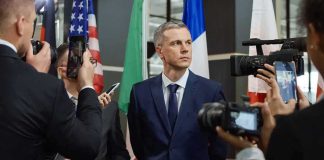
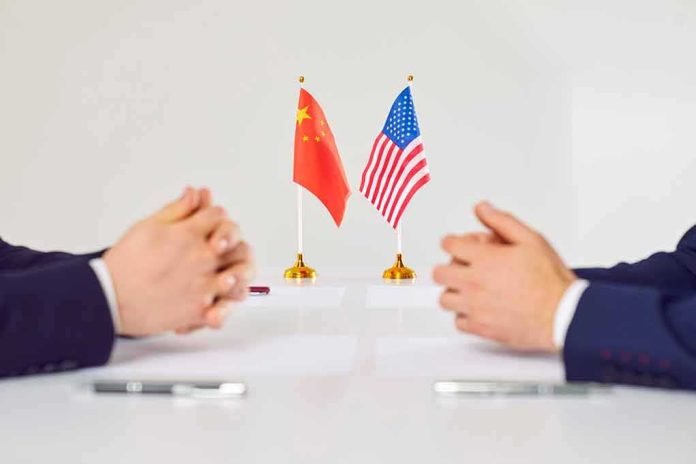
President Trump met China’s Xi Jinping and Russia’s Vladimir Putin in Shenzhen during Asia meetings, marking the first reported summit of all three leaders together. The governments released a joint statement that echoed a Cold War line: a nuclear war cannot be won and must never be fought. The text also said they would hold dialogue on reducing nuclear risks and preventing nuclear spread. Reporters described the event as unprecedented and the declaration as a general peace message.
Reuters reported that the statement did not launch arms control talks, set a timetable, or list any hard limits on weapons. Trump has said he wants cuts to nuclear arsenals, but the public outcome stopped short of that. Yonhap News Agency said nuclear risk reduction was a focus, yet it saw no concrete ceilings or inspection plans in the document. This places the summit in the “opening move” category, not a signed reduction deal with binding terms.
What Was Not In The Declaration
The joint text left out North Korea’s nuclear program, a key worry in Asia and for United States allies. There was no mention of warhead numbers, verification teams, or inspection rights. No follow-up dates or named negotiators appeared in public readouts. American television coverage also noted limits on media access at the Asia meetings, which narrowed direct questioning and visibility into side sessions tied to the summit. Those gaps matter because tight details usually signal real movement.
For many readers, the contrast feels familiar. Leaders promise safety and dialogue, but citizens see no near-term change in threats or costs. Conservatives want strength and clear wins over rivals. Liberals want guardrails, transparency, and less risk of war. Both sides worry that elites meet, talk big, and then return home without fixes that touch daily life. This summit, as reported, offered words of caution on nuclear war but no binding steps to actually shrink the danger.
How This Fits Long-Running Nuclear Diplomacy
Diplomacy often starts with broad safety lines and then, if talks advance, shifts to technical work on warhead limits and checks. Analysts point out that the famous line about nuclear war being unwinnable dates to Ronald Reagan and Mikhail Gorbachev in 1985, and repeating it can ease crisis risks but does not cut arsenals by itself. Today’s tripolar setting is harder. China has long rejected three-way nuclear cuts, arguing its stockpile is smaller than those of the United States and Russia.
In 1945, Roosevelt, Churchill & Stalin divided the world at Yalta. On Nov 19, 2026, Trump, Putin & Xi met in Shenzhen amid wars in Ukraine, Iran & the Middle East. Has post-1945 US supremacy just hit its breaking point? https://t.co/D5IoQuf9By
— Ghost Miracle News World (@gmnewsworld) November 20, 2026
The next tell will be whether any government names negotiators, sets dates, or proposes real numbers. A hotline upgrade, data exchanges, or missile test notifications would also show movement. Without that, the takeaway stays the same: a rare picture of the “big three,” a sober line on the horror of nuclear war, and little that changes force levels or budgets. Voters who feel Washington serves insiders will see this as more stagecraft unless concrete steps follow soon.
Sources:
facebook.com, edition.cnn.com, reuters.com, en.yna.co.kr, dw.com, nbcnews.com