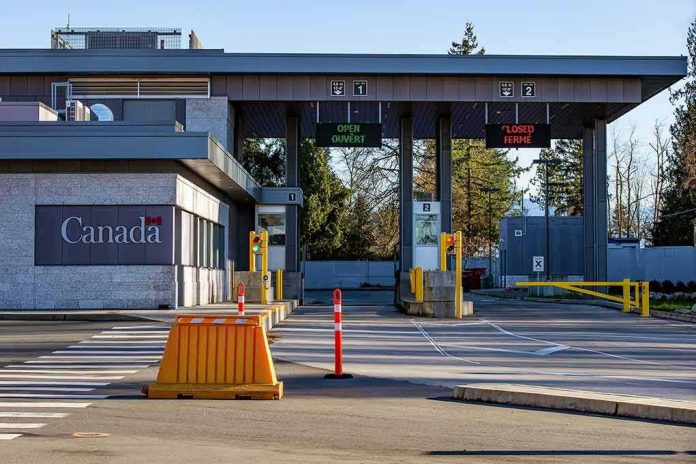
For the first time in 96 years, a forgotten 1930 tariff law is being used to slap 50% duties on Canadian goods, raising hard questions about who in North America really benefits from this trade war and who just pays the bill.
Story Snapshot
- Trump is using Section 338 of a 1930 tariff law to impose **50% duties** on many Canadian imports.
- The White House says Canada discriminates against American **dairy, alcohol, and auto exports**, but leaves major items like oil and potash untouched.
- Canada and trade panels say its dairy rules **follow trade agreements**, putting the U.S. legal case on shaky ground.
- Past tariffs have raised prices and cost jobs, feeding a sense that trade wars punish workers more than elites.
Trump’s New 50% Tariffs And The Old Law Behind Them
President Donald Trump has ordered an extra 50% tariff on a wide range of Canadian goods, using Section 338 of the Tariff Act of 1930. This Depression-era law lets a president hike tariffs up to 50% when another country is judged to discriminate against United States trade. For almost a century it sat on the books but unused; now it is the legal weapon for this latest front in the Canada–U.S. trade war. The new duties will start 30 days after the proclamations.
The White House says Canada has given unfair treatment to American cars, alcohol, and dairy products. A senior official pointed to provincial actions on alcohol, saying all but two provinces stopped buying, distributing, or selling American alcoholic drinks while not placing similar limits on other countries. The administration argues these “non-trade practices” hurt American farmers, manufacturers, and workers, and that higher tariffs are meant to offset that damage and push Canada back to what it calls “fair trade.”
What Gets Hit — And What Gets Spared
The tariff list is long and varied. It runs from milk and cream to wine, beer, whiskey, hockey gear, food items, construction materials, clothing, furniture, technology, and car parts. One official summed it up as covering “wine to hockey sticks to cement.” At the same time, some of Canada’s most important exports are spared. Oil, Canada’s biggest energy export to American refineries, is exempt. So are potash fertilizer, fish, and key critical minerals that American industry depends on.
The exemptions matter because they show this is not a full ban on Canadian trade, but a selective hit list shaped around both politics and supply chains. Goods already facing separate “national security” tariffs, such as steel and many auto parts, are also excluded from this 50% layer. That means some sectors feel stacked penalties while others stay protected, often where American companies rely heavily on Canadian supply. Many voters on both the right and left see this pattern and ask whether trade law is being used more to send messages than to fix core problems.
Canada’s Pushback And The Legal Fight Over Dairy And Alcohol
Canadian leaders and trade experts strongly reject the claim that their dairy and alcohol rules break trade deals. A trade dispute panel under the Canada–United States–Mexico Agreement (CUSMA) has already ruled against the United States in a case on Canada’s dairy supply management, finding Canada’s measures were not inconsistent with CUSMA. A separate panel under the Comprehensive and Progressive Agreement for Trans-Pacific Partnership also called Canada’s dairy system compliant with its international duties, a “clear victory” for Canada.
Legal analysis further notes that the huge “250–300% tariffs” often cited by American officials only apply if export volumes go over set quotas, which has never happened for American dairy going into Canada. That undercuts part of the public argument that Canada is slamming the door on American products. Yet, there is still no detailed public study from Canada showing how much American dairy could realistically grow under current rules, or a clear, on-record explanation from provincial alcohol regulators about why they singled out United States products. This lack of clear data from either side leaves ordinary citizens stuck between dueling claims, trying to guess who is telling the fuller truth.
Courts, Costs, And What This Means For Regular People
Trump’s move also comes right after a major setback in the courts. In February 2026, the United States Supreme Court upheld lower court rulings that struck down broad tariffs on Canada and Mexico that were imposed under the International Emergency Economic Powers Act. That decision warned presidents against using emergency powers to run wide trade wars without clear limits. Now, Trump is switching to Section 338 instead, but scholars say any claim of “discrimination” could also face close review if challenged.
[Donald Trump to impose 50% tariff on most Canadian goods, White House says | Trump tariffs | The Guardian]
“Turmoil likely as Trump officials say Canada unfairly discriminated against US autos, alcohol and dairy products“ https://t.co/xNyhHzN8Uo
— Norio Nakatsuji (@norionakatsuji) July 21, 2026
History suggests who pays in these fights. Earlier rounds of tariffs cost tens of thousands of American manufacturing jobs and raised prices for consumers. Auto tariffs alone were linked to sharp car price increases, making it harder for families to buy vehicles they need. Canada has answered each new set of duties with its own counter-tariffs on American goods, not with economic collapse. For many citizens across the political spectrum, this looks less like a smart strategy to protect workers and more like a long trade storm where well-connected elites hedge their risks while everyone else absorbs higher bills and growing uncertainty.
Sources:
zerohedge.com, detroitnews.com, toronto.citynews.ca, youtube.com, whitehouse.gov, cfib-fcei.ca, en.wikipedia.org, congress.gov, cambridge.org, slaw.ca, dentons.com, international.gc.ca, cbc.ca, ctvnews.ca, cov.com