

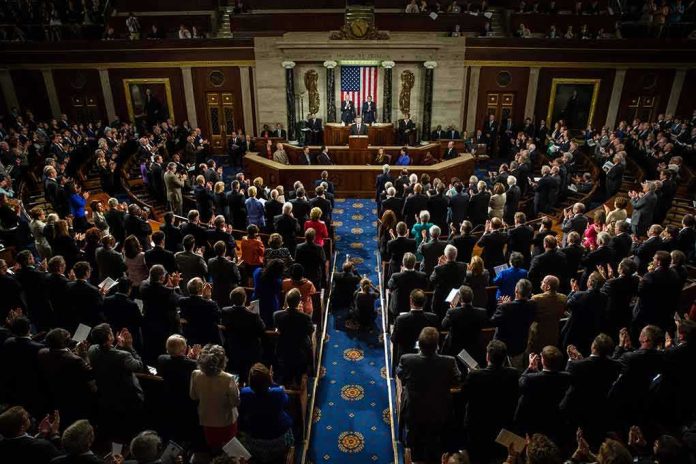
Todd Blanche’s confirmation as attorney general on a 50-49 Senate vote puts President Trump’s former personal lawyer in charge of the Justice Department after a fight that exposed deep fear about political control of federal law enforcement.
Quick Take
- The Senate confirmed Blanche in a 50-49 vote, with every Democrat and two Republicans opposed.
- Reporting said Republicans and Democrats raised concerns about Blanche’s independence from President Trump.
- Coverage tied the confirmation fight to Blanche’s role as Trump’s former personal lawyer and his work on the Justice Department’s anti-weaponization fund.
- Abortion-rights groups are warning about the post, but the supplied reporting does not show an abortion-specific directive from Blanche.
Why the confirmation matters
The Senate’s narrow vote ended weeks of uncertainty over who would lead the Justice Department on a permanent basis. Blanche became the second confirmed attorney general of Trump’s second term after a confirmation fight that split both parties and put his closeness to Trump at the center of the debate. The result was narrow enough to turn a routine cabinet vote into a clear political warning sign.
That alarm came from more than one direction. Reuters and NBC reported bipartisan concern that Blanche might not keep enough distance from Trump’s goals, while the New York Times said his nomination moved forward only after a party-line committee vote. The Senate Judiciary Committee later approved him 12-10, and the full Senate followed with the thinnest possible margin for confirmation in this setting.
Why abortion-rights groups are sounding the alarm
Abortion-rights advocates are reading Blanche’s confirmation through a broader pattern: a president who has already tried to shape the Justice Department around his own priorities. ABC reported that Trump has sought to bend the department to his will and use it against political enemies, which feeds fears that enforcement decisions could reflect politics more than neutral law enforcement. That concern is about power and process, not about a public abortion pledge from Blanche.
The supplied record does not include a Blanche memo, speech, or hearing answer ordering abortion-related enforcement. It also does not show a specific national abortion crackdown plan from the Justice Department. What it does show is a nominee whose independence was questioned, whose ties to Trump were central to his rise, and whose confirmation depended on deal-making over another politically charged issue: the anti-weaponization fund.
What this means for the Justice Department
Blanche’s confirmation places a loyal Trump insider at the top of a department that handles civil rights, criminal enforcement, and major litigation. AP said he had “aggressively pushed” the administration’s priorities while serving in the acting role, which supports the view that he is aligned with Trump’s agenda. Supporters see discipline and follow-through. Critics see a Justice Department that may put loyalty ahead of independent judgment.
The Rule of Law took another hit with the confirmation of Todd Blanchehttps://t.co/IQVRSmCjup#toddblanche #ruleoflaw #senateconfirmation
— Geoffrey A. Schoos, Esq. (@gschoos) August 9, 2026
That divide helps explain why the vote drew attention well beyond Washington. For many voters, the fight is not only about one nominee. It reflects a larger worry that federal institutions answer too easily to power, whether the issue is immigration, protest enforcement, reproductive rights, or criminal cases touching the president’s allies and enemies. The Blanche vote made that distrust visible again, even if the abortion-specific case remains unproven in the supplied record.
Sources:
independent.co.uk, npr.org, politico.com, youtube.com, reuters.com, nytimes.com, cbsnews.com