
A phone call between a Democratic governor and a Republican president just shifted the entire trajectory of a controversial federal immigration operation that left two people dead on American streets.
Story Snapshot
- Minnesota Governor Tim Walz secured Trump’s agreement to consider reducing 3,000 federal agents deployed under Operation Metro Surge after two fatal shootings in Minneapolis
- The confrontation escalated following the death of 37-year-old Alex Pretti, shot by a Border Patrol agent on Saturday during enforcement operations
- Trump agreed to allow state-led investigations by Minnesota’s Bureau of Criminal Apprehension and promised better coordination targeting violent criminals
- Border Czar Tom Homan deployed to Minneapolis to manage the operation’s transition, signaling a tactical shift in federal enforcement strategy
When Federal Force Meets State Resistance
Operation Metro Surge brought approximately 3,000 federal agents from ICE and Border Patrol into Minneapolis streets, transforming the city into a flashpoint for federal-state tensions. The massive deployment aimed to enforce immigration laws and target criminals, but quickly generated a different outcome. Three shootings occurred since the operation began, with two proving fatal. The most recent victim, Alex Pretti, was killed Saturday morning on Eat Street in south Minneapolis by a Border Patrol agent during enforcement activities. His death became the catalyst that forced a reckoning between state authority and federal power.
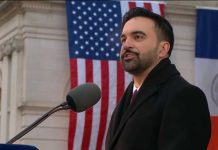
Governor Walz held nothing back during his Sunday press conference, demanding Trump withdraw the agents immediately. He accused the operation of creating fear, violence, and chaos in communities known for safety and cooperation. Walz invoked the earlier death of a VA nurse during federal operations, framing these fatalities as predictable consequences of deploying what he called untrained agents into urban areas. His rhetoric positioned Minnesota as unified resistance against federal intimidation, praising tens of thousands who protested in sub-zero wind chills. The governor’s message resonated beyond partisan lines, suggesting even conservative Minnesotans questioned the operation’s execution and human cost.
The Power of a Monday Morning Phone Call
Monday morning brought unexpected movement. Walz initiated a call with Trump that both sides characterized as productive, though their public statements revealed different priorities. Trump posted on Truth Social emphasizing coordination on violent criminals and claiming crime reduction success. He announced the deployment of Tom Homan, his Border Czar, to Minnesota for direct management. Walz’s office issued a more detailed account: Trump agreed to consider reducing agent numbers, ensure independent investigations by the Minnesota Bureau of Criminal Apprehension could proceed, and improve coordination to focus enforcement on genuinely violent offenders rather than broad community sweeps.
The concessions represent a significant tactical shift. Department of Homeland Security had previously blocked BCA investigators from the Pretti shooting scene despite state warrants. Federal agencies operated with minimal state coordination, creating jurisdictional chaos that left families terrified and communities disrupted. Children hid when agents appeared. Schools faced disruptions. The governor’s office noted Minnesota’s Department of Corrections honors every ICE detainer without failures, suggesting state cooperation already existed without the massive federal presence. Trump’s willingness to negotiate suggests political calculation merged with operational reality, the operation was backfiring spectacularly in a state that ranks high in public safety metrics.
Diverging Narratives and Uncertain Outcomes
Trump claimed Operation Metro Surge succeeded in other cities like Washington D.C., Memphis, and New Orleans, framing Minnesota as an extension of proven strategy. Walz countered that Minnesota needed no such intervention, that state and local law enforcement effectively maintained order without federal shock troops. The competing narratives expose fundamental disagreements about immigration enforcement methodology. Should federal operations prioritize visible force and mass deployments, or targeted cooperation with state authorities already managing public safety effectively? The answer matters beyond Minnesota, setting precedent for how immigration enforcement unfolds in Democratic-led states nationwide.
The practical implications remain uncertain. No confirmed agent withdrawal has occurred yet. BCA access to investigation sites depends on DHS following through on Trump’s verbal commitments. Homan’s arrival could either facilitate genuine coordination or simply provide federal management of continued aggressive operations. Walz secured promises, not guarantees. The families of Alex Pretti and the unnamed VA nurse wait for accountability that state investigators can only pursue if federal officials permit access. Communities remain fearful, uncertain whether the violence represents isolated incidents or predictable patterns when heavily armed federal agents operate in unfamiliar urban environments without local partnership.
The Broader Stakes of Federal-State Confrontation
This confrontation illuminates deeper tensions about sovereignty, immigration policy, and the limits of federal authority. Walz appealed beyond partisan identity, framing resistance as fundamentally Minnesotan rather than Democratic. His strategy recognized that Americans across ideological spectrums value local control and question federal overreach when it produces civilian casualties. Trump’s willingness to negotiate, even partially, acknowledges political vulnerability. Federal immigration enforcement requires some degree of state cooperation to function effectively. Antagonizing state authorities while generating sympathetic victims creates unsustainable political dynamics, even for presidents committed to aggressive immigration policies.
The outcome will influence how other states respond to similar federal operations. Governors watching Minnesota now understand that public confrontation combined with specific demands can yield federal concessions. They also recognize the risks: escalating tensions, potential violence, and uncertain resolutions. For immigrant communities nationwide, Minnesota represents both hope and warning. Hope that state leaders might successfully constrain federal operations. Warning that enforcement can turn deadly regardless of location, legal status, or community cooperation. The operation continues, modified perhaps, but fundamentally unchanged until concrete actions match Monday’s promises.
Sources:
CBS Minnesota: Tim Walz criticizes Donald Trump’s immigration surge following fatal shooting
FOX 9: President Trump, Gov. Walz have productive call over ICE operations
Politico Playbook PM: Trump makes a shift in Minnesota