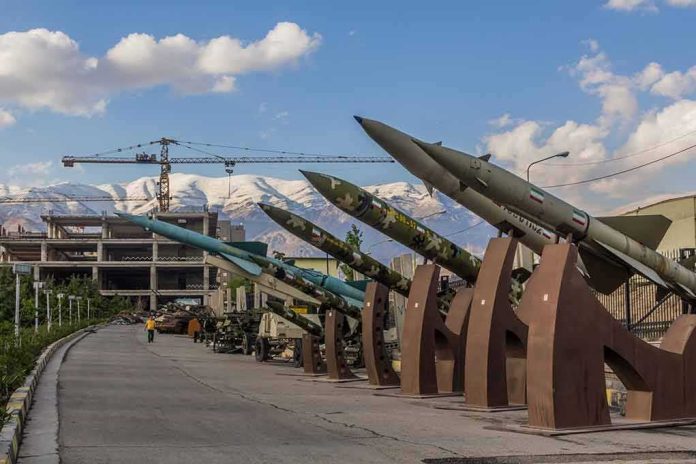
Iran’s top military command warned that any new U.S. strike will trigger attacks on all U.S. bases in the region and could “change the geography of the war.”
Story Highlights
- Iran’s military warned it would hit all regional U.S. bases if attacks resume.
- Statements came from formal command channels, not anonymous sources.
- Past Iranian claims include missile and drone strikes on U.S. sites.
- U.S. officials frame their strikes as limited and precise actions.
What Iran Said And Why It Matters
Iran’s Khatam al-Anbiya Central Headquarters and the Islamic Revolutionary Guard Corps issued direct warnings on September 20-21. They said any new U.S. attack would bring “continuous, effective, and painful” retaliation against all U.S. bases and interests in the region. They also warned countries that host U.S. forces that they may be hit if they enable strikes. The message signaled possible expansion of the fight beyond Iran’s borders if the conflict restarts.
The warnings named U.S. bases as targets and used sweeping language about response without limits. Iranian outlets also said the armed forces raised their alert status, which suggests readiness to act if triggered. The tone was not casual. It came from Iran’s formal military chain, according to reporting by Mehr, Tasnim, and Kurdistan24. That gives the threat more weight than a stray comment or a pundit’s take would carry.
How This Fits Recent Fighting
Iranian reporting claims a track record of hitting U.S. positions after earlier clashes. In late August, state-linked sources said Iran struck two U.S. airbases in Jordan with missiles after an attack on Iran’s Larak Island. Other reports describe Iranian use of both drones and missiles in past operations. These claims are part of Tehran’s case that retaliation is real and can scale if needed, though independent U.S. confirmation is limited in this record.
U.S. and allied messaging paints a different picture. Officials describe their strikes as narrow actions to reduce threats, like targeting command nodes, air defenses, and minelaying units. They say the aim is to deter attacks on shipping and partners, not to widen the war. That controlled frame contrasts with Iran’s warning of a broader response if hit again. The gap shows how both sides try to shape public views during crisis moments.
Risks For Regional Hosts And For Americans At Home
Iran’s statements pointed at countries that host U.S. troops. They urged those governments to prepare civil defense and warned that restraint would fade if they support new attacks. That message pressures partners to distance themselves from Washington’s plans. It also raises the risk that an incident in one area could lead to strikes across several states. That is the “geography” shift Iran says will follow another U.S. hit.
Iran hands US a new set of conditions for restarting negotiations, warning of retaliation without limitations if any new attacks occur. Reza Hatami has more pic.twitter.com/0QWitWUAIW
— TRT World Now (@TRTWorldNow) September 21, 2026
For Americans, a wider fight could mean disrupted trade routes, higher fuel prices, and new deployments. Voters on the right and left already worry that leaders in Washington miss these costs until they land on families and small businesses. Many see a pattern: officials talk tough, promise short missions, and then watch tensions spread. The core fear is mission creep without a clear end, paid for by people far from the briefing rooms in the capital.
What We Know, What We Do Not
The record strongly supports that Iran issued clear, public threats through formal channels. The sources include state-aligned media, which can limit outside verification of exact wording. Some claims about past base damage rely on Iranian assertions rather than confirmed U.S. reports. The phrase about changing the war’s geography appears in reported quotes, not an original transcript here. Still, the warnings exist and target all U.S. bases in the region if fighting resumes.
Bottom Line For Readers
If the United States hits Iran again, Iran says it will strike U.S. bases across the region and pressure host nations. U.S. leaders say their own actions aim to stay limited. Both cannot control what follows once missiles fly. This is why clear goals, honest timelines, and a plan for the day after matter. People on both sides of our politics want one thing here: protect Americans without drifting into a larger, avoidable war.
Sources:
cbsnews.com, en.mehrnews.com, tasnimnews.ir, tribune.com.pk, kurdistan24.net, tribuneindia.com, tabnak.ir, newindianexpress.com, timesnownews.com, france24.com, hindustantimes.com, nytimes.com, independent.co.uk, npr.org