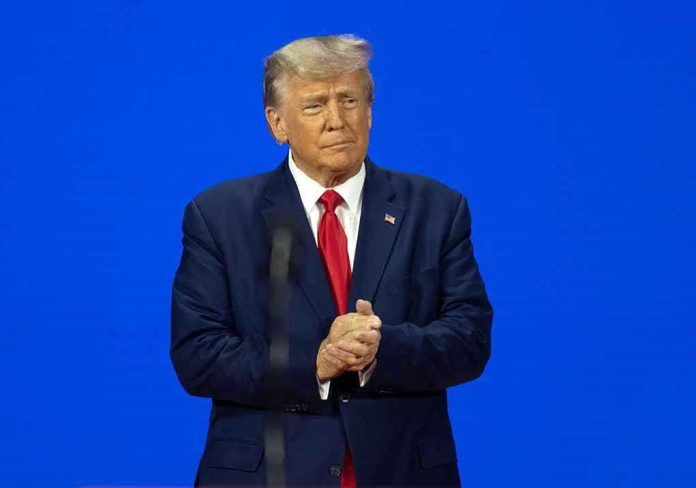
Indonesia just volunteered to be the first test case for whether Trump’s brand-new “Board of Peace” is a serious diplomatic tool or a flashy photo-op with unpredictable consequences.
Story Snapshot
- President Prabowo Subianto plans to attend the inaugural meeting of President Donald Trump’s “Board of Peace” in Washington this month.
- Indonesia’s foreign ministry confirmed it accepted the invitation, signaling a deliberate diplomatic wager, not a casual courtesy call.
- The initiative’s mandate, membership, and mechanics remain unclear, which makes the first meeting the real headline.
- Indonesia’s early participation positions Southeast Asia inside a new U.S.-led forum before the rules are even written.
Washington Gets the First Look at a New “Board of Peace”
President Prabowo Subianto’s planned trip to Washington for the first meeting of President Trump’s newly announced “Board of Peace” puts Indonesia in an unusually exposed position. Jakarta didn’t send a vice minister or an envoy; it signaled that the president himself intends to show up. Indonesia’s foreign ministry publicly confirmed acceptance of the invitation, which turns a vague initiative into a live diplomatic event with reputational stakes.
The unanswered questions are the point. “Board of Peace” sounds grand, but the public record still lacks basics: who else sits at the table, what authority it holds, what issues it prioritizes, and how outcomes get measured. That uncertainty makes Prabowo’s attendance more interesting than the name of the board itself. Leaders don’t usually join a first meeting unless they want influence over the agenda—or need to hedge against being left out.
Why Indonesia Is First in Line, and Why That Matters
Indonesia isn’t a small-state accessory to global politics. It’s the world’s largest Muslim-majority nation, a heavyweight in Southeast Asia, and a country that routinely argues for strategic autonomy rather than formal alignment. By accepting Trump’s invitation quickly, Prabowo signals that “non-alignment” doesn’t mean “non-engagement.” He is placing Indonesia where it can shape conversations early, before they calcify into a U.S.-only framework that others merely react to.
Prabowo’s timing also reflects the rhythm of new administrations. Freshly installed leaders and newly launched initiatives create a short window when big decisions get made fast: who gets invited, who gets ignored, and what “counts” as cooperation. Indonesia’s presence at the inaugural session sets a precedent that Southeast Asia won’t be treated as a distant theater. That’s smart statecraft, especially when regional stability depends on credible deterrence and steady trade, not slogans.
Trump’s Convening Power Meets Prabowo’s Search for Leverage
Trump holds the convening power because the meeting is in Washington and because the board carries U.S. presidential branding. Prabowo brings a different kind of currency: regional legitimacy and the ability to speak to audiences that don’t automatically trust American intentions. That combination can produce progress if both sides define “peace” in practical terms—de-escalation, humanitarian access, or enforceable ceasefires—rather than as a trophy word that papers over unresolved conflicts.
From an American conservative, common-sense view, diplomacy earns respect when it delivers outcomes without dragging the U.S. into open-ended commitments. A “board” can help if it encourages burden-sharing, realistic objectives, and accountability. It becomes a problem if it turns into expensive symbolism, moral preening, or a pathway to soft deals that reward bad actors. The first meeting will telegraph which direction this goes, even if no final agreements emerge.
The Biggest Risk Is Ambiguity, Not Attendance
The reporting so far centers on one clear fact: Indonesia accepted the invitation, and Prabowo plans to attend. Nearly everything else remains undefined. That ambiguity cuts both ways. It lets participants quietly test ideas without immediate backlash, but it also creates a vacuum that critics will fill with speculation. If the “Board of Peace” lacks transparent goals, even a productive meeting can be framed as theater, and any misstep can look like a broken promise.
Indonesia faces a parallel risk. Prabowo’s presence elevates Indonesia’s profile, but it also ties Jakarta to the early reputation of the board. If the initiative later looks unserious or partisan, Indonesia’s choice to show up first could be portrayed as naïve. That’s why disciplined messaging matters: Indonesia can emphasize that attendance is about dialogue, stability, and national interest—not about endorsing every U.S. political fight or every future board decision.
What to Watch When the Cameras Turn On
The most revealing signals won’t be in the word “peace.” Watch who else appears, how the meeting is described afterward, and whether follow-on working groups or timelines get announced. Serious diplomacy produces boring artifacts: schedules, joint statements with specific commitments, and mechanisms for continued contact. Pure branding produces dramatic visuals and vague promises. Prabowo’s team will likely look for deliverables that justify the trip at home and prove Indonesia gained influence.
Indonesia President to Join First Meeting of Trump ‘Board of Peace’
— Asharq Al-Awsat English (@aawsat_eng) February 11, 2026
Limited data is available beyond the foreign ministry confirmation and basic framing, so the best prediction is modest: this first meeting will be more about establishing the board’s identity than solving a major conflict on day one. That doesn’t make it trivial. First meetings determine who feels heard, who gets sidelined, and what kind of results are considered acceptable. Indonesia showing up early signals it intends to be inside that room, not outside guessing.
Sources:
Indonesia President to Join First Meeting of Trump ‘Board of Peace’