
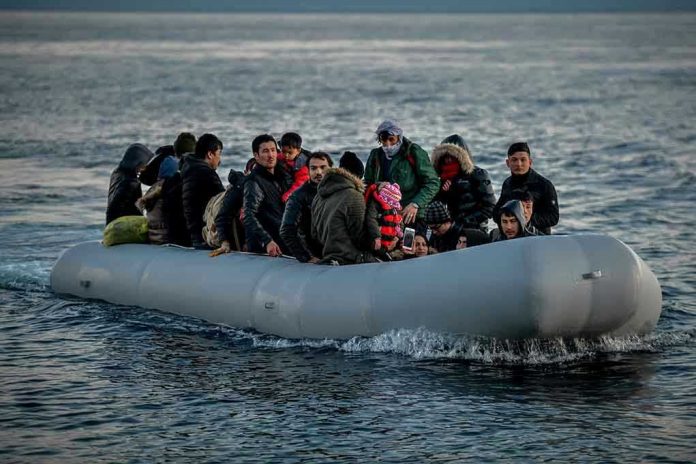
More than 1,000 UK schools are being pulled into a political firestorm after a “sanctuary” reading list encouraged young children to believe there’s always “plenty of room” for migrants arriving by boat.
Quick Take
- Schools of Sanctuary-linked materials used in over 1,000 UK schools have sparked backlash for pro-migrant messaging aimed at young children.
- Critics say the books blur the line between teaching compassion and promoting an “open borders” mindset during a real small-boat migration crisis.
- Supporters frame the books as age-appropriate tools to build empathy and literacy skills, not political advocacy.
- The controversy highlights a broader trust problem: parents across the political spectrum increasingly doubt schools will stay neutral on contentious issues.
What the “Plenty of Room” Phrase Is—and Why It Matters
UK media coverage in late April 2026 spotlighted children’s books promoted through Schools of Sanctuary, a program connected to the wider City of Sanctuary movement. The Telegraph reported that more than 1,000 participating schools are using storybooks with explicitly welcoming messages toward migrants, including lines encouraging children to say “come on in” and “there’s plenty of room.” One of the most cited examples is Kind by Alison Green, aimed at children aged five and up.
The immediate concern for many parents is not that compassion is being taught, but that the message lands in a national context shaped by illegal Channel crossings and intense political debate. When a book uses boat imagery and “room for everyone” language, critics argue it can read less like moral instruction and more like a one-sided take on a policy question—who gets in, under what rules, and at what cost to social cohesion.
How Schools of Sanctuary and Partners Describe the Goal
Supporters describe the approach differently. Schools of Sanctuary encourages schools to adopt a “welcoming” posture toward refugees and migrants, and reading lists are one method used to shape classroom discussions. A separate, related educational effort from the University of Winchester—The Boat—was designed as a literacy and empathy project, with resources built around open-ended storytelling to help pupils practice inference and evaluation while considering why people flee hardship.
That distinction matters because it shows the controversy is not simply about a single author or a single book. It is about a growing infrastructure of publicly supported resources—some tied to arts funding—that can be adopted by schools voluntarily. Even without an explicit party label, a consistent thematic emphasis can still feel political to families who believe schools should avoid messaging that overlaps with high-stakes national policy disputes.
What Critics Are Actually Alleging—and What the Evidence Shows
Sky News commentator Caleb Bond summarized the backlash bluntly, saying children are being told “there’s plenty of room” and to “share your toys” with “illegal immigrants.” Those words capture the political critique: opponents believe the resources collapse the difference between lawful immigration, asylum claims, and illegal entry, while presenting welcoming as the morally correct default. Based on the available reporting, the books do use overtly pro-welcome framing, though they often rely on metaphor rather than direct instruction about law.
The evidence base is also narrower than some headlines imply. The reporting supports that these materials exist, that Schools of Sanctuary promotes them, and that “more than 1,000” schools are affiliated with the program. What is less clear from the sources is how consistently the books are used across all participating schools, whether parents are informed ahead of time, and whether alternative perspectives are presented in class. Without that information, claims of coordinated “indoctrination” remain more interpretation than proof.
The Larger Issue: Neutral Education vs. Ideological Signaling
For many conservatives—especially older voters who have watched culture-war battles move from universities into K–12 classrooms—the UK dispute looks familiar. The core fear is that schools are drifting from basics toward worldview-shaping lessons that parents didn’t authorize. For many liberals, the counterargument is equally familiar: children should learn empathy for vulnerable people, and schools should not mirror the hardest edges of political debate. Both sides, however, share a concern about trust and accountability.
UK Schools Pushing Books On Kids Telling Them "There's Plenty Of Room" For Small Boat Migrants https://t.co/2UvxitjaFL
— zerohedge (@zerohedge) May 3, 2026
That trust problem is where the story becomes bigger than one reading list. When institutions rely on publicly funded partnerships and branded “values” programs, families often suspect an elite consensus is being imposed from above—whether the topic is migration, gender ideology, or national history. The most practical solution is transparency: clear book lists, parental access to materials, and straightforward explanations of learning objectives, especially when real-world policy fights are being mirrored in children’s stories.
Sources:
‘Come on in, there’s plenty of room’: The pro-migrant messages in schoolbooks.
schools-of-sanctuary-uses-children-s-books-to-teach-about-migrant-experiences