
Elon Musk testified he was a “fool” for funding OpenAI, accusing leaders of looting a charity in a $150 billion courtroom showdown that exposes tech elites betraying public good for personal profit.
Story Highlights
- Musk sues OpenAI, Sam Altman, Greg Brockman, and Microsoft for $150 billion, seeking nonprofit reversion and leadership ousters.
- Trial underway in Oakland federal court; Musk testified Tuesday, calling 2019 for-profit shift a betrayal of AI-for-humanity mission.
- Internal documents like Brockman’s diaries reveal financial motives, fueling claims of breach of founding promises.
- OpenAI defends shift as necessary evolution; counters Musk acted out of jealousy after launching rival xAI.
Trial Kicks Off with Musk’s Explosive Testimony
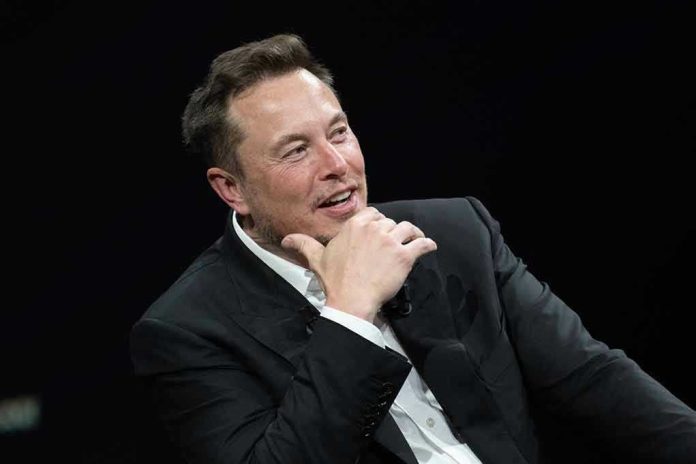
The trial began Monday in U.S. District Court for the Northern District of California in Oakland before a nine-person jury. Elon Musk, OpenAI co-founder, took the stand Tuesday. He labeled himself a “fool” for providing $38 million in early funding from 2015 to 2017. Musk criticized OpenAI’s 2019 shift to a for-profit model, 13 months after his January 2018 board departure, as “looting a charity.” He returns to testify Wednesday in the expected four-week proceedings.
Origins of the Nonprofit Betrayal
OpenAI launched in December 2015 as a nonprofit dedicated to developing safe AI for humanity’s benefit. Musk co-founded it alongside Sam Altman and Greg Brockman. Tensions arose by 2018 when Musk lost confidence and left the board after his CEO takeover bid failed. OpenAI then created a for-profit entity in March 2019, backed heavily by Microsoft. Musk alleges secrecy and exploitation of his contributions and name to build a profit juggernaut valued at $85 to $850 billion.
Stakes and Demands in the Lawsuit
Musk demands $150 billion in damages, calculated from OpenAI’s valuation and his attributed 50-75% contributions. He seeks to revert OpenAI to nonprofit status, remove Altman as CEO and Brockman as president, and direct proceeds to the charitable arm. The suit claims breach of charitable trust and unjust enrichment. Witnesses include Microsoft CEO Satya Nadella and former board member Shivon Zilis. Musk’s attorney Steven Molo calls defendants a “profit-seeking juggernaut.”
Thousands of pages of documents, including Brockman’s diaries and emails, entered evidence. These show early financial motivations and power struggles. OpenAI counters that Musk supported the for-profit pivot in 2019 but sued in 2024 after launching rival xAI in 2023 and failing another CEO bid.
Clashing Narratives and Broader Ramifications
Musk warns, “If we make it okay to loot a charity, the entire foundation of charitable giving in America will be destroyed.” OpenAI posted on X: “The truth and the law are on our side. This lawsuit has always been a baseless and jealous bid to derail a competitor.” Valuation figures vary across reports, and Musk’s prior awareness of the shift remains debated. Short-term, OpenAI faces leadership uncertainty and potential IPO delays. Long-term, the case could set precedents for nonprofit-to-profit transitions in AI and tech charities, scrutinizing elite control over transformative technologies.
This battle underscores frustrations across political lines with powerful elites prioritizing riches over public missions. In an era of deep state skepticism, Musk’s stand against Big Tech’s charity exploitation resonates with Americans weary of unaccountable billionaires reshaping society unchecked. It questions whether AI governance aligns with founding principles of trust and common good, or devolves into corporate plunder.
Sources:
Elon Musk attorney claims OpenAI, Sam Altman ‘stole charity’ high-stakes legal fight begins
Calcalistech article on OpenAI trial details
Elon Musk, Sam Altman OpenAI trial in Oakland