A progressive female Archbishop of Canterbury meets America’s first pope in a Vatican encounter that spotlights deepening doctrinal rifts over women’s ordination, challenging traditional Christian values cherished by conservatives.
Story Highlights
- On April 27, 2026, Sarah Mullally, the first woman Archbishop of Canterbury, met Pope Leo XIV, the first U.S.-born pope, at the Vatican for prayers and unity talks.
- The historic audience included gift exchanges and discussions on global wars and divisions, marking the first such meeting with a female Anglican leader.
- Doctrinal tensions persist, as Catholics reject women’s ordination—approved by Anglicans in 1994—highlighting irreconcilable differences on family roles and church leadership.
- Pope Leo XIV urged collaboration despite “intractable” issues, echoing long-standing ecumenical efforts amid declining Western Christianity.
- As Trump leads America in 2026, this transatlantic dialogue raises questions about aligning faith with conservative principles of tradition and limited progressive overreach.
Historic Vatican Meeting Unfolds
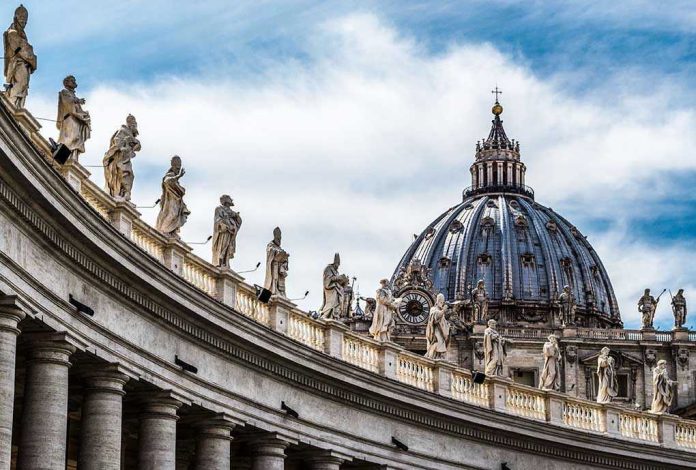
Sarah Mullally, enthroned as the 106th Archbishop of Canterbury in January 2026, arrived at the Vatican on April 27 for her inaugural audience with Pope Leo XIV. The first American pope, elected in May 2025, welcomed her in his library before they prayed together in the Urban VIII Chapel. They exchanged gifts and addressed global challenges like wars and societal divisions. This encounter, closed to the press, symbolized outreach between the Catholic Church and the Church of England, spiritual head of 85 million Anglicans worldwide.
Doctrinal Divides Under the Spotlight
The meeting underscores persistent tensions rooted in the 16th-century English Reformation, when the Church of England split from Rome. Anglicans approved women’s ordination in 1994, a practice Catholics firmly reject, viewing it as incompatible with apostolic tradition. Mullally’s nursing background and progressive stances on social issues contrast sharply with Catholic teachings on gender roles in clergy. Conservatives see this as erosion of biblical family values, prioritizing male spiritual leadership as outlined in Scripture.
Pope Leo XIV acknowledged new problems compounding historical divides, yet vowed continued dialogue. Mullally praised his calls for peace amid “horrific violence” in conflicts, emphasizing human dignity. She downplayed her gender, focusing on shared Christian witness, but the symbolism amplifies Anglican progressivism that alarms traditionalists.
Ecumenical Efforts Amid Global Challenges
Past precedents include Pope John Paul II’s 1982 meeting with Archbishop Robert Runcie and Pope Francis’s 2016 audience with Justin Welby, Mullally’s predecessor. This visit, 60 years after the first post-Reformation papal-archiepiscopal prayer in 1966, advances ARCIC dialogues started in 1967. Both leaders seek unity to counter secularism and fragmentation in the West, where Christianity declines amid woke agendas and moral relativism.
The Pope urged churches not to let modern divisions hinder collaboration on faith-spreading and peace initiatives. No further events followed immediately, but the encounter positions ongoing talks as a foundation, potentially influencing U.S.-Europe religious dynamics under President Trump’s second term focused on American values.
Implications for Conservative Christians
Short-term, the meeting boosts ecumenical morale among 170 million combined faithful, fostering hope amid schisms. Long-term, doctrinal gaps like ordination limit full communion, reinforcing conservative concerns over progressive shifts that undermine traditional marriage and family structures. Socially, it promotes gender inclusivity debates clashing with biblical norms.
Politically, it signals Western churches’ stance on global conflicts, relevant as America prioritizes sovereignty and energy independence. Traditionalists view such unity pushes warily, fearing dilution of core tenets in favor of compromise with modernist trends.
Sources:
Pope meets first woman Archbishop of Canterbury (UCA News)
Pope and first female Archbishop of Canterbury meet and pray together (Straits Times)