When earthquake survivors in Venezuela felt abandoned, some grabbed food to live while others – including alleged cops – grabbed flat‑screen televisions.
Story Snapshot
- Quake-hit La Guaira saw both survival looting for food and water and brazen theft of appliances and cash.
- Slow, “meager” aid and days without shelter, power, or security pushed desperate residents over the edge.
- Reports now claim some security forces themselves looted valuables from ruins instead of rescuing people.
- The fight over how to label this behavior exposes deeper anger at failed governments and disaster “management.”
Quakes, Chaos, And A City Left On Its Own
Back-to-back powerful earthquakes slammed Venezuela’s coastal state of La Guaira on June 24, turning neighborhoods like Catia La Mar and Caraballeda into rubble and leaving thousands dead or injured.[2] Survivors who feared cracked buildings set up camps on highway medians, in parks, and in stadiums, often sleeping outside with no shelter.[2] Basic services collapsed as power outages and blackouts knocked out traffic lights and complicated emergency response, creating a vacuum where normal order quickly broke down.[1]
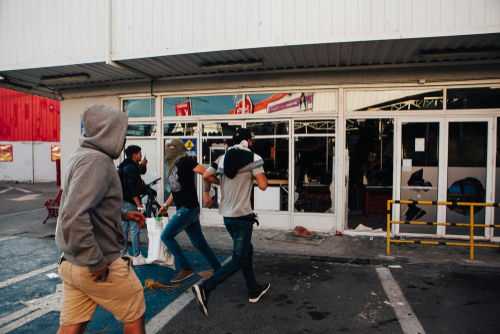
As rescue teams dug through collapsed homes for trapped families, security forces focused on saving lives in residential areas, not guarding shops in commercial zones.[1][2] Nightfall brought a different kind of crisis: people streamed into damaged supermarkets and stores, taking food, water, and other goods while no one was watching the aisles.[1][2] International media and local residents shared videos that showed streets filled with debris, sirens, and people carrying bags, boxes, and even large appliances out of shattered storefronts.[1][10]
Looting For Survival Or Crime Of Opportunity?
Footage and on-the-ground reports show a mix of behavior that is hard to squeeze into a simple “good” or “bad” box.[1][2] Many survivors grabbed clear essentials like food, drinking water, medicine, clothes, and blankets from ruined supermarkets and warehouses, often in neighborhoods hit hardest by the quakes.[1][2][4] In a separate report from the wider disaster zone, one resident described salvaging only “cookies, water, and underwear” from a damaged building, calling them bare essentials for the first hours after the shakes.[5]
At the same time, reporters watched swarms of motorcycles hauling away refrigerators, televisions, and even store cables from gutted shops in Catia La Mar.[2][6] Some outlets said people “took advantage of the disaster” to clear out whatever remained inside businesses, from appliances to cash drawers.[2][5] A systematic review of past disasters finds this pattern is common: most people seek survival goods, but a smaller group abuses the chaos to steal non-essential items when security fails.[13] That mix is exactly what seems to be playing out on La Guaira’s streets.[1][2][6]
Slow Aid, Deep Anger, And A State Of Emergency
Local anger is not just about broken glass and missing televisions; it is about feeling abandoned, again, by those in power.[5][6] Venezuelans in the quake zone told reporters that government help was “slow and meager,” even as the official death toll climbed above 1,400 and tens of thousands were missing.[5][6] One major newspaper summed it up bluntly: “aid trickles in, survivors sleep outside, and looting breaks out,” linking empty relief lines with full looted carts in La Guaira’s streets.[2]
Facing public outrage and growing disorder, Venezuela’s government declared a state of emergency and sent in the military to “stabilize” the region.[1][3] That move gave authorities a legal basis to treat all unauthorized taking of goods as a crime, no matter whether someone carried out bottled water or a brand-new television.[1] Disaster scholars warn this is a familiar script worldwide: states frame post-disaster looting mainly as criminal opportunism to justify heavy control, instead of fixing the logistics failures that left people hungry in the first place.[13][14]
When Those Meant To Guard Start To Steal
The trust crisis deepened when new reports claimed some members of the very security forces sent to keep order were caught looting too.[3] One detailed account describes images from La Guaira that appear to show officers taking valuable items and jewelry from rubble instead of helping a trapped victim nearby, sparking outrage on social media and beyond.[3] Separate clips shared online allegedly show police on a motorcycle carrying a boxed television, feeding public belief that ordinary people and officials play by different rules.
For many Americans watching from afar, this sounds uncomfortably familiar: rules for the people, loopholes for the powerful. Studies of past earthquakes and hurricanes show that looting of supermarkets and fuel often happens where poverty is high, damage is severe, and basic services or banking are already weak.[7][13] In other words, the people most crushed by the system before the disaster are the first to be pushed into illegal acts just to get what they need when the system collapses.
Why This Matters Beyond Venezuela
The fight over how to describe La Guaira’s looting is really a fight over who failed whom. For working families on both the American left and right, the pictures from Venezuela tap into a shared fear: in a major disaster, distant elites and slow, bloated agencies will protect their own interests first, while regular people are told to wait calmly in line with empty hands. Disaster research backs up that fear by stressing that delays in “logistical assistance” often push people toward illegal acts for survival.[13][14]
Media labels matter too. When cameras focus on the person hauling a television but ignore the mother grabbing infant formula, the story tilts toward simple “law and order” and away from hard questions about why aid was not there on time. Veterans of disaster research argue that most people act with solidarity after crises, helping neighbors, sharing supplies, and rescuing strangers, not turning into criminals overnight.[14][15] Yet talk of “looters” and sweeping crackdowns lets officials dodge blame for broken systems and lost lives.
Sources:
[1] YouTube – Venezuela quake survivors turn to looting
[2] YouTube – Furniture, Appliances& More Looted In La Guaira
[3] Web – Aid trickles in, survivors sleep outside, and looting breaks out in La …
[4] Web – Reports of looting emerged in Venezuela’s La Guaira region …
[5] Web – Looting Reported After Venezuela Earthquake … – Facebook
[6] Web – June 24-25, 2026 — Venezuela rocked by 7.5 and 7.2 magnitude …
[7] Web – La Guaira, Venezuela in the immediate aftermath of the June 24 …
[10] Web – Looting broke out in La Guaira, Venezuela, after two powerful …
[13] Web – La Guaira, Venezuela before and after the earthquake on June 24 …
[14] Web – Venezuela Live Updates: Window Narrowing to Find Survivors as …
[15] Web – On 25 June 2026, the Federal Council took note of the devastating …