
The United States is sending warships, planes, and a Marine general to Venezuela, and the move is already fueling questions about trust, power, and real limits on military missions.
Quick Take
- U.S. Southern Command says it is supporting State Department-led relief after deadly earthquakes in Venezuela.[1][9]
- Marine Corps Major General Kevin J. Jarrard arrived in Caracas to oversee the U.S. military role.[1][3]
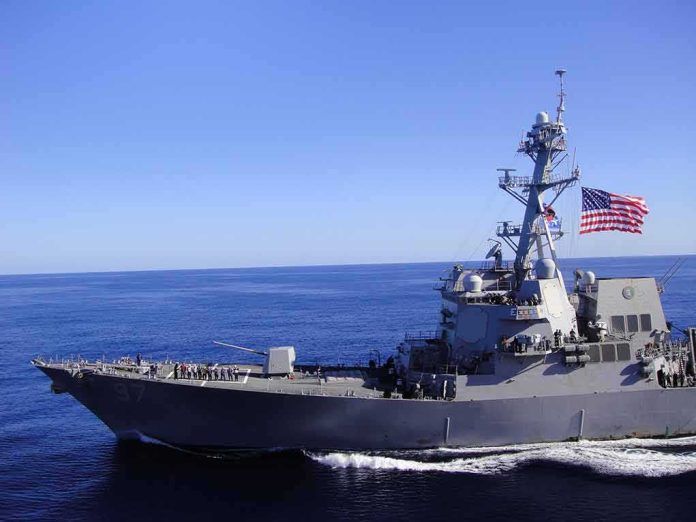
- The deployment includes the USS Fort Lauderdale, the USS Billings, C-17 and C-130 aircraft, and search and rescue teams.[1][3]
- President Trump approved $150 million in aid and emergency support for the response.[5][6]
What Washington Says the Mission Is
U.S. Southern Command says the mission is a relief effort, not a combat operation. The command says its forces are working with the State Department to support U.S. government relief operations in Venezuela after the June 24 earthquakes. It says the interim Venezuelan authorities formally asked for help. The official release also says the effort is meant to save lives and deliver critical aid.[1][6][9]
The public face of the mission is simple enough. U.S. officials say warships, transport planes, and search and rescue teams are being used for airlift, logistics, and rescue support. SOUTHCOM says the USS Fort Lauderdale and USS Billings are part of the response, along with C-17 and C-130 aircraft. Task & Purpose reported that the first arrivals reached Caracas Thursday night with a Marine Corps general leading them.[1][3]
Why Many Americans Will Still Be Skeptical
That official story will not erase the political baggage around Venezuela. Brookings noted that the United States launched a special operation in January 2026 to remove Nicolás Maduro, and Trump later said Washington was “running Venezuela” until the country’s oil system was rebuilt.[10] Against that backdrop, any fresh military movement in the country will draw suspicion, even if the stated purpose is humanitarian relief.
Critics also have reason to watch the details closely. SOUTHCOM’s own language stresses “unmatched airlift, logistics, and lifesaving capabilities,” which sounds noble, but still reflects a large military footprint.[1] The deployment of warships, aircraft, and hundreds of personnel can look like a show of force to people already wary of U.S. power in Latin America. That is why transparency matters so much in a crisis like this.
Aid, Control, and the Bigger Picture
Trump authorized $150 million in humanitarian aid, and NPR reported that $50 million is going to groups already working in Venezuela, including Samaritan’s Purse and Catholic Relief Services, while $100 million is going to a United Nations fund.[5] Supporters will call that practical. Skeptics will say it puts aid through layers of outside groups instead of direct government channels. Either way, the choice shows Washington wants speed and control in how relief is delivered.
US Deploys Warships and Aircraft to Venezuela Following Devastating Twin Earthquakeshttps://t.co/YmVI6MUhxu
A catastrophic twin earthquake has shattered Venezuela's capital, triggering an unprecedented US military response as the death toll climbs beyond 235 and rescue teams… pic.twitter.com/Xxzb3aLvwE— QNC News (@qnc_news) June 26, 2026
The response also shows how fast the government can move when it wants to. FEMA-style search and rescue teams from Virginia and California are part of the effort, with dogs, rescue gear, and emergency planners heading in.[5] If the mission stays focused on rescue and logistics, it may help save lives and rebuild some trust. But if the scope shifts or the paperwork stays hidden, doubts will only grow around the real purpose of the deployment.
Sources:
[1] Web – US sends warships, planes and Marine general to Venezuela after …
[3] Web – As directed by the Department of War, U.S. Southern Command is …
[5] Web – U.S. Military Support to Venezuela Earthquake Relief – southcom
[6] Web – U.S. pledges generous earthquake relief to Venezuela – NPR
[9] Web – Which countries have pledged aid to Venezuela after powerful …
[10] Web – Venezuela Earthquake Relief: Unmatched @deptofwar forces and …