
A federal judge has temporarily stopped New York from enforcing its new ban on masked federal officers, turning a deep fight over immigration and government power into the latest warning sign about who really runs the country.
Story Snapshot
- A federal judge issued a preliminary injunction blocking New York from enforcing its mask ban and ID rules against federal officers.
- The Justice Department argues New York’s law unconstitutionally tells federal agents what they can wear and how they must identify themselves.
- Governor Hochul and state lawmakers say the ban is a public-safety measure meant to stop “lawless” and intimidating immigration tactics.
- The battle highlights growing tension between state efforts to control immigration enforcement and federal claims of supremacy and officer safety.
What New York’s Mask Ban Actually Does
Governor Kathy Hochul pushed and signed a law that bars law enforcement from wearing face coverings while dealing with the public in New York. The rule covers local, state, and **federal** officers, including immigration agents, and is part of a wider immigration package aimed at curbing tactics by Immigration and Customs Enforcement. The law defines “face covering” broadly, including balaclavas, ski masks, neck gaiters, and tactical masks, but excludes medical masks and necessary protective gear. Willful violations start as an infraction, and repeat offenses can become misdemeanors.
New York’s statute also requires that every law enforcement officer clearly display their name or badge number when interacting with the public. The state’s own legal filing says the law applies to police officers, peace officers, and federal law enforcement officers, with limited exceptions for undercover operations, emergencies, or security risks. Supporters argue this “Mandating End of Lawless Tactics” approach is meant to increase transparency, reduce fear in immigrant communities, and make it harder for officers to act without accountability. Critics respond that it ties the hands of officers in volatile situations and exposes them to new dangers.
How and Why the Federal Government Fought Back
The U.S. Department of Justice sued New York, Governor Hochul, and other state officials, claiming the mask and identification rules are unconstitutional. In its complaint, the Justice Department says New York is “unlawfully regulating the Federal Government” by criminally banning federal officers from wearing masks and by dictating specific identification rules. The filing argues that the law violates the Supremacy Clause of the Constitution and the doctrine of intergovernmental immunity, which bars states from directly controlling how federal officers perform their duties. Federal lawyers also warn that forced unmasking could endanger agents and compromise sensitive operations.
The Justice Department’s brief stresses that the law is not simply about safety gear but about who decides how federal work gets done. By defining “law enforcement officer” to include federal agents and by attaching criminal penalties, New York is, in the federal view, stepping over a constitutional line. That line matters beyond masks: the same budget package also cancels many local cooperation agreements, known as 287(g) arrangements, that let county jails and police help carry out immigration enforcement. Together, federal officials say, these moves attempt to hamstring national immigration policy inside one state.
The Judge’s Ruling: Mask Ban Blocked, Power Struggle Exposed
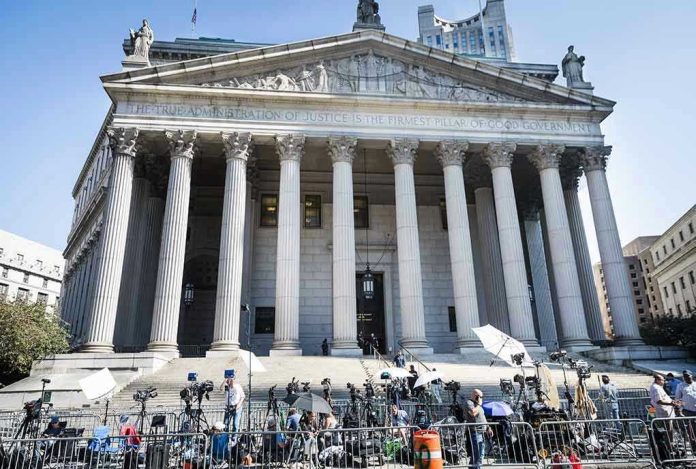
U.S. District Judge Mae D’Agostino issued a preliminary injunction blocking New York from enforcing its ban on masks and related rules against federal officers while the case continues. Her order means immigration agents and other federal officers can keep wearing face coverings and using their own identification practices during public interactions in New York, at least for now. Reporting on the ruling says she allowed parts of New York’s limits on local-federal cooperation to remain in place, showing the court is drawing a line between how states treat their own agencies and how they treat federal ones.
This is not the first time a state mask ban has run into federal courts. Earlier this year, a federal judge blocked California’s effort to ban face coverings for federal law enforcement, ruling that the state could not apply those restrictions unevenly. That California decision reportedly allowed a requirement that federal officers show a name or badge number, but rejected a targeted ban on masking. Taken together, these rulings suggest judges are wary of states using “visibility” rules to single out federal officers, even if some identification measures might survive.
Why Both Sides Say Public Safety and Trust Are at Stake
Governor Hochul and her allies frame the law as a pushback against what they call fear tactics by masked immigration agents in New York communities. Hochul has argued there is “no reason” for Immigration and Customs Enforcement agents to wear masks during routine operations and says the practice only serves to intimidate people. Many liberals and immigrant advocates see masked officers as a symbol of a government that feels unaccountable and distant, and they support stronger rules to force officers to show their faces and names.
In a ruling that may signal a similar outcome in New Jersey, a federal judge has struck down a New York law prohibiting federal officers from wearing masks.
“New York cannot impose its own uniform requirements on federal agents simply because it disagrees with how the Federal… https://t.co/QQOOP0AkDU
— Shlomo Schorr (@OneJerseySchorr) August 3, 2026
Federal officials and many conservatives see something else: a state trying to micromanage federal law enforcement and weaken immigration enforcement. Immigration and Customs Enforcement has already said it has “no intention” of following New York’s mask ban, calling it unconstitutional. For officers who often deal with dangerous suspects, gang activity, and cross-border crime, masks can feel like basic protection—not a tool of intimidation. To them, New York’s law looks like another example of political leaders putting symbolism over safety and using state power to block federal law.
What This Fight Reveals About Government and Power
This clash lands in a country where many on the right and left already believe the system is failing ordinary people. On one side, New York leaders claim they are defending civil liberties and trying to rein in heavy-handed immigration raids. On the other, the federal government insists it cannot let states decide what federal officers wear, how they identify themselves, or which local partners they keep. Both sets of officials say they are protecting the public, but both also seem locked into defending turf, budgets, and political narratives.
Legal experts note that the Supreme Court has long struggled with where to draw the line between state authority and federal supremacy. Today’s mask fight is part of that bigger story: states pass broad rules in the name of safety and dignity, while Washington argues those rules are really aimed at blocking federal policy. For citizens watching from the outside, the result can feel less like protection and more like a power game. Whether you worry more about masked agents or about weak borders, this case is another sign that the people in charge remain focused on control, not on fixing a broken system.
Sources:
thegatewaypundit.com, news10.com, justice.gov, tollbit.gothamist.com, nytimes.com, syracuse.com, cmsapi.theepochtimes.com, ag.ny.gov, courthousenews.com, facebook.com, youtube.com, timesunion.com, binghamtonhomepage.com