
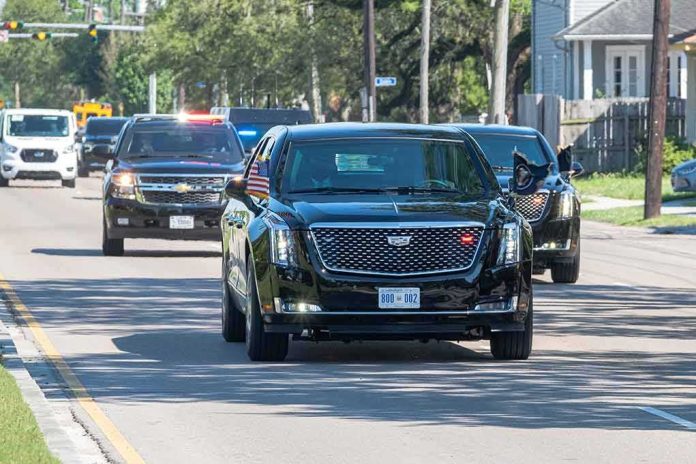
After storms grounded aircraft, President Trump ordered his team into a motorcade and sped 85 miles from Texas to make his Oklahoma rally anyway.
Story Snapshot
- Severe weather blocked helicopter and plane travel between Texas and Oklahoma, prompting a ground dash.
- The White House said the president would motorcade from Denton, Texas, to Durant, Oklahoma, about 85 miles.
- Reporters said the caravan moved at high speeds to keep the rally on schedule.
- The shift shows how presidential trips rely on backup plans and tight security logistics.
Weather Scrambles Plans, Rally Goes On
Officials said storms in North Texas and southern Oklahoma grounded aircraft between events. The White House announced a switch from air to a motorcade from Denton, Texas, to Durant, Oklahoma, roughly 85 miles away. President Trump told the crowd his team suggested canceling because they could not fly, but he chose to drive instead. Local coverage in Oklahoma matched those details, noting stormy conditions made a helicopter hop unsafe. The rally started late but went forward as planned.
Pool and local reports described a fast run north on U.S. 75 to limit the delay. One outlet said vehicles at times neared 100 miles per hour to shrink the gap before the start time. That pace reflects common motorcade practice during schedule crunches. Law enforcement typically clears lanes and ramps to protect the convoy and the public. Delays still happen, but preferred routes are pre-mapped so a ground fallback can launch within minutes when flying is not an option.
How Presidential Travel Adapts Under Pressure
United States Secret Service planners build trips with layers of backups. Agents work with local police weeks in advance, map the road route, and identify hospitals and safe sites along the way. Aviation teams also plan for airspace holds and weather updates. When storms close the window for helicopters or a quick hop by plane, the plan switches to armored cars and escorts. That is standard practice, not a one-off event, and it trades speed for control and safety when skies turn risky.
The motorcade itself is a rolling security bubble. Modern convoys include decoy limousines, counterassault teams, bomb technicians, and medical support. Road closures and on-ramps get locked down before the lead car arrives. That footprint looks large to bystanders, and it is. But the size reflects real risks tied to any presidential movement. The aim is simple: keep the route secure, move at a steady pace, and arrive with the principal protected even if the schedule slips.
Why This Moment Resonates Beyond One Rally
This detour taps into wider voter frustration about government planning and priorities. Many citizens on the right and left see leaders as insulated from daily problems like traffic, rising costs, and delays. This episode shows both sides of the machine. Weather forced a change that any traveler knows well. Yet the system adapted quickly because teams had prepared a ground route and police support. That is government working as designed, at least for the country’s most protected traveler.
President Trump wrapped up a long evening rally in Durant, Oklahoma, after traveling by motorcade from a Texas factory stop because weather blocked flights. He spent roughly an hour and a half on stage supporting Republican midterm candidates, then left the platform moving to… https://t.co/L81kUC40Wx
— Rahul Soni (@shivison048x) October 2, 2026
At the same time, the sprint to keep a political event on track will strike some as proof that elites get instant solutions while regular people wait. That tension is real. The safeguards and spending behind these movements are significant, and oversight groups have long tracked those costs and duties for transparency. The bottom line here is clear: storms grounded flights, the plan flipped to wheels, and the president made the stage—late, but there—because the backup system held.
Sources:
facebook.com, apnews.com, nbcnews.com, click2houston.com, ranker.com, inquirer.com, forth.news