President Trump met Ireland’s top leaders in Dublin before flying west to his own Doonbeg resort for the Irish Open, blending diplomacy with business on a tight two-day schedule.
Story Snapshot
- Trump held meetings in Dublin with Ireland’s president and prime minister before heading to Doonbeg.
- The stop included remarks to U.S. and Irish business leaders at the U.S. ambassador’s residence.
- Irish officials framed the visit as a chance to reaffirm strong economic and cultural ties.
- The trip mixed formal talks with a high-profile golf event at Trump’s own resort.
What Happened in Dublin
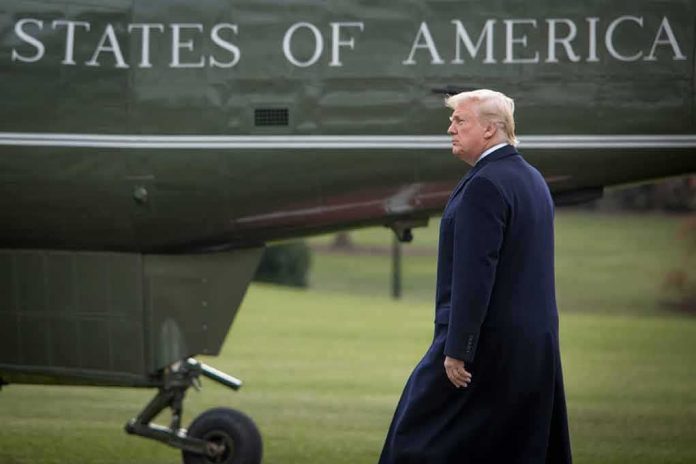
President Trump landed in Dublin for a two-day visit that began with official meetings. Reporting states he met Ireland’s president, Catherine Connolly, and the prime minister, known in Ireland as the Taoiseach, Micheál Martin. The schedule, described in advance by major outlets, placed these talks first. The visits took place in secure government settings typical for leader meetings. Reporters said the engagements were cordial and connected to ongoing United States–Ireland ties and current global issues.
After the leader meetings, Trump headed to the United States ambassador’s official residence in Dublin. There, he was slated to address a group of United States and Irish business figures, according to wire reporting. That business outreach underscored a simple point. The United States and Ireland share a deep trade and investment link that touches jobs, research, and finance on both sides of the Atlantic. Irish officials signaled that the visit fit within that wider economic relationship.
Why the Ireland Stop Matters
Irish leaders publicly welcomed the chance to meet and discuss areas of mutual interest. Taoiseach Micheál Martin said he looked forward to talks that reaffirm strong economic, cultural, and people-to-people ties between the two nations. Those ties are not small. Ireland hosts hundreds of United States companies, and Irish firms also invest widely in the United States, reflecting a two-way bridge for jobs and capital, as other reporting and business groups have often noted.
The mix of diplomacy and business also highlights a recurring feature of modern presidential travel. A visit can serve several goals at once. In Ireland, the meetings in Dublin sat alongside a public plan to reach out to business leaders and then attend a major golf event. That created a full picture that was both formal and public facing. It also kept a tight timetable for security and logistics in the capital and beyond.
The Doonbeg Leg and Local Optics
Following the Dublin schedule, Trump traveled west to County Clare. There, he planned to stay at and appear at Trump International Golf Links and Hotel Doonbeg, which he owns. The trip aligned with the Irish Open, a high-profile tournament that draws crowds and media attention. This stop carried a business angle by nature, since the property is linked to the president. It also drew focus to tourism jobs and local pride around the event.
Travel Report 9- Taoiseach meeting and Qs on Iran, Gaza, Trade, more
Pool was ushered into a small, beautiful wood paneled room at Farmleigh with large tapestries on the wall. President Trump and the Taoiseach sat next to a large white bouquet in front of a fireplace.
The…
— White House Press Pool Reports (@WHPressPool) September 12, 2026
Wire services noted this was not an official state visit. That means the protocol level sat below the full ceremonial setting that comes with a state visit. Still, the stop included recognized leader meetings, an ambassadorial business event, and a defined travel plan. The hybrid structure is common and often shapes how the public sees such trips. In this case, the Dublin talks and the Doonbeg event together framed the short visit.
How Both Sides in America May Read It
Conservatives may see a president working to deepen trade links and support United States business abroad. Liberals may worry about the overlap between public duty and private holdings. Both views reflect a wider concern many Americans share. People across the spectrum feel leaders focus on optics and access for elites while core kitchen-table issues wait. This visit shows how official travel can quickly touch those nerves, even when the schedule is clear and public.
What Is Still Limited
Public reports confirm the meetings and the schedule sequence. They do not offer long readouts of policy substance. Outlets did not publish a joint statement that listed agreed actions or deadlines. That lack of detail is common for short leader drop-ins, but it limits how much we can say about concrete outcomes from the Dublin talks. The confirmed facts remain the itinerary, the meetings, and the dual focus on diplomacy and business.
Sources:
facebook.com, bbc.com, apnews.com, rte.ie