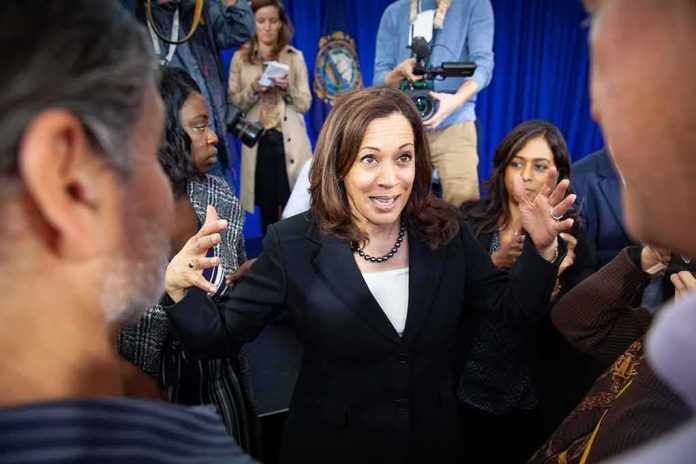
Vice President Kamala Harris is joining Abdul El-Sayed in Michigan for a roundtable on Black maternal health, and both campaigns say the visit is about turnout and control of the Senate.
Story Highlights
- Harris will appear with El-Sayed in Michigan for a Black maternal health roundtable tied to voter turnout.
- Both campaigns link the stop to building a Democratic Senate majority and lowering costs.
- Harris endorsed El-Sayed after his primary win, framing the race around prices and accountability.
- Michigan’s battleground status makes the surrogate visit a strategic push before November.
What The Campaigns Announced
Vice President Kamala Harris will campaign with Michigan Senate candidate Abdul El-Sayed at a roundtable focused on Black maternal health. Harris’s spokesperson said she aims to help turn out voters in a critical state and flip the Senate. El-Sayed’s campaign said the conversation will address Black maternal health and lowering health care costs. Outlets described the event as a scheduled policy discussion, not a rally, with a date certain and a clear topic.
The Harris team framed the visit as part of a broader push to reduce costs and challenge what they call Trump-era corruption. El-Sayed’s camp highlighted Harris’s long-time focus on maternal health and her stature in Detroit communities. The campaigns tied the stop to turnout and Senate control, signaling a focus on coalition priorities with broad appeal. The statements center on affordability and health outcomes, which both sides argue affect daily life in Michigan.
Endorsement And Message Continuity
Harris endorsed El-Sayed after his August primary win and said she “proudly” stands with him to secure a Democratic Senate majority. Her endorsement cited rising costs for housing, gas, groceries, health care, and child care, and criticized tax breaks for the wealthy. The visit continues that message track and presents a united front on cost-of-living issues. The continuity matters in a tight race, where repeated signals can help mobilize base voters.
El-Sayed has framed the roundtable as aligned with Harris’s record on maternal health and with his own public health focus. Reports say the event will address disparities in maternal and infant mortality in Black communities. That policy frame lets Democrats spotlight a human stakes issue with cross-party sympathy even in a polarized climate. It also gives the campaign a local lens that can connect national politics to community health outcomes.
Why Michigan, Why Now
Michigan remains a battleground state where small changes in turnout can swing outcomes. Research on surrogate campaigning finds these appearances can shift a candidate’s vote share by a modest but real amount when the messenger and issue fit the audience. The decision to feature a maternal health roundtable in Detroit-area communities fits that model and seeks to energize voters who care about health access and fair treatment in hospitals and clinics.
Kamala Harris Backs Abdul El-Sayed in Michigan as Senate polling lead grows https://t.co/9vedECvb01 pic.twitter.com/3hL8J5MexG
— Newsweek (@Newsweek) September 23, 2026
Campaign events like this also offer donors and organizers a clear story: the party is aligned on Senate control and on a kitchen-table theme. That can help with volunteer energy and media coverage. The current record relies on on-the-record campaign statements and advance reporting, which firmly establish the what, who, when, and topic. The materials do not yet include full transcripts, detailed attendance counts, or post-event impact data.
What This Means For Voters
For voters who feel Washington is not working, the event underscores a recurring pattern in modern politics. National figures fly in, set a message, and aim to boost turnout in key zip codes. Supporters may see attention to maternal health as overdue and necessary. Critics may see another stop in a long campaign season. Either way, the visit signals what leaders think matters to win: lower costs, better care, and control of the Senate lever that shapes national policy.
Sources:
insiderpaper.com, abcnews.com, detroitnews.com, politico.com, foxnews.com, washingtontimes.com, abdulforsenate.com, blackmamasmatter.org