
A federal judge ordered Iowa to let The Satanic Temple hold a holiday event in the State Capitol after the state denied it three times, calling the denials unconstitutional viewpoint discrimination.
Story Snapshot
- A judge granted a preliminary injunction forcing Iowa to approve the event.
- Officials said the plan was harmful to minors due to costumes and props.
- The court found The Satanic Temple likely to win on free-speech grounds.
- The dispute highlights rules for religious speech in public forums.
What the Court Ordered and Why It Matters
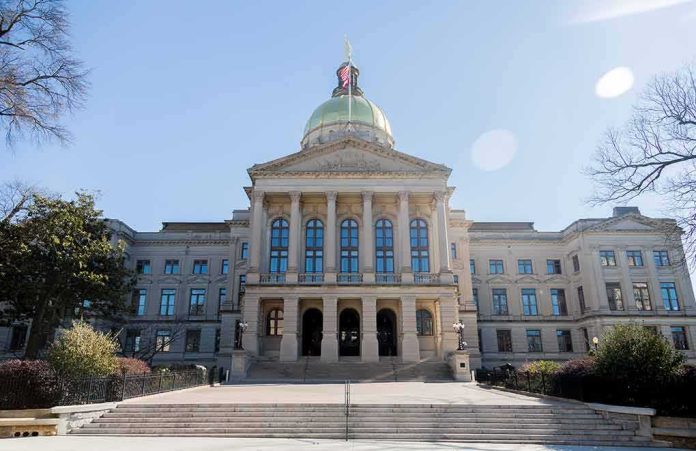
Chief United States District Judge Stephanie Rose issued a preliminary injunction on November 2, 2026. The order directed Iowa officials to approve The Satanic Temple’s December 12 Capitol event. The court said the group was likely to win on its free-speech claim, and the other legal factors favored relief. A preliminary injunction is not a final ruling. It keeps the status quo and prevents harm while the lawsuit proceeds. The event may now occur as the case continues.
The Satanic Temple’s plan included music, arts and crafts, and a Krampus costume contest. Iowa officials rejected the application three times, citing a Capitol policy that bars material harmful to minors and concerns about frightening costumes and sticks used as props. The American Civil Liberties Union of Iowa sued, arguing the state targeted the group’s viewpoint, not safety. The judge’s order sided with the free-speech case at this stage.
What Iowa Officials Argued
Iowa Governor Kim Reynolds said the event targeted children and would be harmful to minors under Capitol rules. State officials pointed to a policy that bans obscene content and gratuitous violence in a building often full of kids. A former department director said sticks in proposed costumes could be used as weapons against children. Officials later defended excluding the Krampus contest as a safety and fear concern. These reasons drove the denials.
Public statements by state officials framed the plan as inappropriate for youth. They objected to children creating Satanic symbols, singing hymns, and joining a contest with props linked to abuse. The state also revised general Capitol use rules, capping multi-day events and limiting groups to one event per year. Supporters said the changes improved safety and order. Critics said the moves narrowed access in ways that burden disfavored speakers.
Why Free Speech Principles Controlled Here
The key legal question was whether the Capitol’s event space functioned as a forum for private expression. When government opens such a space, it can set neutral rules. But it cannot pick winners based on viewpoint. The Supreme Court said as much in Good News Club v. Milford Central School, holding that government may not exclude religious speech when others can speak on the same topics in the same space. The judge applied that pattern to Iowa’s denials.
Officials may enforce real safety rules. They may restrict time, place, and manner if they do so evenly. Courts look closely when safety rules seem to track disfavor for a group’s message. The judge found The Satanic Temple likely to show Iowa crossed that line. The order did not say the state must accept any conduct. It said the state cannot use child-harm claims to mask viewpoint-based rejection in a public forum.
What This Means Beyond Iowa
This fight reflects a bigger national tension. Voters across the spectrum feel the rules change to suit the powerful. Many see government quick to bless favored groups while shutting out those it dislikes. Courts often step in to force neutral treatment. That can feel like a win for one side and a loss for another. But the deeper point is equal rules for all speakers, even unpopular ones, when the government opens the door.
The ACLU of Iowa has won a preliminary injunction that clears the way for The Satanic Temple to stage a holiday event next month in the Iowa Capitol rotunda.https://t.co/a0MRRE9QIs
— Matt Gunn KTVO (@MattGunnKTVO) November 3, 2026
For citizens, the outcome underscores two lessons. First, if the government invites community events in a public building, it must allow diverse views under even rules. Second, real safety standards must be specific, proven, and applied to everyone. Expect more fights like this as states refine policies after court orders. Watch how officials write and enforce rules, not just what they say the rules are.
Sources:
aclu-ia.org, courthousenews.com, rawstory.com