

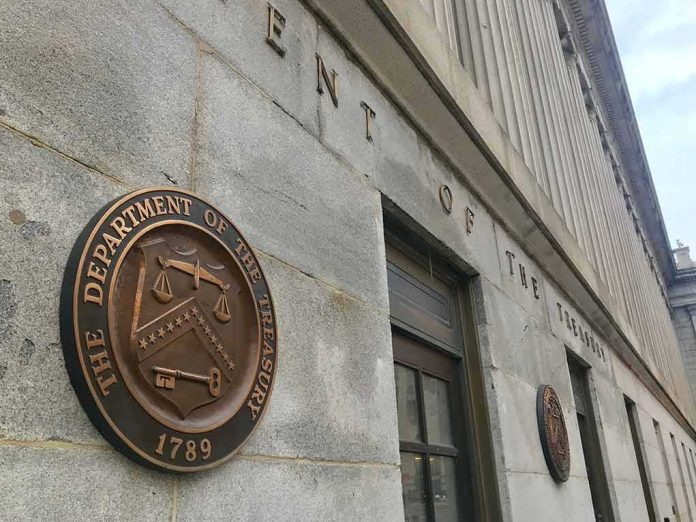
The Treasury Secretary moved onto a U.S. military base after threats tied to Iran, a rare step that signals a serious security concern and rising geopolitical risk.
Story Snapshot
- The New York Times reported Scott Bessent left his home for a military base after Iranian threats.
- Treasury linked the danger to Iran and said Bessent will not be deterred.
- Recent intelligence warned Iranian plots against Americans had reached advanced stages.
- Key details remain undisclosed, including the base location and timing.
What Happened and Why It Matters
The New York Times reported on November 10 that Treasury Secretary Scott Bessent moved from his residence to a U.S. military base after threats against his life attributed to Iran, citing three people with knowledge of the matter. A Treasury spokesperson said Bessent would not be deterred by the Iranian regime’s threats, linking the security step to his role in sanctions and economic pressure on Tehran. Several outlets repeated the account and noted the severity of the threats was not publicly clear.
Reuters reporting, summarized by The Straits Times, said a senior intelligence official warned in late October that lethal plots by Tehran against American citizens had reached advanced stages. This warning gives context for why protective steps escalated. Moving a Cabinet official onto a base is unusual and suggests credible concern. It also shows how foreign pressure can reach into daily life for top officials. That reality fuels a shared worry: powerful actors can target public servants while the public sees few details.
How This Fits a Larger Security Pattern
U.S. agencies sometimes act on threats before they can share proof. The United States Secret Service and partner units rely on threat assessments to lower risk to protectees, which can include relocation when danger rises. Case-by-case choices weigh the cost of disruption against potential harm. Similar concerns have driven protection for figures tied to past Iran confrontations, like officials linked to the 2020 strike on Qassem Soleimani. These steps do not prove who planned a threat, but they do show authorities judged the risk as real.
The Times said the threats’ severity was unclear, and public reports do not name the base, the date of the move, or which agency ordered it. Iran has denied past plots on U.S. soil in separate coverage, but the latest reporting frames the danger as part of a more advanced phase of Tehran’s targeting. This mix creates tension. Security teams must act fast, yet the government cannot reveal sensitive sources and methods. Citizens see a major move, but not the evidence that drove it.
Policy Stakes for the Economy and National Security
Sanctions are a core tool in U.S. pressure on Iran. The Treasury Department leads that work. If Iran linked threats to Bessent’s role, it signals pushback on the economic front. That matters for markets and for families. Sanctions can raise oil volatility, which hits gas and heating prices. A hit to a top economic official’s safety plan can also unsettle investors. Even if daily life stays calm, this kind of risk can ripple through energy, trade, and inflation expectations.
Treasury Secretary Scott Bessent moved with his family to a military base after Iranian threats against his life, per the NYT and a senior official. Treasury says he will not be deterred.
Sources: https://t.co/7dbvCvp6oc#Iran #Treasury #Bessent #PerpSignalDesk pic.twitter.com/wdESkEpOeE
— PerpSignal Desk (@PerpSignalDesk) November 11, 2026
Americans across parties share a deeper fear here. People on the right see a hostile regime testing U.S. resolve and exploiting gaps in security. People on the left see national security blending with political messaging and want proof-based decisions. Both sides see a government machine that often shields details while asking for trust. This event again shows how opaque systems, intelligence limits, and elite protection can widen the gap between citizens and Washington’s security state.
What We Know, What We Do Not
Facts supported by on-record or named reporting: The New York Times says Bessent moved to a base after Iranian threats, supported by three knowledgeable sources; Treasury linked the danger to Iran and pledged Bessent will continue his work. Independent outlets echoed the account and cited a late October memo warning that plots had reached advanced stages. Unclear items include the base name, timing, and the protective authority that ordered the move, which remain undisclosed for security reasons.
Bottom Line
A Cabinet official’s move onto a military base is not routine. It reflects a government judgment that the threat environment has intensified. The action aligns with a broader pattern of preemptive steps against suspected Iranian plots, even when public proof is limited. In a time of sharp division, this development underscores a shared concern: foreign adversaries can reach into our system, while citizens must parse sparse facts to judge whether leaders are keeping them safe and free.
Sources:
facebook.com, israelnationalnews.com, politicalwire.com, ua.news