

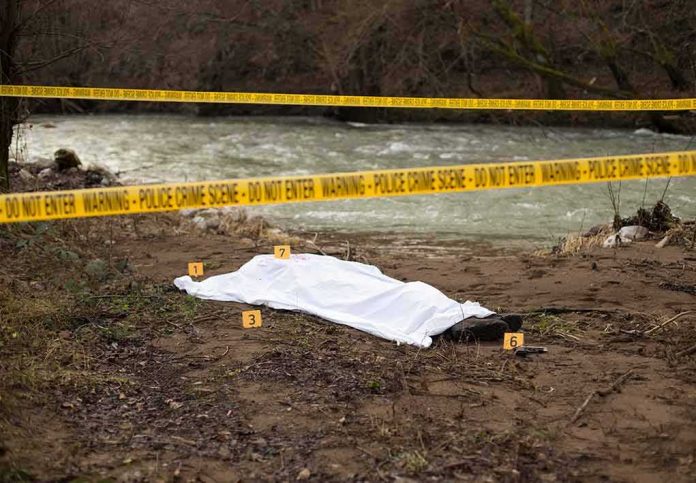
A coroner ruled that five-year-old Saylor Hayes drowned, and he listed child neglect as a contributing factor.
Story Snapshot
- The coroner said Saylor died from asphyxia due to drowning; neglect contributed.
- The manner of death remains undetermined, not ruled accidental or homicidal.
- Parents face charges tied to alleged neglect and abandonment after the August incident.
- Reports say a tracking-device claim may have pushed searchers away from the river.
Coroner’s Findings and What They Mean
Georgetown County Coroner Chase Ridgeway concluded on November 6 that Saylor died from asphyxia due to drowning. He listed child neglect as a contributing factor in the death. He left the manner of death undetermined, meaning the evidence did not prove whether the drowning was accidental or caused by a homicidal act. This ruling closes the medical questions for now, but it does not settle the legal case. The court process will test what actions, if any, broke the law.
Authorities recovered Saylor’s body from the Waccamaw River near a Pawleys Island rental on August 31. Officials had searched for the child after her disappearance was reported earlier that day. The physical location supports the basic timeline: a missing child, a waterway close by, and a recovery from that water soon after. The coroner’s office earlier noted no external trauma, which fits a drowning scenario but does not prove how the child reached the water.
Criminal Charges and Key Allegations
Deputies arrested John Herb Hayes III and Geordyn Nichole Hayes in early September in Tennessee. The charges include unlawfully placing a child at risk and willfully abandoning a child. A judge later denied bond, citing the serious nature of the allegations. These criminal counts focus on supervision and safety duties. Prosecutors will have to connect specific acts or failures to the dangers that led to the drowning, using evidence gathered since August.
News reports that summarize arrest affidavits say the parents told authorities the child wore a Project Lifesaver tracking device during the search. Investigators later found the device at the family’s Virginia home, according to those reports. Officials say that claim may have sent search teams away from the river, where Saylor was found. If proven in court, that detail could matter, because search time and focus can shape outcomes in water cases.
Supervision, Autism, and Known Water Risks
Reports say affidavits describe Saylor as severely non-verbal, autistic, and drawn to water. They also say she had a history of wandering. Those traits raise clear, documented safety concerns in any setting with open water nearby. Research shows children with autism face higher risks of wandering and drowning, which can turn a small gap in supervision into a life-threatening event near ponds, rivers, or lakes. That context helps explain why officials emphasize tight supervision and physical barriers.
Families and first responders often rely on layers of protection. These include locked doors, alarms, fencing, constant line-of-sight, and, when appropriate, tracking tools. When one layer fails, the others should catch the risk. Prosecutors now argue those layers broke down in this case. Defense attorneys, if they contest the charges, may argue the tragedy does not equal a crime. The coroner’s undetermined manner leaves room for the courts to weigh the facts without a preset label.
Why This Case Strikes a Nerve Nationally
This story blends heartbreak and hard questions. Parents juggling high needs often face complex systems and slow support. Police and rescue teams need clear, accurate information in the first minutes of a search. When details are wrong, precious time can be lost. Many Americans on the left and the right see these gaps as a sign of a system that reacts late and blames early, instead of building strong safety nets that prevent the worst outcomes.
The coroner in Georgetown County, South Carolina say that 5yo Saylor Hayes died of "asphyxia due to drowning, with child neglect a contributing factor."
They also note “This classification reflects the inability to conclusively determine whether Saylor’s death was accidental or… pic.twitter.com/FhFXUK6vi7
— Chris Stewart (@CStewartNews) November 9, 2026
Communities can act now while the legal case continues. Rental owners near water can add fences, alarms, and clear warnings. Schools and doctors can flag wandering risks and share water-safety plans. Local governments can support rapid-response tools and training for missing autistic children. These steps do not decide guilt. They do save lives. In a country divided on many issues, most agree that a child’s safety should not depend on luck or perfect conditions that never exist.
Sources:
nypost.com, supertalk929.com, wjbf.com, counton2.com, wyff4.com