

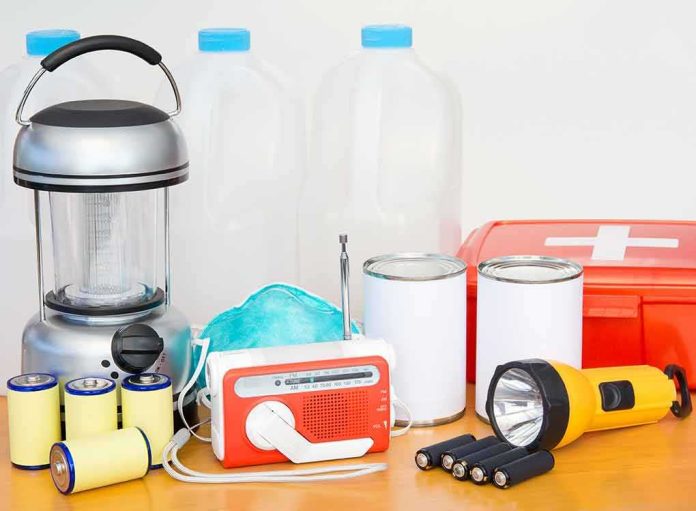
Public agencies say families may be on their own for up to 72 hours after a major disaster, yet many households still do not keep the basic supplies experts recommend.
Story Snapshot
- Officials advise at least three days of supplies, including one gallon of water per person per day.
- Local guidance warns help may be delayed for 72 hours after major events due to demand and blocked roads.
- A 2015 survey found most people had not assembled a kit and expected government help to arrive quickly.
- Preparedness kits focus on simple basics: water, food, first aid, light, and communication.
What Authorities Recommend For The First 72 Hours
Public safety agencies urge every household to keep at least three days of supplies on hand. Guidance calls for one gallon of water per person per day for drinking and sanitation, plus food, first aid, light, and vital documents. These lists are not doomsday plans. They cover normal needs when power is out or roads are closed. The Unified Fire Authority explains that a simple 72-hour kit can bridge the gap until services resume or aid reaches your street.
Community colleges and fire districts share similar checklists. They stress shelf-stable food, backup lighting, radios, chargers, hygiene items, and medicine refills. They also suggest copies of IDs, cash in small bills, and supplies for infants and pets. The goal is practical: eat, drink, stay warm or cool, treat small injuries, and get reliable updates. The San Mateo County Community College District frames the kit as a basic lifeline for at least 72 hours or longer if needed.
Why Help May Not Reach You Right Away
County emergency managers say response can lag when a big storm, quake, or outage hits many people at once. Crews face high call volumes and blocked or flooded roads. Power and water teams must assess damage before repairs begin. Wayne County’s guidance warns that police, fire, and medical services may not be available for up to 72 hours after a major disaster. Households should plan to manage on their own during that window.
Expecting fast rescue can create a false sense of security. If stores close or shelves empty, food and water run short. If cell towers fail, alerts and maps may not load. If traffic lights go dark, evacuation slows. A small kit can turn a hard three days into a manageable wait. It keeps pressure off first responders, who can then focus on people in immediate danger rather than basic supply needs.
What Surveys Say About Household Preparedness
Older survey data painted a stark picture. In 2015, a Chapman University report said seventy-two percent of respondents had made no effort to assemble an emergency kit. More than half expected emergency services to help them, while many cited lack of time, avoidance, or not knowing what to do as barriers. Those mindsets leave families exposed when systems fail, even for a short period like three days.
The One Year Urban Survival Plan for Preppers
Could your household manage a week without power or running water? Tell us the first gap you’d tackle.
Build readiness over the next 12 months through supplies, skills and practice. Address immediate food, water, medical and… pic.twitter.com/xCbKpHBQGC
— The Prepper Almanac (@prepperalmanac) November 15, 2026
The message has stayed steady even as communities debate budgets, climate risks, infrastructure, and trust in institutions. A basic kit is cheap insurance for any household, whether rural or urban, left or right. It reduces fear by turning needs into a checklist you can finish over a few weekends. Start with water and a manual can opener. Add a flashlight, radio, batteries, first aid, and a week of vital medications. Then build from there with calm, steady steps.
How To Build A 72-Hour Plan That Actually Works
Start with the basics agencies repeat: water, food, light, first aid, and communications. Use clear targets like one gallon of water per person per day for three days. Choose foods you already eat and rotate them. Pack a flashlight and headlamp, extra batteries, and a battery or hand-crank radio for updates. Keep copies of IDs and a printed contact list. List power needs for medical devices and chargers, and plan a safe way to keep phones alive.
Tailor the kit to your family. Add formula, diapers, pet food, and comfort items for kids. Store a spare pair of glasses and essential medicines. Note evacuation routes and meet-up spots if phones die. Walk through a no-power weekend drill to test your setup. Simple steps protect what both sides of our politics say they value: safe homes, self-reliance, and neighbors who can help others because their own house is squared away first.
Sources:
unifiedfireut.gov, smccd.edu, blogs.chapman.edu, waynecountymi.gov