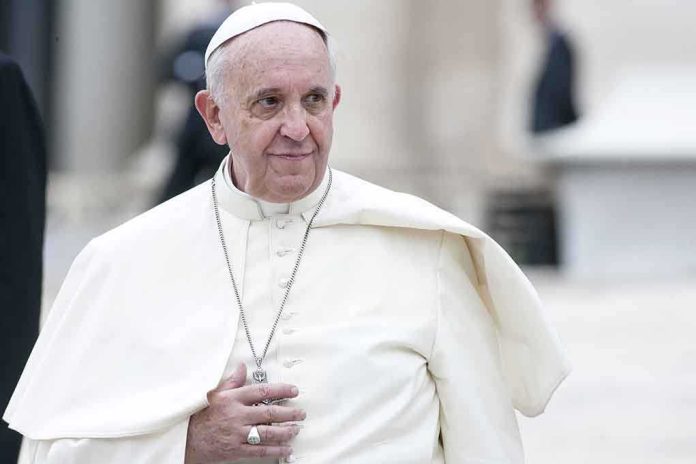
As AI deepfakes now put false words in the pope’s mouth, Americans who already distrust global elites are watching another powerful institution slip further into digital chaos.
Story Snapshot
- Viral “Pope Leo reveals his secret” clips are built on AI deepfakes and fiction, not verified Vatican events.
- Fact‑checkers and Vatican media have already debunked claims about a secret son, resignation, and apocalyptic “final warnings.”
- These hoaxes show how AI and Big Tech can weaponize religious authority and confuse millions worldwide.
- For U.S. conservatives, it is one more warning sign about elite narratives, censorship games, and truth in the digital age.
Deepfake Popes and the Battle Over Truth
Across YouTube, X, and fringe sites, attention‑grabbing titles like “Pope Leo Reveals His Secret” or “Heaven’s FINAL WARNING for 2025” claim that the new Pope Leo XIV has dropped world‑shaking revelations, from hidden children to secret prophecies and even the location of the Ark of the Covenant. Behind the drama, investigators find no single real event, but a web of AI‑generated deepfake videos, fictional thrillers, and click‑bait rumors orbiting a relatively new and little‑known pope.
Vatican media and independent fact‑checkers have already had to step in. Vatican News warned Catholics that at least one widely shared 36‑minute video of “Pope Leo” was an AI fabrication, not an authentic homily or interview. A Brazilian fact‑checking outlet dug into a viral claim that Leo XIV had confessed to having a son and resigning his office; it found no trace of such an announcement in any official Vatican release or serious Catholic outlet, and labeled the story a hoax.
Why This Matters to Constitutional Conservatives
For a conservative American audience already burned by COVID narratives, Russiagate, “disinformation” czars, and Big Tech censorship, the Pope Leo story is a familiar pattern in a new robe. The same digital machinery that shadow‑banned border‑security voices and buried honest debate about inflation is now churning out synthetic popes delivering made‑to‑order “prophecies” and scandals. The details may be Catholic, but the pattern hits close to home for anyone wary of coordinated narrative control.
Artificial intelligence makes it cheap and easy to impersonate any authority figure, from the president to a pastor to a police chief. Deepfake papal clips show how fragile trust becomes when you cannot be sure a video or voice is real. That reality should alarm Americans who care about the First Amendment, election integrity, gun rights, and due process. If AI can convincingly fake a pope, it can just as easily fake a sheriff’s “statement,” a candidate’s “confession,” or a gun owner’s “threat.”
The Vatican’s Struggle Echoes America’s Media Crisis
Pope Leo XIV’s actual, verified preaching has focused on spiritual themes like avoiding destructive polarization between tradition and novelty, not on doomsday countdowns or explosive personal revelations. Yet YouTube channels and social‑media storytellers repurpose his name and image for thrillers about the Ark of the Covenant, or for dramatic “final warnings” about demonic attacks and household rituals. Some viewers treat these as prophecy, others as entertainment, but millions never see a clear line between fiction and fact.
That confusion mirrors what many American families experienced under the Biden administration’s information games. Parents who raised concerns about school lockdowns, biological males in girls’ sports, or graphic content in classrooms were smeared as extremists. Federal officials leaned on Silicon Valley to throttle dissenting voices while approved experts dominated the airwaves. Now, with Trump back in the White House promising to dismantle censorship regimes and rein in rogue bureaucrats, the Leo XIV saga stands as a reminder of how far the information crisis extends beyond U.S. borders.
AI, Faith, and the Weaponization of Authority
Deepfake papal videos are not just random internet mischief; they are a test case for how AI can hijack trusted symbols to move public opinion. When a clip shows “the pope” confirming ancient secrets or announcing the end of days, it can rattle believers, fuel conspiracy theories, or inflame religious tensions in already volatile regions. In the same way, synthetic media could be used to fabricate “evidence” against a political enemy, justify new surveillance powers, or scare the public into accepting more government control.
Conservatives who defend religious liberty and limited government should see two dangers. First, confusion: ordinary people no longer know which messages are real, which invites cynicism and apathy. Second, control: the same elites who failed on inflation, borders, and energy will rush to demand new “truth ministries” to police AI, claiming only their fact‑checkers can be trusted. Without careful safeguards, that response risks turning a technology problem into an excuse for fresh crackdowns on speech and conscience.
The better answer looks more like what many on the right already practice: verify before you share, look for primary sources, and favor transparent institutions over anonymous feeds. The Vatican is now urging Catholics to rely on official channels and established Catholic journalism to confirm papal statements. Likewise, American citizens should lean on clear constitutional processes, independent courts, local churches, and alternative media rather than surrendering trust to centralized gatekeepers who have repeatedly abused it.
Sources:
Vatican warns of fake Pope Leo XIV quotes and AI-generated videos – America Magazine