
The Justice Department asked a federal judge to stop Alaska from certifying its Senate race if Senator Dan Sullivan loses and a name-confusion review could change the outcome.
Story Snapshot
- Justice Department filed a lawsuit to block certification under a specific name-confusion theory tied to the ballot.
- President Trump said he directed the Justice Department to bring the case, increasing the political stakes.
- The suit targets votes cast for Daniel J. Sullivan that might have been meant for Senator Sullivan.
- Alaska previously allowed Daniel J. Sullivan to remain on the ballot, adding a legal hurdle for federal intervention.
What The Lawsuit Seeks And When It Would Apply
The Justice Department asked the court to block Alaska from certifying the Senate race only in a narrow case. The block would apply if Senator Dan Sullivan loses and if counting votes cast for “Daniel J. Sullivan” as votes for the incumbent would change the result. The complaint ties the request to a claimed legal duty to protect election integrity. The filing asks for relief focused on the final margin, not every confusing ballot. The request aims at certification, not the vote count itself.
President Trump said he told the department to file the case, linking the action to the White House’s stated priorities on election rules. That admission shifted the fight from a routine court dispute to a test of federal power and political will. The statement also raised hard questions about the department’s independence. The filing came close to Election Day, while voting was already underway, which adds time pressure on the court and state officials handling results.
The Name-Confusion Theory And Alaska’s Ballot Design
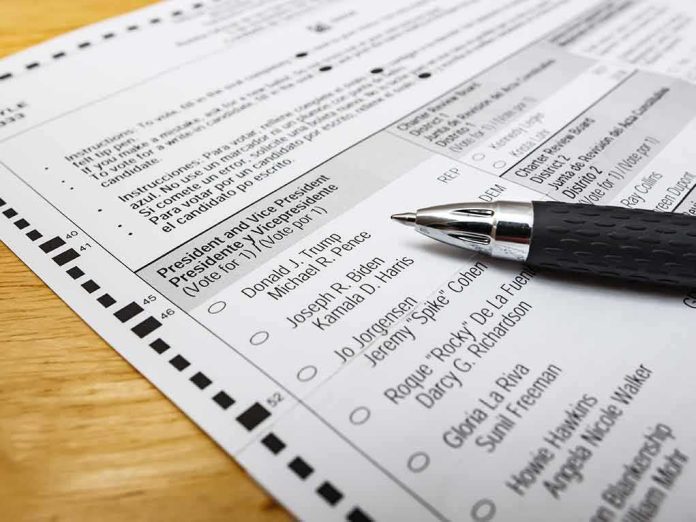
The complaint argues that voters could confuse Senator Dan Sullivan with a different candidate named Daniel J. Sullivan, who also appeared on the ballot. The department says some voters who support the incumbent may have marked the wrong “Sullivan” by mistake. The government frames this as a threat to the integrity of the election process. Reports note that Alaska’s ballot identified the incumbent and distinguished the names, but the department still claims confusion could matter in a tight race.
The lawsuit ties its claim to a federal statute aimed at election integrity, rather than general claims about fraud. It does not ask the court to remove a candidate or change how votes were cast. It asks to pause certification if the margin is small enough that wrongly placed votes could flip the result. The action follows earlier state litigation that allowed Daniel J. Sullivan to remain on the ballot. That earlier ruling gives Alaska a legal footing to resist a late federal block.
Evidence Gaps And The Limits Of The Filing
Public reporting on the case has not identified voter affidavits or a full ranked-choice analysis that proves confusion changed the outcome. The filing’s theory is conditional and looks at “what if” math under specific margins. The department has not published a full plan to decide which “Sullivan” votes were errors. The request instead seeks time to assess whether the final spread is narrow enough to justify a targeted pause in certification while courts review the issue.
Alaska uses ranked-choice voting. That system can transfer votes as lower-ranked choices are counted. Reports do not show whether votes for Daniel J. Sullivan could swing the final round under those transfers. The department’s ask focuses on certification, not the tabulation steps. That leaves the court to decide how far federal power can reach when state law and state courts already set ballot rules and candidate access before Election Day.
Why This Fight Matters Beyond Alaska
The Alaska case fits a growing pattern where legal teams try to stop certification based on a focused ballot theory, rather than broad claims about the whole election. Here, the theory centers on two similar names and how that could alter a close race. The move tests the line between state control of elections and federal claims to protect voters from misleading ballot setups. It also measures how courts weigh last-minute federal requests against state-run processes.
DOJ moves on Alaska race
Justice Dept sues to block Senate certification if Sullivan loses
Trump says he ordered the filing
Follow @MrNewsaholic for the real updates. We're the best.#Alaska #Elections #Politics— Newsaholic (@MrNewsaholic) October 24, 2026
Both right-leaning and left-leaning voters share a core worry: powerful insiders can bend rules after people vote. Supporters of tougher ballot rules see the lawsuit as guarding voter intent. Critics see a White House-directed effort to delay a loss. The court’s response will set a near-term guide for future fights. If the judge grants a pause tied to a close margin, more campaigns may test similar name or design arguments in other states.
Sources:
cbsnews.com, cnbc.com, cnn.com, abcnews.com, upi.com, commondreams.org